
Palm weevil
Derelomus piriformis
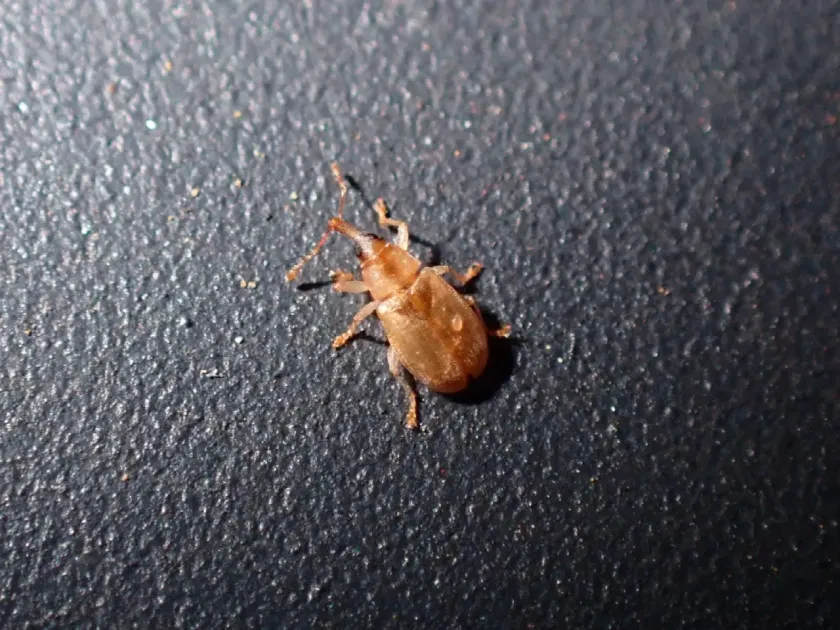
Description
How to identify
The palm weevil Derelomus piriformis is a beetle species belonging to the family Curculionidae within the order Coleoptera. It is a specialized pest that thrives by infesting the tissues of palm trees.
The adult insect is characterized by a typical weevil morphology, featuring a distinct elongated snout and a dark, cryptic coloration that allows it to blend into the woody parts of the host plant.
Its life cycle is intimately synchronized with the flowering stages of the palm. The adults primarily occupy the inflorescences, where they find nutrition and suitable sites for oviposition.
The larvae are apodous (legless) and possess a fleshy, cream-colored body. They spend their entire development period hidden deep within the plant tissues, which provides them with protection from predators and environmental stress.
Under warm environmental conditions, the pest can complete its life cycle rapidly, enabling multiple generations to overlap during the growing season.
What it damages
The primary host range of Derelomus piriformis includes various species of palms, where it targets the reproductive organs.
The damage is primarily caused by larvae feeding inside the inflorescences, which disrupts the natural development of flowers and fruit-bearing processes.
This feeding behavior weakens the floral structure and can lead to the structural failure of blossoms, significantly reducing the reproductive capacity of the palm.
The galleries created by the larvae also serve as entry points for secondary infections, such as pathogenic fungi and bacteria, leading to tissue rot.
In ornamental nurseries and plantations, the economic impact is high because the damage leads to aesthetic degradation and loss of harvest quality.
Signs of infestation
The first external sign of infestation is the presence of fine, sawdust-like frass (excrement) around the base of the palm inflorescences.
Careful observation may reveal small, circular entry or exit holes on the surface of flower stalks or dormant buds.
Premature shriveling, wilting, or yellowing of the inflorescence is a major indicator that internal tissues are being consumed by larvae.
When investigating suspected areas, one can find intricate tunnels filled with brownish detritus and larvae of various developmental stages.
Reduced overall vitality of the flowering spikes and abnormal, stunted growth of the buds are also clear signs of an established infestation.
Control measures
Sanitation is a critical control measure; all infested plant material must be removed and destroyed immediately to break the life cycle of the pest.
Systemic insecticides are the most effective chemical approach, as they are absorbed by the plant and target larvae hidden within the internal tissues.
Preventive spraying schedules should be synchronized with the flight activity of adult weevils to prevent them from laying eggs in new inflorescences.
Integrated Pest Management (IPM) programs increasingly incorporate biological control agents, such as specific entomopathogenic nematodes or fungi.
- Regular monitoring using pheromone traps to detect initial adult arrival.
- Ensuring strict quarantine measures for any new palm material entering the site.
- Enhancing plant health through balanced nutrition and proper irrigation to improve natural defense.
Taxonomy
- Latin name
- Derelomus piriformis
- Order
- Coleoptera (beetles)
- Family
- Curculionidae
- EPPO code
- DEREPI
Discussion
No discussions yet — be the first.