
Dentalium
Dentalium
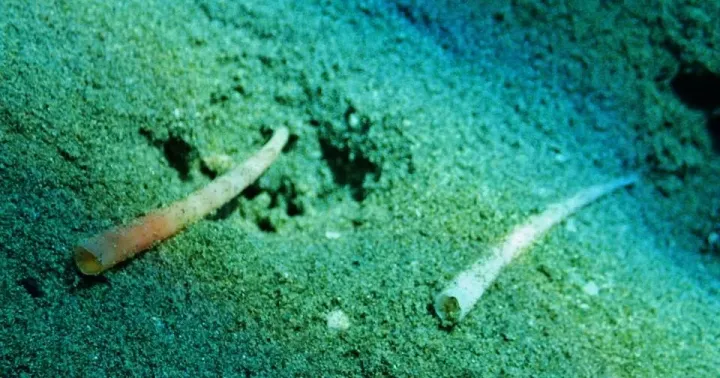
Description
How to identify
Dentalium is a genus of marine scaphopod mollusks, commonly known as tusk shells. They possess a characteristic tubular, slightly curved shell that looks like a small elephant tusk.
These organisms live exclusively in marine habitats, buried in sand or mud at the bottom of the ocean. They are not terrestrial creatures and cannot survive in agricultural soil environments.
Taxonomically, they belong to the order Dentaliida and the family Dentaliidae. They have no evolutionary or biological relationship to the pests that typically damage terrestrial crops.
Their body structure includes a foot used for burrowing and tentacles (captacula) for capturing microscopic prey. They completely lack the mouthparts necessary to feed on plant tissues.
The confusion regarding their status as a pest likely arises from the resemblance of their small, hard shells to certain insect pupae or the larval stages of soil-dwelling pests.
What it damages
Dentalium species cause no damage to agricultural or horticultural plants. As marine organisms, they are confined to salty aquatic environments and play no role in plant pathology.
Your crops, whether cereal, vegetable, or ornamental, are safe from dentalium. These mollusks lack the mobility and environmental tolerance to colonize land-based fields or greenhouses.
Any perceived damage to roots or stems attributed to dentalium is almost certainly caused by actual soil pests such as wireworms, white grubs, or root-feeding nematodes.
There is no economic or agronomic threat associated with this genus. It is important for farmers to distinguish between harmless marine fauna and actual destructive pests.
Spending money or effort to control dentalium in a terrestrial garden is counterproductive and suggests a misidentification of the actual problematic organism present in the soil.
Control measures
No pest control measures are required or recommended for dentalium. Because they are not agricultural pests, there are no approved pesticides or biological controls for them.
To ensure crop health, focus on identifying the actual culprits affecting your plants. Regular field scouting and soil testing are the best ways to determine real pest pressure.
Consult with a local extension office or a plant pathology expert if you find unknown organisms in your soil. Proper identification is the cornerstone of integrated pest management.
Maintain soil health through proper fertilization and crop rotation to discourage real terrestrial pests rather than focusing on non-existent threats from marine organisms.
Always verify the scientific name of any organism labeled as a pest. If the genus is identified as a marine species, you can safely assume it is not responsible for crop loss.
Taxonomy
- Latin name
- Dentalium
- Family
- Dentaliidae
- EPPO code
- DENTSP
Discussion
No discussions yet — be the first.