
Debus emarginatus
Debus emarginatus
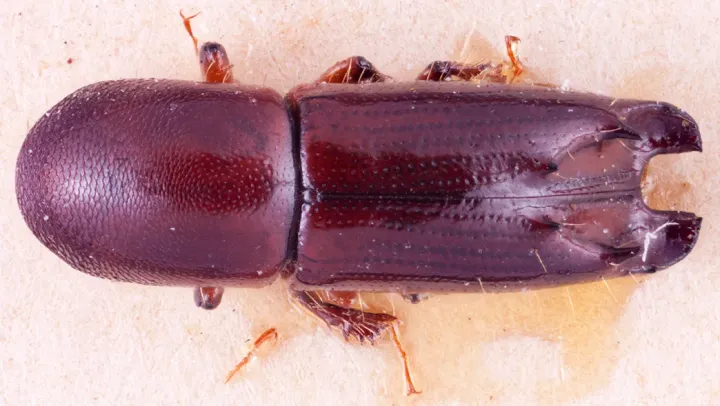
Description
How to identify
Debus emarginatus belongs to the Histeridae family, also known as clown beetles, which are often characterized by their compact, hard bodies.
The adult beetle has a distinct, heavily sclerotized cuticle that provides protection against predators and environmental stresses.
The identification mark for this specific species is the emarginate (notched) pronotum, from which the Latin name is derived.
These beetles are usually small, dark-colored, often black or deep brown, and exhibit a shiny appearance.
The larvae are typically creamy-white, elongated, and adapted to living in nutrient-rich, moist decomposing organic matter.
What it damages
While members of this family are often predatory, Debus emarginatus can be associated with agricultural crops during its larval stage.
Damage primarily occurs when the beetles inhabit decaying organic matter that is in close proximity to the roots of young seedlings.
Larval feeding on roots can cause superficial lesions, which weaken the plant and may lead to secondary infections by soil-borne pathogens.
Although they are not major pests in well-managed fields, their presence in high densities can affect plant vigor in organic farming systems.
The most significant harm is observed when organic fertilizers are poorly composted or applied in excess near sensitive crop roots.
When it appears
The activity of Debus emarginatus is tied to the warmer months, with peaks in population occurring from late spring through late summer.
Adult beetles overwinter in the soil or in deep organic debris, emerging once soil temperatures reach adequate levels in the spring.
The developmental cycle is strongly influenced by ambient temperature and soil moisture levels within their preferred habitats.
Reproductive activity usually increases mid-season, corresponding with the peak growth phase of most horticultural crops.
As autumn approaches, the beetles prepare for diapause, seeking protected areas to survive the colder months.
Signs of infestation
The primary sign of their presence is the observation of adult beetles within decaying vegetable matter or manure heaps.
Roots of damaged plants may show small, irregular pits or necrotic lesions upon careful examination of the root system.
Stunted growth or sudden yellowing of foliage in young plants can indicate root damage caused by soil-dwelling insects.
Finding high numbers of these beetles near the root zone during soil cultivation is a clear warning sign of potential infestation.
Excessive moisture or a strong smell of decay in the soil often correlates with the presence of these beetles in an area.
Control measures
Good agricultural practices are the most effective way to manage Debus emarginatus populations in the field.
Ensure all organic matter is fully composted before application to reduce the presence of suitable breeding sites.
Proper soil aeration and maintaining optimal drainage will make the environment less hospitable for the larvae.
If necessary, soil-applied insecticides can be used to protect high-value crops, following all local safety guidelines.
- Use well-composted organic fertilizer.
- Practice regular inter-row cultivation.
- Clear field debris to prevent breeding.
Taxonomy
- Latin name
- Debus emarginatus
- Order
- Coleoptera (beetles)
- Family
- Curculionidae
- EPPO code
- DEBUEM
Discussion
No discussions yet — be the first.