
Debus
Debus
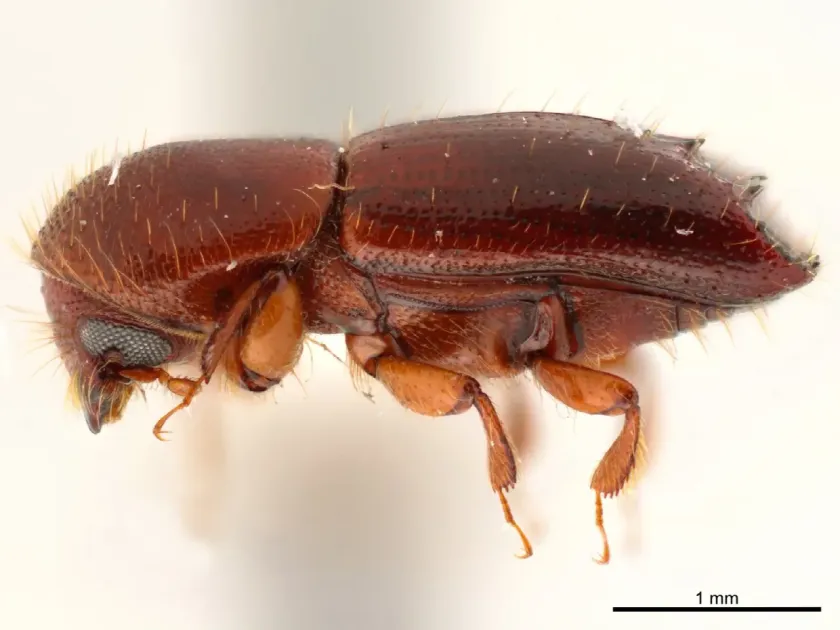
Description
How to identify
The genus Debus belongs to the family Carabidae (ground beetles) within the order Coleoptera. In an agronomic context, specific species of this genus may act as specialized entomophages or as pests depending on the ecological conditions of the field.
Adult beetles possess a robust chitinous exoskeleton, often featuring a metallic sheen. Taxonomic identification of these insects requires precise examination of their genital structures and the morphological characteristics of their elytra.
Larvae are typically campodeiform, displaying high mobility in the soil surface layer and among crop debris. They possess well-developed mandibles specialized for grasping and processing their food sources.
The life cycle encompasses four stages: egg, larva, pupa, and imago. Overwintering occurs mainly as adult beetles or late-stage larvae within the soil, protected by organic matter.
Field monitoring is performed using Barber soil traps, which allow agronomists to estimate the population density of the beetles within the cropping area.
What it damages
The primary damage caused by these insects involves the consumption of seeds, sprouts, and young seedlings of cereals such as wheat, barley, and maize. They target the germinating embryo, causing poor emergence.
Under conditions of high moisture and significant crop residue, the population density increases rapidly, leading to major field losses. The debris provides both shelter and an alternative food source.
When seeds are exhausted, the insects may transition to feeding on vegetative parts, damaging the stem base and the root collar of young plants.
The feeding activity creates wounds that serve as entry points for phytopathogenic fungi, leading to root rot and further weakening of the crop stand.
Crop loss severity is often correlated with the time of emergence and the intensity of the beetle's activity during the early growth stages of the plant.
When it appears
Peak adult activity is observed during the early spring, aligning with the germination phase of spring-sown crops. This period is critical for beetle mating and feeding to prepare for reproduction.
A secondary wave of activity typically occurs in late summer, coinciding with oviposition and larval development in the soil.
Soil temperature is the most significant factor influencing biological activity; metabolic rates reach an optimum between +15°C and +22°C.
During extreme drought or heat, the insects migrate to deeper soil layers to avoid desiccation, becoming less susceptible to topical insecticide applications.
Seasonality is also linked to field management practices; fields with high humidity and mulch cover tend to show higher infestation rates throughout the year.
Signs of infestation
The primary sign of infestation is poor or patchy stand emergence. Digging into the affected rows often reveals hollowed-out seeds with visible mandible marks.
Seedlings may exhibit stunted growth or death due to damage to the subterranean stem area, which is a classic indicator of beetle feeding activity.
Presence of adult beetles on the soil surface at night, particularly in damp fields or areas with high residue, serves as a direct observation of the pest population.
Laboratory examination of soil samples can confirm the presence of larvae, which are often found near damaged plant root systems.
- Missing seeds in the seed furrow.
- Irregular holes in the germinating seed coats.
- Visible damage to the root collar of young seedlings.
Control measures
The most effective strategy is the prophylactic treatment of seeds with systemic insecticides, providing immediate protection to the germinating seedling.
Agrotechnical practices such as deep ploughing help disrupt the life cycle of the pest by exposing larvae to surface predators and reducing their overwintering success.
Crop rotation remains a fundamental component of integrated pest management, preventing the buildup of beetle populations in the soil.
Managing weeds and efficiently incorporating crop residues into the soil removes essential nesting and food resources, discouraging population growth.
If population thresholds are exceeded, the application of granular soil insecticides during sowing is recommended to ensure robust protection of the root zone.
Taxonomy
- Latin name
- Debus
- Order
- Coleoptera (beetles)
- Family
- Curculionidae
- EPPO code
- DEBUSP
Discussion
No discussions yet — be the first.