
Mint weevil
Datonychus melanostictus
Description
How to identify
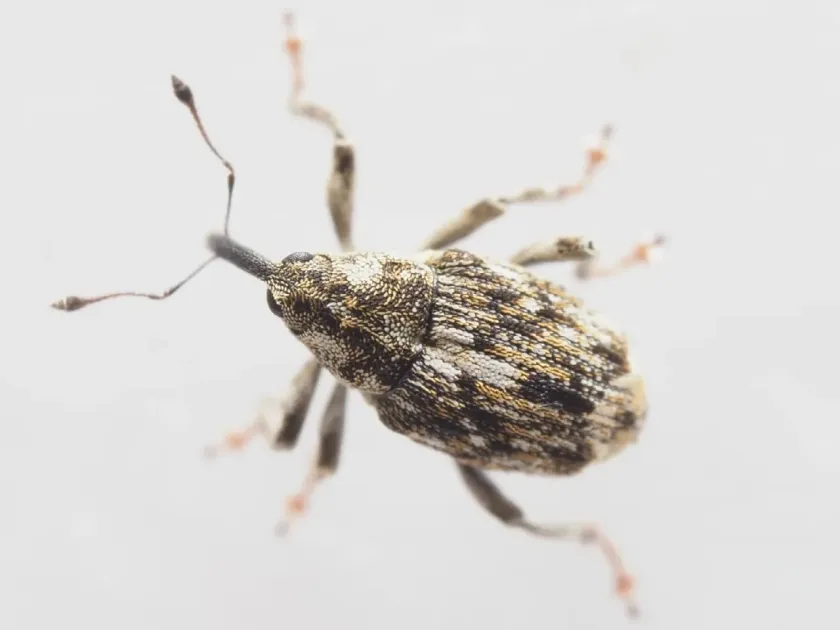
The mint weevil (Datonychus melanostictus) is a small beetle belonging to the Curculionidae family. It typically measures between 2.5 and 3 mm in length and features a characteristic elongated snout (rostrum).
The body is oval-shaped and dark brown or black in color, sometimes displaying a metallic sheen. The elytra are covered with fine, sparse pale hairs that may form faint spots.
The larvae are legless, yellowish-white in color, and have a distinct brown head. They spend their entire developmental period hidden inside plant tissues, making detection difficult.
Pupation occurs in the soil, where the larvae construct small earthen chambers. Adult beetles possess functional wings, enabling them to migrate to new hosts when resources are depleted.
This species is highly specialized, primarily targeting plants within the Lamiaceae family, and favors humid environments for its survival and reproduction.
What it damages
The main crops susceptible to this pest are members of the Lamiaceae family, most notably peppermint, catnip, sage, and lemon balm.
Adult beetles damage the foliage by feeding on the leaves, creating small, distinct holes that reduce the plant's photosynthetic capacity and mar the quality of medicinal harvests.
Larval damage is far more severe, as they bore into stems and leaf petioles. By consuming internal tissues, they disrupt the transport of nutrients and water throughout the plant.
Affected stems often show signs of wilting, curvature, or stunted growth. In severe cases of infestation, the terminals of the shoots may dry up and die completely.
Large populations can drastically reduce crop yield and affect the overall vitality of the plantation, making the plants more susceptible to subsequent secondary infections.
When it appears
Adults overwinter in the top layer of the soil or beneath accumulated plant debris. When spring temperatures rise, they emerge to begin feeding on young foliage.
The emergence phase typically spans April to May, aligning perfectly with the active growth stage of the mint plants after their winter dormancy.
Females lay eggs directly into the tissue of young stems or leaf petioles. The egg-laying process is extended, leading to overlapping generations throughout the growing season.
The full life cycle, from egg to adult, takes approximately 30 to 45 days. Depending on regional climatic conditions, one or two generations may occur per year.
As autumn approaches and plants begin to senescence or are harvested, the adult weevils seek shelter in the soil to enter diapause for the coming winter.
Signs of infestation
The most immediate sign of an infestation is the presence of numerous small, circular holes in the leaves, caused by adult feeding.
Yellowing, drooping, or twisted stems are clear indicators that larvae are feeding internally and damaging the plant's vascular system.
Stunted growth patterns compared to the rest of the crop can indicate a localized hot spot of the pest within the field.
Close inspection of stems may reveal small entry points or slight swelling where larvae have penetrated the plant structure.
The presence of fine waste (frass) near the entry points or within the hollowed stems is a definitive sign of larval activity.
Control measures
Effective management begins with proper crop rotation, which breaks the pest's cycle by removing the host plants from the infested field for a period.
Deep autumn plowing of the field is a critical cultural control method that exposes overwintering adults and pupae to predators and harsh weather.
Weed management is essential, particularly focusing on the removal of wild Lamiaceae species that serve as alternative hosts during the off-season.
- Monitoring pest density using sticky traps.
- Applying systemic or contact insecticides during the larval hatching period.
- Encouraging natural predatory insect populations in the field.
Any chemical intervention must prioritize safety, especially for mint grown for human consumption, by adhering strictly to pre-harvest intervals.
Taxonomy
- Latin name
- Datonychus melanostictus
- Order
- Coleoptera (beetles)
- Family
- Curculionidae
- EPPO code
- CEUTME
Discussion
No discussions yet — be the first.