
Datonychus
Datonychus
Description
How to identify
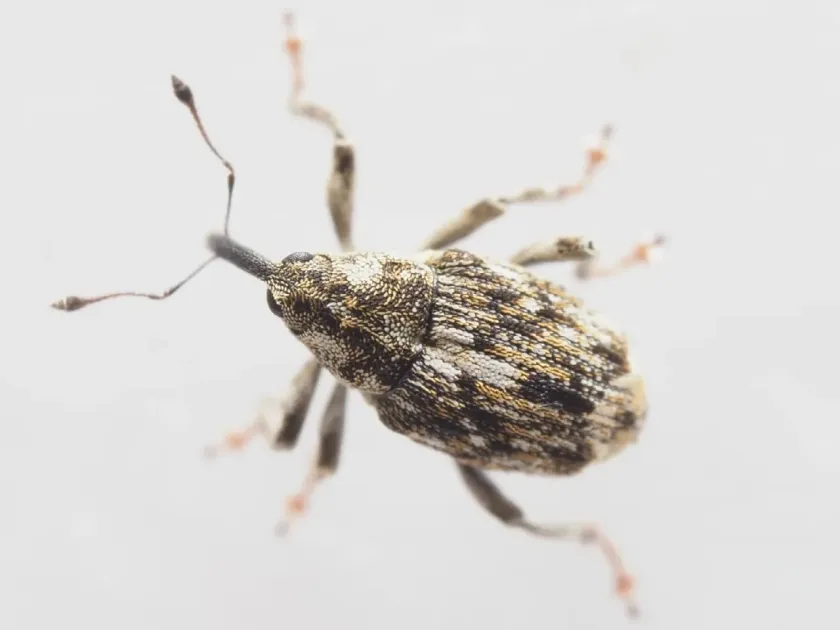
Datonychus is a genus of small beetles belonging to the family Curculionidae (true weevils) within the order Coleoptera. Adult beetles are characterized by their snout-like proboscis, a standard feature for this family.
The body is typically oval-shaped and dark in color, often covered with fine scales or sparse hair. Precise identification of specific species usually requires a microscopic examination of morphological features.
Larvae are legless, grub-like, and typically off-white with a darker head capsule. They are exclusively endophagous, meaning they develop entirely within the tissues of their host plants.
Adults exhibit a common defensive behavior: when disturbed, they freeze, retract their legs, and drop to the ground, effectively blending in with the soil or debris to escape detection.
The lifecycle follows a complete metamorphosis, including egg, larval, pupal, and adult stages. The pupation phase often occurs in the soil or protected spaces within the host plant, depending on the specific species.
What it damages
Datonychus species are known to affect various plants, particularly those in the Lamiaceae family, such as mint, sage, and thyme. They can significantly impact the quality of aromatic and medicinal herbs.
Adult beetles feed on leaves, creating small, irregular holes (shot-hole damage). While this may seem superficial, heavy infestations can significantly reduce the plant's photosynthetic capacity.
Larval feeding causes the most severe damage by tunneling through stems, petioles, or floral shoots. This internal feeding disrupts nutrient transport and causes structural weakness.
Plants infested by larvae often show stunted growth, leaf chlorosis, or drooping stems that are prone to snapping under wind pressure or mechanical stress.
The internal tunnels created by the larvae serve as entry points for secondary pathogens, such as fungi and bacteria, which can lead to localized necrosis or the total decay of the plant stem.
When it appears
Adults emerge from hibernation in early spring as soon as soil temperatures rise, moving quickly to young host plants to begin their supplementary feeding phase.
Mating and oviposition (egg-laying) typically occur in late spring and early summer, as females use their snouts to bore into plant tissue where they deposit individual eggs.
Larval development takes place throughout the summer months. The duration of this stage is highly dependent on ambient temperature, with warmer summers accelerating the pest's reproductive cycle.
The new generation of adults usually emerges in late summer or early autumn. These beetles feed briefly before seeking suitable overwintering sites.
Hibernation is primarily performed by adult beetles, which shelter under plant litter, in soil crevices, or deep within the crown of hardy perennials to survive the cold winter months.
Signs of infestation
The most visible sign of an infestation is the 'shot-hole' appearance on the leaves, where adult beetles have fed on the tissue, leaving behind small, ragged circular holes.
Deformed or wilting shoots during the peak growing season are classic indicators that larvae are feeding internally within the stem structure.
During morning observations, one may spot adult beetles on the foliage. Tapping the plant will often cause them to fall to the ground, confirming their presence.
Frass (insect waste) may be visible near the entry or exit holes on stems, providing a clear sign of larval activity within the plant tissue.
Early senescence or premature yellowing of specific branches in an otherwise healthy plant is a strong indication of internal stem damage caused by developing larvae.
Control measures
Cultural control is paramount: removing and destroying crop residues after harvest is essential to eliminate overwintering sites for the next generation of weevils.
Deep cultivation or plowing of the soil in the autumn can help expose overwintering adults to predators and harsh weather conditions, significantly reducing the population for the following year.
Chemical control should be timed to target adult beetles before they begin laying eggs. Once the larvae are inside the stems, they are protected from most contact insecticides.
Biological control, using entomopathogenic nematodes or specialized fungi, can be highly effective when applied to the soil during the pupal stage or when environmental conditions allow for fungal activity.
Monitoring using yellow sticky traps or regular field inspections helps growers determine the exact timing for intervention, ensuring that pesticide use remains minimal and targeted.
Taxonomy
- Latin name
- Datonychus
- Order
- Coleoptera (beetles)
- Family
- Curculionidae
- EPPO code
- DATOSP
Discussion
No discussions yet — be the first.