
Dascillus cervinus
Dascillus cervinus
Description
How to identify
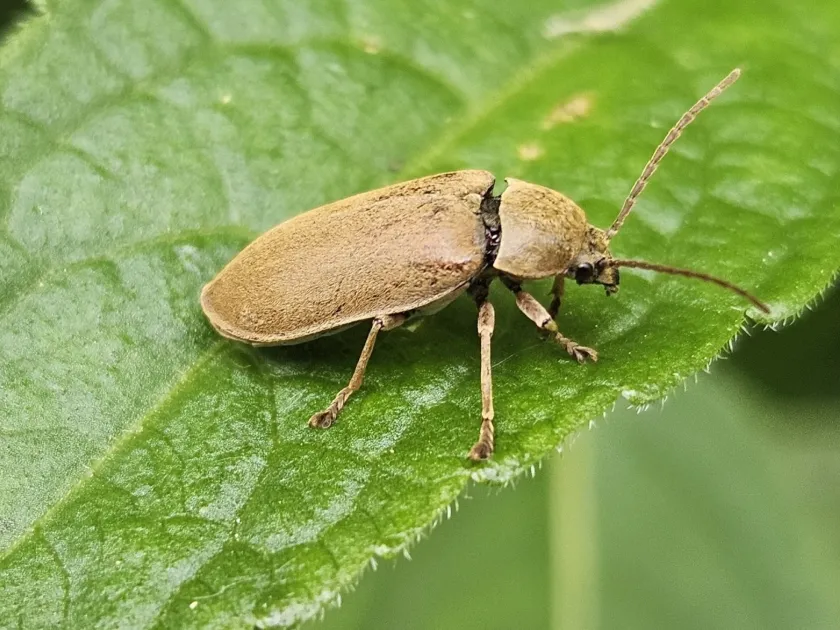
Dascillus cervinus is a beetle belonging to the Dascillidae family, characterized by a specific appearance. Adult specimens have an oval, slightly elongated body about 8–10 mm long, covered with dense hairs that give them a matte finish.
The coloration of the beetles varies from yellowish-brown to dark brown, which allows them to effectively camouflage against vegetation. The insect's head is small and closely pressed to the pronotum.
The larvae of Dascillus resemble wireworms or the larvae of scarab beetles. They have a cylindrical, well-segmented body of white or grayish-white color with a distinct chitinous head capsule.
The sensory organs of the larvae are poorly developed, which is typical for soil-dwelling organisms. They possess powerful chewing mouthparts adapted for grinding plant tissues within the soil.
The insect's development involves a complete metamorphosis: egg, larva, pupa, and adult. Adult beetles are diurnal and are often found on the flowers and stems of plants.
What it damages
The main damage to crops is caused by the larvae, which live in the soil and feed on the roots of various plants. Adult beetles feed on pollen and leaves, but their impact on yield is usually secondary.
Damaged crops primarily include grasses, cereals, and some legumes. The pest can also attack the root systems of young seedlings in forest nurseries.
Damage to the root system leads to impaired plant nutrition. As a result, the growth of the above-ground part is inhibited, leaves turn yellow, and in cases of mass infestation, entire plots of crops may perish.
Larvae pose the greatest danger in sodded areas, pastures, and fields that have not been deeply plowed for a long time. In such environments, the pest population can accumulate in significant numbers.
Economic damage is determined by the population density of larvae in the soil profile. Severe root damage makes plants vulnerable to secondary fungal infections.
When it appears
The flight of adult beetles is observed during the summer, most often in June and July. It is during this time that mating occurs, followed by egg-laying in the topsoil layer rich in organic matter.
Larvae are active throughout almost the entire growing season. Depending on soil temperature and humidity, they can migrate within the soil profile, moving deeper during drought conditions.
The species' life cycle can span several years, as larvae overwinter in the soil. This makes the pest difficult to target with standard preventive treatments.
The peak of larval activity occurs in the spring and early autumn, when soil conditions are most favorable for intensive feeding on the root system.
The emergence of larvae in the upper soil layer in spring coincides with the period of active root growth in grasses, which poses the greatest risk to young crops.
Signs of infestation
The first sign of the pest's presence is patchy wilting of plants despite sufficient soil moisture. If a damaged plant is unearthed, chewed roots can be observed.
The presence of beetles on plant flowers during the blooming period indicates an active population in the area. In cases of mass infestation, damage to leaf blades may also be noticed.
To confirm an infestation, experts recommend soil sampling. The presence of larvae in the root zone is a key marker for the necessity of control measures.
Indirect evidence includes the presence of weeds in fields, especially grasses, which serve as reservoirs for the reproduction of Dascillus.
A decline in the general condition of meadows and pastures is often accompanied by yellowing patches, which, in combination with soil analysis, indicates infestation by soil-borne pests.
Control measures
The main control measure is crop rotation. Avoiding prolonged periods of fields under perennial grasses significantly reduces the number of larvae in the soil.
Deep fall plowing helps reduce the population, as larvae are exposed to the surface, becoming prey for birds or dying from temperature fluctuations.
Implementing agronomic measures to eliminate weeds deprives the pest of its food source during the off-season, limiting its reproduction.
Chemical protection includes seed treatment with systemic insecticides, which ensures protection for young roots during the critical phase of plant development.
- Regular soil monitoring before sowing.
- Maintenance of optimal soil moisture levels.
- Use of high-quality seeds.
Taxonomy
- Latin name
- Dascillus cervinus
- Order
- Coleoptera (beetles)
- Family
- Dascillidae
- EPPO code
- DASLCE
Discussion
No discussions yet — be the first.