
Cyzicus tetracerus
Cyzicus tetracerus
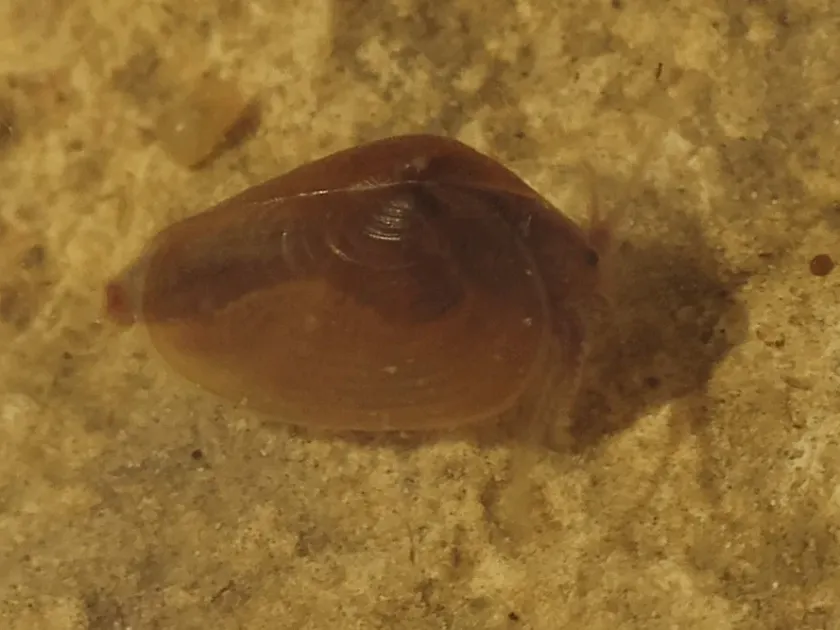
Description
How to identify
Cyzicus tetracerus belongs to the order Diplostraca and the family Cyzicidae. It is a small aquatic crustacean commonly found in temporary freshwater bodies and flooded rice paddies.
The body of the pest is enclosed in a bivalved carapace, which gives it the appearance of a small clam, hence the common name "clam shrimp" used for related species.
Adult individuals typically measure between 5 and 10 millimeters in length and possess various appendages adapted for moving through muddy substrates.
The biology of this species is characterized by the production of highly resistant eggs that can remain viable in dry soil for several years during periods of drought.
When fields are flooded, these cysts hatch rapidly, leading to a quick population surge that poses a significant threat to germinating agricultural crops like rice.
What it damages
Cyzicus tetracerus primarily attacks young rice plants. The pests damage the root system and the base of the stems while foraging for organic matter in the sediment.
High densities of these crustaceans lead to the uprooting of young rice seedlings, resulting in thin, uneven stands and significant yield reduction in early growth stages.
Beyond direct mechanical damage, the foraging activity of these organisms causes extreme turbidity in the water, blocking sunlight necessary for the development of seedlings.
The continuous churning of mud by the crustaceans creates silty layers that smother young rice plants, leading to their suffocation and eventual death.
In cases of heavy infestation, farmers may lose up to 50 percent of their crop during the initial weeks following the flooding of the fields.
When it appears
The active season begins in the spring, immediately after the flooding of the rice paddies, provided the temperatures are between 20 and 25 degrees Celsius.
The life cycle from hatching to the maturation of individuals capable of reproduction is extremely short, lasting roughly two weeks under favorable conditions.
This rapid development allows for multiple generations to occur during a single flooding cycle, exponentially increasing the population density within the fields.
Once the water is drained before harvest, the adult population dies, but they leave behind a vast number of cysts that remain dormant in the soil until the next season.
Therefore, the most critical period for intervention is the first ten days after the initial flooding of the fields, when the rice plants are most vulnerable.
Signs of infestation
One of the primary indicators of a Cyzicus tetracerus infestation is a sudden and distinct cloudiness or browning of the water in the rice paddies.
Farmers often notice uprooted rice seedlings floating on the surface of the water as a direct consequence of the crustaceans digging in the sediment.
- Increased turbidity of the water shortly after flooding.
- Visible patches of damaged or missing rice seedlings.
- Observation of small, shelled crustaceans moving in the water column or mud.
Detailed inspections of the soil surface often reveal small pits and disturbances caused by the active foraging behavior of the clam shrimp.
A general lack of vigor in young plants and slower growth rates compared to adjacent non-infested fields serve as secondary indicators of their presence.
Control measures
Effective management begins with proper field leveling and management to minimize unnecessary accumulation of loose silt before the planting process.
Agrotechnical practices, such as short-term draining of the paddies if the crop stage permits, are effective in interrupting the life cycle and reducing populations.
Chemical control involves the use of specialized insecticides or compounds safe for aquatic environments that target crustaceans without harming the rice crop.
Biological controls can include the introduction of natural predators, such as specific fish species that feed on these crustaceans within the flooded ecosystem.
Preventive measures include monitoring water sources to prevent the spread of cysts and ensuring that seedbeds remain clean and free from environmental contamination.
Taxonomy
- Latin name
- Cyzicus tetracerus
- Family
- Cyzicidae
- EPPO code
- CYZITE
Discussion
No discussions yet — be the first.