
Cyrtogenius
Cyrtogenius
Description
How to identify
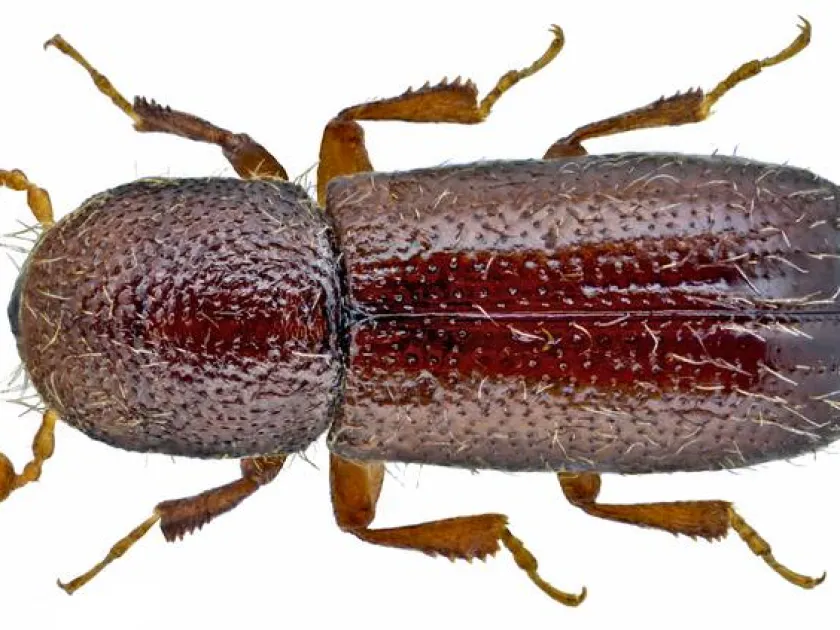
The genus Cyrtogenius belongs to the family Curculionidae, specifically the subfamily Scolytinae, commonly known as bark beetles. These insects are small, cylindrical beetles adapted for tunneling into wood.
Adult beetles are typically small, ranging from 2 to 4 millimeters in length, with dark brown or reddish-brown coloration. Their morphology is highly specialized, featuring hardened elytra designed for protection while excavating beneath bark.
Their life cycle includes egg, larva, pupa, and adult stages, with both larvae and adults frequently contributing to the structural damage of the host tree. Larvae are legless grubs that feed extensively on plant tissues.
Systematically, they are part of the order Coleoptera. Many species within this genus are known to be opportunistic colonizers, preferring trees that are already stressed by environmental factors or pathogens.
The reproductive strategy often involves the creation of nuptial chambers where mating occurs before the females construct egg galleries. This process ensures the survival of the next generation within the protected environment of the host wood.
What it damages
Cyrtogenius beetles primarily target weakened or dying trees, but high population outbreaks can lead to the successful colonization of healthy specimens. They disrupt the tree's vascular system by feeding on the phloem and cambium layers.
This feeding behavior causes the girdling of the tree, which restricts the transport of water and nutrients from the roots to the canopy. Consequently, the affected tree experiences dehydration, needle/leaf drop, and eventual death.
These insects are also known to carry fungal pathogens. As they tunnel through the wood, they introduce spores that germinate and cause sapstain or wood decay, further compromising the structural and economic integrity of the timber.
The economic impact is significant in forestry and wood processing industries. Timber infested by bark beetles is often downgraded in quality, making it unsuitable for high-end construction, furniture making, or export purposes.
- Disruption of tree nutrient transport.
- Introduction of secondary wood-decay fungi.
- Economic devaluation of harvested timber.
- Increased risk of forest mortality during drought years.
Signs of infestation
The presence of fine wood dust, often called "frass" or "boring dust," at the base of the tree or on bark crevices is a primary indicator. This material is expelled by the beetles as they drill into the wood.
Small, circular entrance holes on the surface of the bark are typical entry points. In resinous trees, these holes are often accompanied by pitch tubes, where the tree attempts to push the intruder out with resin.
Crown symptoms such as yellowing, browning, or thinning of the foliage indicate that the infestation is well-established. By the time visual symptoms appear in the canopy, the beetles have likely completed several generations inside the trunk.
Removing a section of the bark reveals the characteristic galleries. These tunnels have distinct patterns, often radiating from a central chamber, and are typically packed with frass and decaying wood fibers.
Increased woodpecker activity on a specific tree is often an early sign that the tree is infested with wood-boring insects, including Cyrtogenius species, as the birds actively hunt the larvae.
Control measures
Sanitation harvesting is the most effective management strategy. Removing and processing infested trees before the new generation of adult beetles emerges is crucial to curbing population growth within a forest stand.
Pheromone traps are widely used for monitoring and trapping purposes. These devices attract adult beetles during their peak flight periods, helping foresters determine the timing and intensity of infestation waves.
Chemical applications, specifically contact insecticides applied to the bark of high-value trees or logs, can provide temporary protection against beetle attacks. This is often practiced in urban forestry or sawmills.
Proper timber storage management is essential to minimize losses. Quick processing or debarking of harvested logs significantly reduces the attractiveness of the wood to Cyrtogenius and other bark beetle species.
Integrated Pest Management (IPM) programs emphasize biological control, including the protection of natural predators like clerid beetles and parasitic wasps that keep beetle populations in check under natural conditions.
Taxonomy
- Latin name
- Cyrtogenius
- Order
- Coleoptera (beetles)
- Family
- Curculionidae
- EPPO code
- CYRGSP
Discussion
No discussions yet — be the first.