
Cyrtobagous singularis
Cyrtobagous singularis
Description
How to identify
Cyrtobagous singularis belongs to the Curculionidae family (weevils), order Coleoptera. This species is a small beetle morphologically adapted to life on aquatic and semi-aquatic plants.
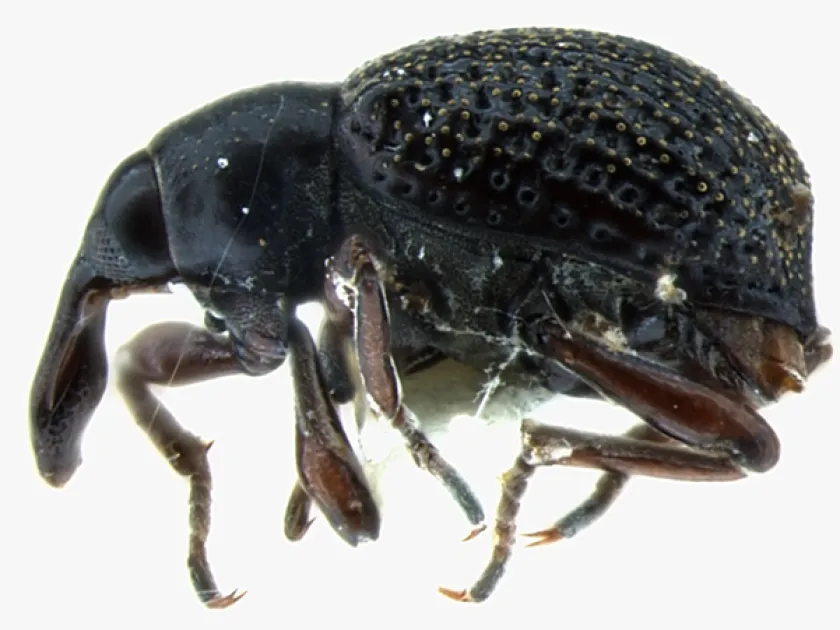
Adult beetles exhibit a dark coloration common to many members of the Erirhininae subfamily. The body is compact, featuring a distinct snout typical of weevils, allowing the insect to feed efficiently on plant tissues.
Larvae are whitish or cream-colored and develop hidden within the host plant's tissues. They are typically legless, a standard feature for weevil larvae developing inside stems or rhizomes.
The biology of this species is closely linked to the aquatic environment. Adults are capable of navigating the water surface and foliage, actively colonizing new areas of water bodies inhabited by suitable host plants.
The life cycle encompasses egg, larval (several instars), pupal, and adult stages. Metamorphosis occurs directly within the plant tissue, protecting the developing offspring from predators and temperature fluctuations.
What it damages
This species specializes in damaging specific aquatic and riparian plants. The primary damage occurs in agricultural settings where aquatic vegetation may obstruct irrigation systems and water flow.
Adult beetles damage the above-water parts of plants by boring holes in leaves and young shoots. This reduces the photosynthetic capacity of the plant and slows down the overall growth of the weed colony.
Larvae cause the most significant damage by feeding inside stems and rhizomes, disrupting the plant's vascular systems. This often leads to tissue decay and the eventual death of the affected plant segments.
Under heavy infestation, the pest can cause massive die-offs of plant populations. This specific trait is sometimes leveraged as a biological control strategy against invasive weed species in certain regions.
Economic damage is primarily associated with the clogging of irrigation canals and the degradation of water quality caused by the decomposition of plant matter damaged by the larvae.
Control measures
Biological regulation remains the primary control method. As this species is often utilized as a biological control agent for invasive plants, its deployment is subject to strict oversight by quarantine authorities.
Mechanical removal of infested vegetation helps to reduce the pest population density within a specific water body. Removed plants must be disposed of away from the infestation site.
Chemical control is rarely employed due to the potential ecological risks to aquatic ecosystems. Insecticide use is strictly limited to industrial canals disconnected from fishery water bodies.
Agronomic measures include water level management and the containment of weed populations, which effectively restricts the suitable habitat for the pest's reproduction.
Monitoring is conducted through visual inspections of foliage for characteristic feeding scars from adults and internal stem damage, which indicate active infestation.
Taxonomy
- Latin name
- Cyrtobagous singularis
- Order
- Coleoptera (beetles)
- Family
- Curculionidae
- EPPO code
- CYRBSI
Discussion
No discussions yet — be the first.