
Cyrtobagous salviniae
Cyrtobagous salviniae
Description
How to identify
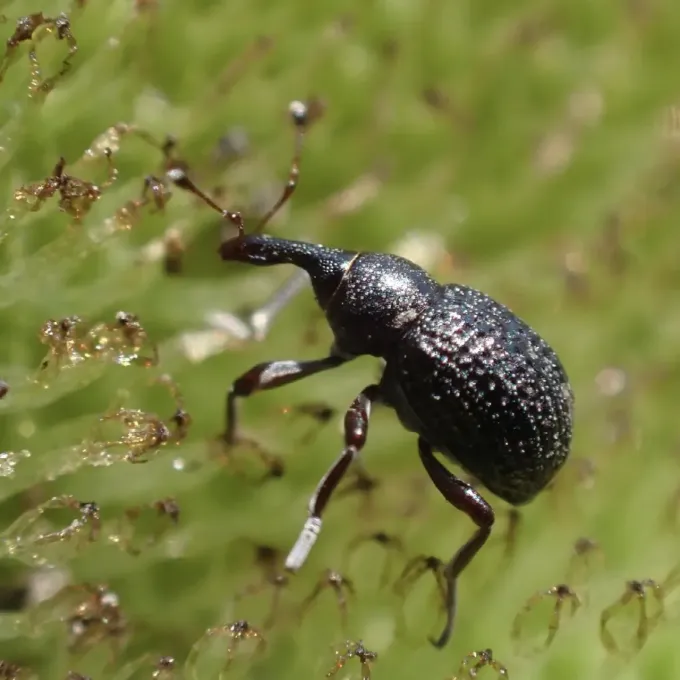
Cyrtobagous salviniae is a small weevil species within the Curculionidae family and the Coleoptera order. Adult beetles are characterized by their dark, almost black color and a compact body length of approximately 2 to 3 millimeters.
The larvae of this insect are cream-colored, legless, and have a curved body shape. They typically develop inside the plant tissues, making it difficult to detect them through simple visual surface inspection of the host plant.
This weevil is highly specialized, which allows it to locate and colonize specific host plants across expansive water bodies. Morphologically, it is well-adapted for survival both on the surface of floating plants and during brief periods underwater.
Females lay their eggs directly into the stems or leaf petioles of the Salvinia plant, ensuring that the emerging larvae have immediate access to nutrients, which is a critical aspect of their reproductive strategy.
Despite their diminutive size, the population of these insects can increase rapidly when food sources are abundant, transforming them into a highly effective tool for ecological management.
What it damages
The primary food source for this weevil is the invasive aquatic fern, Salvinia molesta. The beetle is a highly host-specific phytophagous insect, feeding exclusively on this plant species.
The larvae cause the most significant damage by burrowing into the inner tissues of stems and rhizomes. This activity interferes with the plant's metabolic processes and disrupts the internal nutrient transport system.
Adult beetles also inflict damage by creating small feeding holes in the leaves and growing points, which impairs the plant's ability to photosynthesize and reproduce vegetatively.
Mass infestation causes Salvinia colonies to lose their buoyancy, leading to the collapse and subsequent decay of the weed mats, effectively clearing the water surface.
From an agricultural perspective, the beetle is considered beneficial rather than harmful, as it does not pose a threat to crop species and serves as a natural regulator in aquatic systems.
When it appears
The life cycle of Cyrtobagous salviniae is strongly dependent on water temperature and ambient air conditions. Optimal breeding conditions typically occur within tropical and subtropical climates.
When water temperatures exceed 20 to 25 degrees Celsius, the development time for a single generation is significantly reduced, facilitating rapid population growth and outbreaks.
Winter seasons in temperate regions act as a limiting factor, as the weevil has a low tolerance for cold temperatures, which can severely restrict its survival during the colder months.
Under favorable conditions, the weevil can produce several continuous generations throughout the year, ensuring sustained pressure on the invasive weed population.
The peak period of damage occurs during the warmer summer months when Salvinia exhibits its most aggressive growth and occupies the largest surface areas of water bodies.
Signs of infestation
The first indicator of the weevil's presence is the discoloration of Salvinia leaves, which turn from green to brown and become increasingly brittle.
Significant yellowing is observed, followed by the gradual sinking of the fern mats, which is a clear sign that the internal structure of the plant has been compromised.
Close inspection of the plant material may reveal small entry holes on the petioles, created by adults during feeding or oviposition activities.
In areas of heavy infestation, there is a noticeable reduction in the density of the plant canopy, which eventually breaks apart into fragments and sinks to the bottom.
The lack of new growth or flowering in previously aggressive weed colonies is a strong indirect indicator of successful population establishment and activity.
Control measures
Unlike standard agricultural pests, Cyrtobagous salviniae does not require control measures; rather, it is intentionally introduced as a biological control agent.
Maintaining stable water temperatures is essential for the beetle's efficacy, as cold stress can severely inhibit its reproductive and feeding performance.
The application of insecticides in areas where this biological control is active is strictly discouraged, as it would destroy the beneficial beetle population.
Regular monitoring of the weevil-to-weed ratio is necessary to evaluate the progress of the infestation and the overall health of the biocontrol program.
Because the weevil population is strictly dependent on its host plant, the population naturally declines once the weed is brought under control, eliminating the risk of unintended ecological impacts.
Taxonomy
- Latin name
- Cyrtobagous salviniae
- Order
- Coleoptera (beetles)
- Family
- Curculionidae
- EPPO code
- CYRBSA
Discussion
No discussions yet — be the first.