
Cyrtobagous
Cyrtobagous
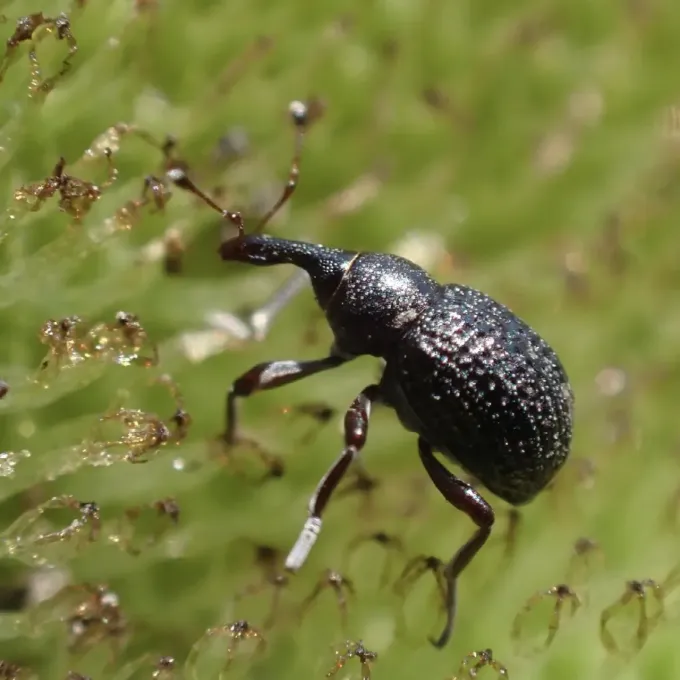
Description
How to identify
Cyrtobagous is a genus of weevils belonging to the family Curculionidae, widely recognized for its significant role in managing aquatic invasive plants.
Adult beetles are small, usually about 2 millimeters in length, and possess a dark-colored, hard exoskeleton that is well-adapted to semi-aquatic environments.
The morphology of these beetles includes a distinct snout typical of weevils, which they use to feed on plant tissues and lay eggs.
Taxonomically, the genus is complex, and specific identification of species, such as Cyrtobagous salviniae, often requires expert entomological examination.
They are highly specialized insects that spend their entire life cycle on or within the host plants floating on water surfaces.
What it damages
The damage caused by Cyrtobagous is highly targeted toward invasive weeds, primarily the giant salvinia, a floating fern.
Adult beetles feed on leaves and buds, causing minor mechanical injury that disrupts the photosynthetic capacity of the plant.
The most destructive impact comes from the larvae, which burrow into the stems and rhizomes, creating internal galleries that destroy the plant's vascular system.
This internal damage prevents the plant from transporting nutrients, leading to growth cessation and eventual sinking of the plant material.
This ecological interaction turns the weed into a degraded, non-reproductive state, allowing natural water currents and decomposition to clear the infested areas.
When it appears
The life cycle and activity of Cyrtobagous are strongly influenced by water temperature and the availability of healthy host plants.
In tropical and subtropical climates, the population can breed year-round, leading to multiple generations and rapid expansion.
Cooler temperatures tend to slow down their reproductive cycle and metabolic activity, which can limit their efficacy in temperate regions during winter.
Optimal development occurs during warm months when the water surface is covered in dense, nutritionally rich weed mats.
Population density typically tracks the abundance of the host weed, with surges in beetle numbers coinciding with weed peaks.
Signs of infestation
Signs of infestation begin with minute feeding punctures on the upper surface of the leaves, indicating the presence of adults.
A change in leaf color is an early indicator; the plants turn from a vibrant green to a dull brown or yellow as tissues die.
The structural integrity of the weed mat decreases, resulting in fragments breaking off and settling to the bottom of the water body.
As the larval population grows, the lack of new growth points on the stems becomes apparent, signaling that the plant is no longer expanding.
In advanced cases, the water surface clears significantly, with the weed mat showing large, decaying patches.
Control measures
Cyrtobagous is widely used as a biological control agent rather than a pest to be controlled by chemicals.
Effective management involves identifying infested water bodies and introducing an initial population of beetles to establish a colony.
Long-term success depends on the monitoring of population levels and ensuring that the environmental conditions support beetle survival.
The use of chemical pesticides in these water bodies is strictly discouraged as it negatively impacts the beetle population and local ecology.
Assessment protocols focus on measuring the reduction in weed biomass and the rate of recovery of the aquatic environment after the beetle introduction.
Taxonomy
- Latin name
- Cyrtobagous
- Order
- Coleoptera (beetles)
- Family
- Curculionidae
- EPPO code
- CYRBSP
Discussion
No discussions yet — be the first.