
Asiatic oak weevil
Cyrtepistomus castaneus
Description
How to identify
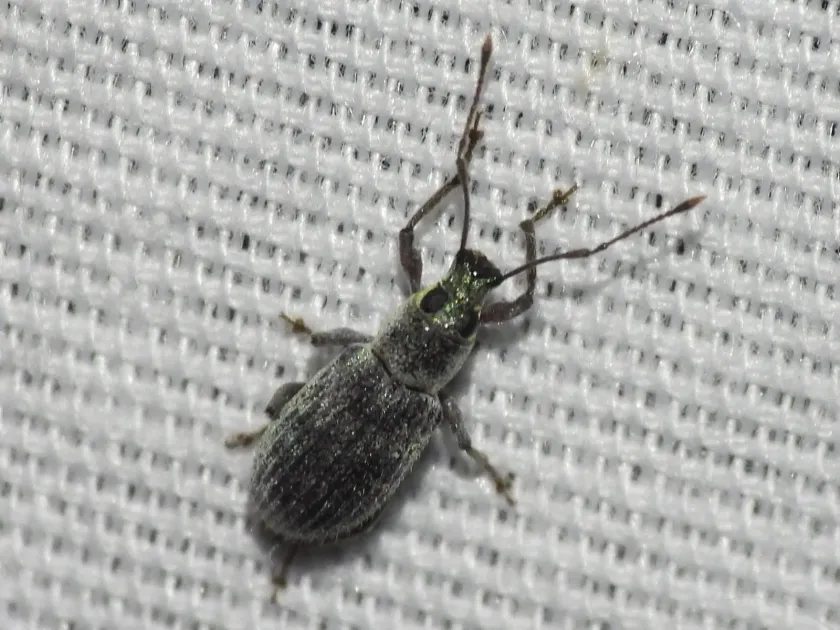
The Asiatic oak weevil (Cyrtepistomus castaneus) is a member of the Curculionidae family, recognizable by its brown, scaly body that measures approximately 6-8 mm in length.
These weevils possess a distinctively short, broad snout, which differentiates them from many other common weevil species found in agricultural settings.
The adults are nocturnal, spending their days hiding within the dense foliage of trees or shrubs, which often keeps them unnoticed until infestation becomes severe.
Larvae are C-shaped, legless, and whitish, developing underground where they feed on the roots of host plants, remaining hidden beneath the soil surface.
The life cycle typically spans one year, with adult emergence occurring during the summer months when they become most active in feeding on foliage.
What it damages
This species is a generalist feeder, attacking over 100 species of trees and shrubs, including oaks, maples, fruit trees like apples, and various ornamental plants.
While adults cause noticeable foliar damage, the larvae can be more destructive to nursery seedlings by feeding on root systems, weakening the plant significantly.
Heavy adult feeding leads to substantial defoliation, which reduces the tree's ability to perform photosynthesis and store nutrients for the upcoming season.
Repeated defoliation by the Asiatic oak weevil can stress trees, making them susceptible to secondary infestations by wood-boring insects or plant diseases.
In high-value ornamental landscapes, the damage causes significant aesthetic loss, often requiring intervention to preserve the health and appearance of the trees.
Signs of infestation
The most prominent sign of infestation is irregular, notched edges on leaves, created as the weevils feed on the leaf margins during the night.
A closer inspection at night using a flashlight will often reveal adults feeding on leaves or congregating near the tips of branches.
Small, dark fecal droppings left on the leaves beneath feeding sites serve as a diagnostic indicator of the weevil's current presence.
Stunted growth or wilting of young saplings, despite adequate watering, may indicate that root-feeding larvae have compromised the plant's stability.
Premature leaf drop is a common symptom in severely infested trees, reflecting the high level of physiological stress induced by the pest.
Control measures
Chemical control usually involves the application of registered insecticides to the foliage to target active adults before they can lay eggs in the soil.
Soil-applied insecticides are utilized to manage the larval stage, particularly in nursery settings where root damage poses a high risk to seedling survival.
Cultural management practices, such as tilling or cultivating the soil beneath host plants, can help disrupt the life cycle of the larvae and pupae.
Monitoring using light traps can provide valuable data on the timing of adult emergence, allowing for more precise application of management interventions.
Maintaining high plant vigor through proper irrigation and fertilization programs can help trees better tolerate the feeding damage caused by these insects.
Taxonomy
- Latin name
- Cyrtepistomus castaneus
- Order
- Coleoptera (beetles)
- Family
- Curculionidae
- EPPO code
- CYRPCA
Discussion
No discussions yet — be the first.