
Cyrtepistomus
Cyrtepistomus
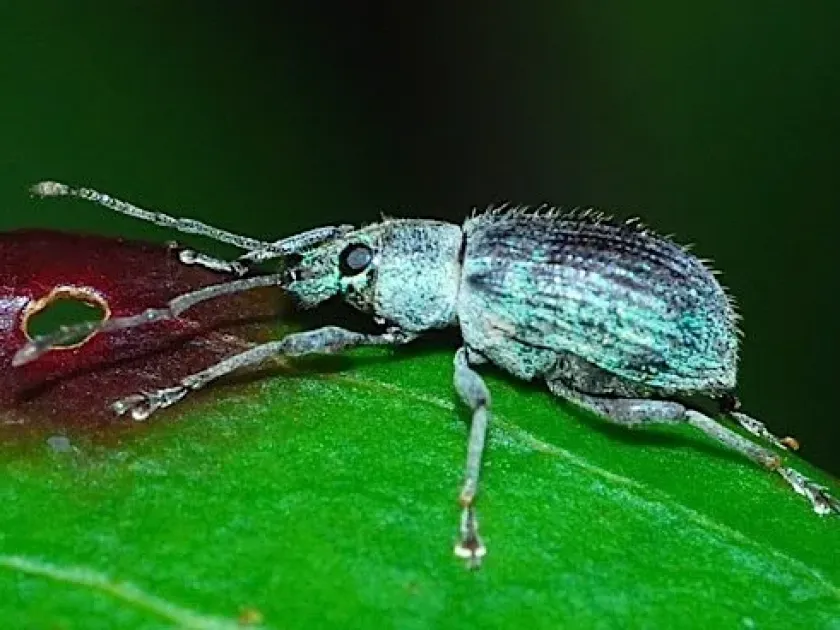
Description
How to identify
Cyrtepistomus, scientifically known as Cyrtepistomus castaneus, is a species of broad-nosed weevil that acts as a significant plant pest in various environments.
Adult beetles are relatively small, typically measuring between 5 and 7 millimeters in length. Their bodies are covered in dense, brownish scales, providing camouflage against bark and soil.
Belonging to the family Curculionidae, this insect possesses the characteristic snout of a weevil, although it is broader and shorter compared to other subfamilies.
The life cycle of Cyrtepistomus consists of a complete metamorphosis, involving the egg, larva, pupa, and adult stages. Each stage is adapted to specific environmental niches.
These beetles are known for their ability to remain inconspicuous during the day, often hiding under leaves or in soil crevices, which makes their early identification challenging.
What it damages
Cyrtepistomus is a polyphagous insect, meaning it feeds on a wide range of host plants, which makes it a persistent threat in both orchards and ornamental gardens.
Key plant species affected include various members of the Rosaceae family, such as apple, peach, plum, and rose bushes, as well as several species of forest trees.
The damage caused by adults is primarily cosmetic and physiological, as they chew irregular notches along the margins of the leaves, reducing the plant's photosynthetic capacity.
The larvae are subterranean dwellers that cause severe damage to the root system of host plants, consuming the finer rootlets necessary for nutrient and water uptake.
In cases of heavy infestation, the combination of leaf defoliation and root damage can severely stress the host plant, leading to stunted growth or even death in young saplings.
When it appears
Adult emergence typically occurs in the late spring, coinciding with the rise in temperatures and the onset of new vegetative growth on host plants.
The peak activity period for adult beetles usually spans from early June through mid-July, during which mating and subsequent egg-laying in the soil take place.
Larvae develop throughout the summer and autumn, spending their entire active phase in the soil, where they continue to feed on root systems before the onset of colder weather.
Overwintering occurs either as larvae deep in the soil or as adults in protected environments, allowing the population to survive harsh winter conditions successfully.
Understanding these seasonal windows is essential for timing preventative treatments to coincide with the most vulnerable phases of the pest's life cycle.
Signs of infestation
The most recognizable sign of an infestation is the presence of distinctive semi-circular or irregular notches along the edges of the plant leaves.
Wilting of foliage or a general lack of vigor in plants despite adequate irrigation often points to hidden root damage caused by larvae in the surrounding soil.
Shaking tree branches often reveals the presence of adult beetles, which tend to drop to the ground and feign death when they perceive a threat.
The observation of adult beetles feeding on the underside of foliage, particularly during the twilight hours, is a definitive indicator of an active population.
In nursery environments, stunted plant development and reduced foliage density are key indicators that warrant a thorough inspection for Cyrtepistomus presence.
Control measures
Management of Cyrtepistomus involves an integrated approach combining chemical, physical, and biological control methods to reduce population densities effectively.
Chemical control via foliar insecticide applications is most effective during the peak emergence period of adult beetles to prevent leaf damage and egg-laying.
Cultivation practices such as regular soil tilling around the base of trees and shrubs can physically disrupt the larval stages and reduce their survival rates.
Biological control using entomopathogenic nematodes or fungi applied to the soil can be highly effective in reducing the larval population without environmental disruption.
- Monitor leaf damage regularly.
- Keep the area free of excess debris and weeds.
- Use sticky barriers on tree trunks.
- Inspect new plant material for signs of infestation.
Taxonomy
- Latin name
- Cyrtepistomus
- Order
- Coleoptera (beetles)
- Family
- Curculionidae
- EPPO code
- CYRPSP
Discussion
No discussions yet — be the first.