
Cypridopsis vidua
Cypridopsis vidua
Description
How to identify
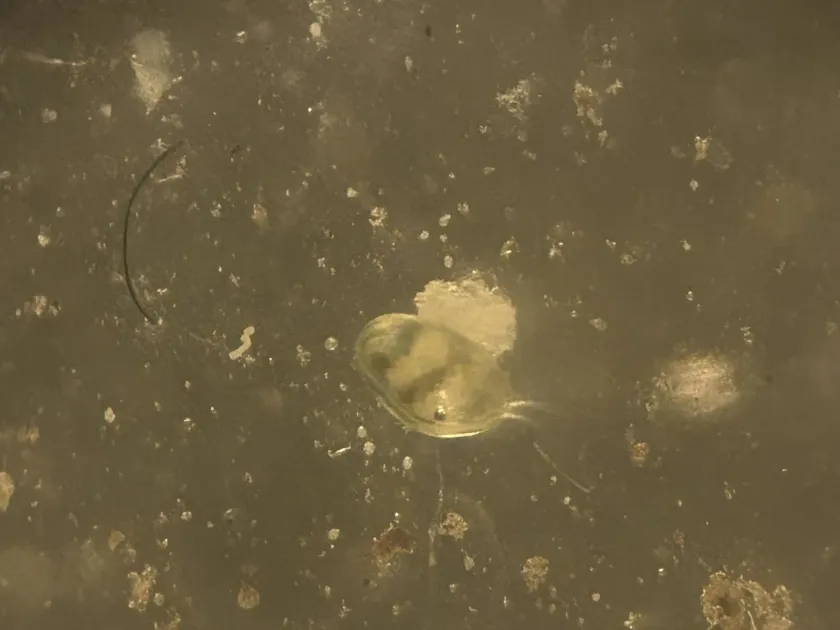
Cypridopsis vidua, commonly known as a type of seed shrimp or ostracod, is a microscopic crustacean encased in a hard, bivalve-like calcareous shell.
Measuring less than 1 mm in length, these creatures are characterized by a distinct mottled, spotted pattern on their shells, visible under low magnification.
They belong to the family Cyprididae within the order Podocopida and are found globally in various freshwater habitats, especially in standing water.
Equipped with specialized appendages, they are highly mobile, enabling them to navigate swiftly through the water column or along the substrate.
They reproduce primarily through parthenogenesis, allowing a single individual to rapidly populate an entire aquatic system or cultivation tank.
What it damages
While Cypridopsis vidua is not a standard pest of field crops, it poses a significant threat to hydroponics, aquaculture, and submerged crops like rice.
They cause damage by grazing on the tender tissues of young sprouts, roots, and plant surfaces, creating entry points for secondary bacterial infections.
High population densities can lead to the total destruction of young foliage, significantly impacting the growth and survival rates of aquatic plants.
In commercial systems, the presence of these ostracods often results in the clogging of filtration units, disrupting nutrient flow and water circulation.
Furthermore, their metabolic waste products can alter the chemical balance of the nutrient solution, causing stress and chlorosis in sensitive cultivars.
When it appears
The peak activity of Cypridopsis vidua is closely tied to water temperature, with optimal development occurring between 20°C and 25°C.
In greenhouse or indoor hydroponic environments, where temperatures remain stable, these ostracods can maintain continuous breeding cycles year-round.
Their life cycle duration is highly dependent on light levels and the availability of organic detritus, which serves as a primary food source.
Spring and early summer mark the period of most rapid population expansion, which often aligns with the initial planting phase of many water-based crops.
During colder months, they exhibit reduced activity levels but are highly resilient and capable of overwintering in bottom sediments until conditions improve.
Signs of infestation
A primary indicator of an infestation is the observation of tiny, cloud-like swarms moving erratically through the water or across leaf surfaces.
Visual identification often reveals a moving, mottled film on submerged plant stems, which is, in fact, a dense aggregation of the crustaceans.
Plants affected by these pests show ragged, eaten edges on leaves and microscopic pitting or damage to the delicate root systems.
Stunted plant growth and visible chlorosis are frequent indicators that the root system has been compromised by ostracod feeding activity.
- Presence of discarded molted shells on the water surface.
- Visible grazing damage on submerged plant stems.
- Increased turbidity and organic buildup in the water supply.
Control measures
Effective management begins with stringent hygiene protocols, including regular disinfection of tanks, equipment, and water delivery systems.
Implementing fine-mesh mechanical filtration can significantly reduce the number of adult ostracods circulating within closed systems.
Maintaining high water quality by regularly removing organic waste and detritus is essential to limit the food source available to the pests.
Biological control, such as introducing small predatory fish or specialized invertebrates, can be a highly effective way to manage population numbers.
Chemical intervention should be considered a last resort, using products specifically formulated to target crustaceans while ensuring safety for the aquatic crops.
Taxonomy
- Latin name
- Cypridopsis vidua
- Family
- Cypridopsidae
- EPPO code
- CYPRVI
Discussion
No discussions yet — be the first.