
Cypridopsis
Cypridopsis
Description
How to identify
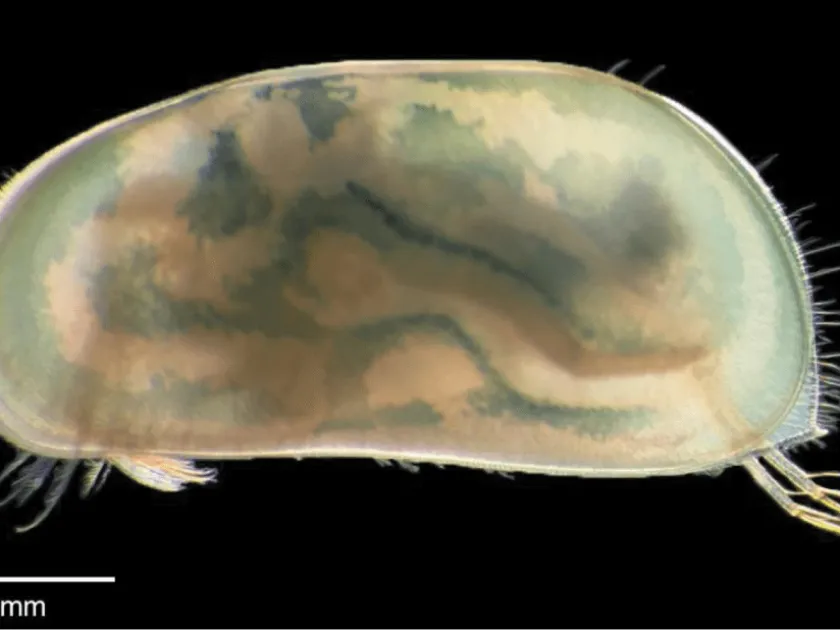
Cypridopsis is a genus of small crustaceans belonging to the class Ostracoda. These organisms are characterized by a bivalve chitinous shell that protects their soft body.
They measure roughly 0.5 to 1.0 mm in length and are adapted for life in freshwater environments, where they swim or crawl across underwater vegetation and substrates.
Systematically, they are members of the family Cyprididae. These ostracods are widely distributed in stagnant or slow-moving water bodies, including rice paddies and irrigation canals.
Their small size makes them difficult to spot with the naked eye, but they are easily identified in the water by their distinctive jerky, jumping swimming pattern.
Due to their ability to survive in various conditions, they can form dense populations that significantly impact the hydrobiological environment of agricultural fields.
What it damages
Cypridopsis primarily causes damage to rice crops during the early stages of plant development, specifically targeting young seedlings shortly after flooding.
By feeding on tender root tissues, these crustaceans stunt the growth of young rice plants, leading to uneven stands and reduced overall plant vigor.
High population densities can cause mechanical injury to roots, which hinders the absorption of vital nutrients and water, ultimately impacting the yield.
The damage is compounded by the fact that their presence creates an unfavorable environment in the rhizosphere, stressing the young rice plants further.
In severe cases of infestation, the combined stress of tissue damage and root interference can lead to localized crop loss within the affected paddy fields.
When it appears
The appearance and population explosion of Cypridopsis are strongly correlated with the temperature of the water in rice paddies and irrigation systems.
They become active and begin reproducing rapidly once the fields are flooded and the water temperature warms up during the spring and early summer months.
The life cycle is remarkably resilient; their eggs can survive in dried mud for extended periods, waiting for the return of favorable aquatic conditions.
The peak of their activity usually occurs in mid-summer, providing the ideal thermal conditions for rapid metabolic activity and mass reproduction.
As water temperatures drop in the autumn, the population density decreases, and the organisms enter a state of dormancy to survive the winter months.
Signs of infestation
A primary sign of infestation is a noticeable delay in the growth of rice seedlings compared to non-infested areas within the same field.
Microscopic examination of the roots of affected seedlings reveals small bite marks, tissue damage, or necrosis caused by the feeding activity of the crustaceans.
Increased turbidity of the water in the paddy field often indicates a large population of Cypridopsis disturbing the bottom sediment and organic debris.
Plants often exhibit pale or yellowed foliage, which is a symptom of nutrient deficiency resulting from the compromise of the plant's root system.
The presence of a thin, organic-looking film on the water surface near the soil can also indicate high levels of ostracod biological activity.
Control measures
The most effective management strategy involves tactical water drainage, which disrupts the life cycle of the ostracods by exposing their eggs to desiccation.
Chemical control can be implemented using selective molluscicides or insecticides approved for use in aquatic systems, though caution is required for environmental safety.
Maintaining a clean field environment by removing excessive organic matter and old crop residues can significantly reduce the potential overwintering sites for the pest.
Regular monitoring of water density and field conditions is essential to apply control measures before the population reaches an economic damage threshold.
- Implementing systematic water management and field drying periods.
- Using biological agents that prey upon aquatic crustaceans.
- Optimizing fertilizer application to support rapid rice development.
Taxonomy
- Latin name
- Cypridopsis
- Family
- Cypridopsidae
- EPPO code
- CYPRSP
Discussion
No discussions yet — be the first.