
Spotted knapweed root weevil
Cyphocleonus tigrinus
Description
How to identify
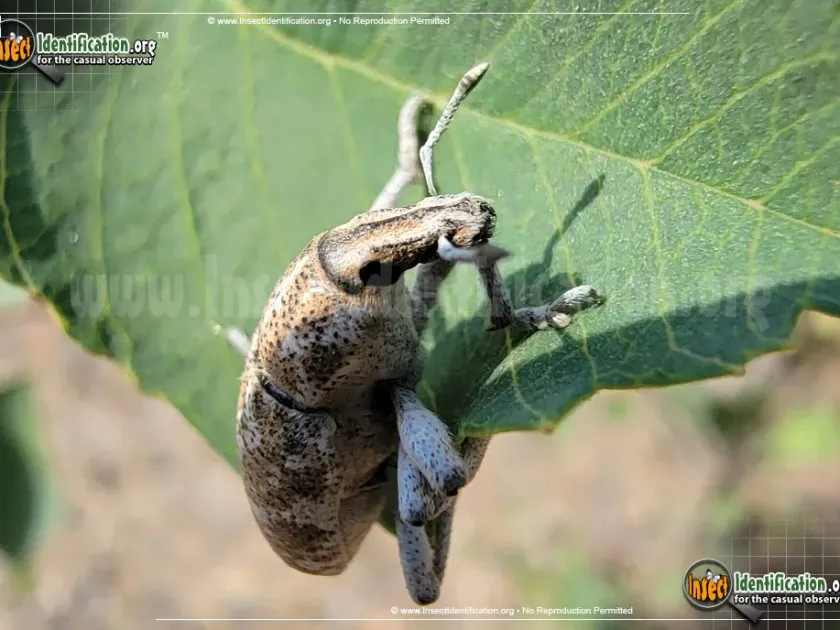
The spotted knapweed root weevil (Cyphocleonus tigrinus) is a member of the Curculionidae family. Adult weevils are recognized by their mottled, tiger-like pattern on the wing covers, which provides excellent camouflage.
The body of the weevil is robust and covered with dense, gray-brown scales. They possess a prominent snout, known as a rostrum, which is a key diagnostic feature of the species and is used for both feeding and oviposition.
Larvae are white, C-shaped, and lack legs, adapted specifically for living within the root systems of host plants. Their heads are usually darker and well-sclerotized to aid in boring through tough plant tissues.
Pupation occurs in specialized chambers inside the roots. This subterranean stage protects the developing insect from predators and environmental extremes, ensuring higher survival rates.
The species is primarily associated with certain thistle and knapweed species, making it a critical subject in studies regarding invasive plant control.
What it damages
The primary damage is caused by the larvae, which bore galleries into the taproots of their host plants. This feeding activity disrupts the transport of water and nutrients, severely weakening the plant.
While often considered beneficial for controlling invasive weeds, in high densities, the weevil can be problematic if it shifts its preference to related agricultural crops or desired plant species.
Root damage often results in stunting, reduced flowering, and increased mortality in host weeds, effectively serving as a natural biocontrol agent for land managers.
Adult weevils feed on foliage and stems, but this damage is usually superficial compared to the structural destruction caused by the subterranean larval stages.
Long-term infestation leads to the decline of weed patches, as the root galleries provide entry points for pathogens and prevent the plant from storing sufficient winter energy reserves.
When it appears
Adults emerge from the soil in the spring as temperatures rise, signaling the start of their active season. They are most frequently observed on warm, sunny days when they mate and feed.
Oviposition typically occurs in mid-to-late summer, with eggs laid near the root crown. Once hatched, larvae immediately burrow into the root system to begin their feeding cycle.
Larval development continues throughout the summer and into the early autumn, requiring healthy host plants to provide the necessary nutrition for completing their growth cycle.
The species overwinters primarily as larvae within the roots or as adults in the soil surface layer, depending on the stage reached before the onset of cold weather.
The life cycle is closely synchronized with the phenology of its host plants, ensuring that larval feeding peaks exactly when the host plant is most vulnerable to damage.
Signs of infestation
The presence of adult weevils on leaves and stems during the daylight hours is the most obvious sign of an active infestation in the area.
External signs on the host plant include wilting, yellowing of leaves, and a noticeable reduction in size or vigor during the peak of the growing season.
Careful excavation of the root system reveals the tell-tale boreholes and galleries. The presence of larval frass (excrement) within these tunnels is a definitive indicator of colonization.
Plants affected by larvae may show abnormal swelling or gall-like growths at the root crown, a physiological response to the tunneling damage.
A sudden decline in the density of weed flowering in an area is a strong indicator that the population of root-boring weevils has reached significant levels.
Control measures
Management focuses on integrated pest management (IPM), balancing the use of these insects for biological weed control with strategies to protect crops if infestation risks arise.
Cultural methods, such as deep tillage, can be used to disrupt the soil environment and destroy overwintering populations if the weevil becomes a nuisance in certain areas.
Chemical control should be applied judiciously, targeting the adults on foliage if they threaten neighboring crops, while avoiding harm to beneficial arthropods.
- Implement crop rotation to disrupt the host plant availability.
- Monitor field edges to detect early migration of weevils.
- Use pheromone-based trapping to assess population levels accurately.
- Encourage biological control programs for long-term invasive weed suppression.
- Maintain buffer zones between infested weed patches and sensitive agricultural crops.
Taxonomy
- Latin name
- Cyphocleonus tigrinus
- Order
- Coleoptera (beetles)
- Family
- Curculionidae
- EPPO code
- CYPHTI
Discussion
No discussions yet — be the first.