
Pine stem weevil
Cylindrocopturus longulus
Description
How to identify
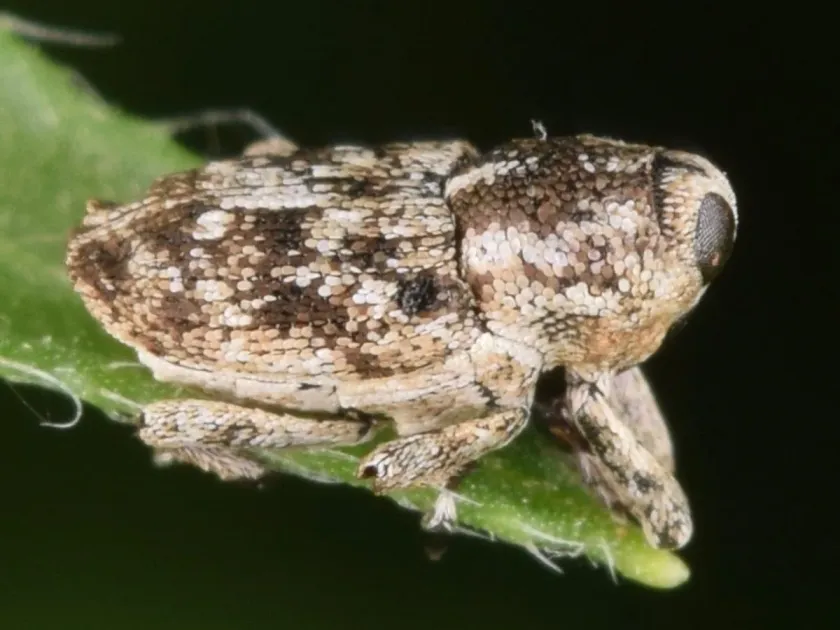
The pine stem weevil (Cylindrocopturus longulus) is a member of the Curculionidae family. Adult beetles are small, typically ranging from 3 to 5 mm in length, and feature a protective color pattern made of dense gray and brown scales that help them blend into the bark.
The larvae are typical of the weevil family, being legless, creamy-white in color, and possessing a yellowish head capsule. They spend their entire developmental cycle beneath the bark, tunneling through the cambium layer of coniferous trees.
The life cycle generally lasts one year. Pupation takes place within specially constructed cells that the larvae excavate in the sapwood or inner bark shortly before completing their development.
Adults are active primarily during daylight hours and are capable of flight, which allows them to effectively colonize new stands of young conifers, plantations, and nurseries across a wide geographical area.
Due to their secretive lifestyle and effective camouflage, identifying this pest is often difficult. Professional inspection usually involves peeling back the bark of suspect trees to locate larval galleries or the insects themselves.
What it damages
The primary damage is caused by the larvae, which feed on the cambium of young pines and other conifers. This activity disrupts the tree's vascular system, hindering the transport of essential nutrients and water from roots to needles.
Adult beetles also contribute to damage by feeding on young shoots and needles. While this surface feeding is usually less lethal than the internal damage caused by larvae, it significantly weakens the plant's defense mechanisms.
Young trees, particularly those in the 3 to 10-year age range in nurseries or young forest plantations, are the most susceptible to attack. Severe infestation can lead to stunted growth or tree death.
Once trees are weakened by the weevil, they become prone to secondary infestation by other wood-boring insects and pathogenic fungi, which can exacerbate the overall damage to the plantation.
In cases of ring-barking caused by extensive larval activity, the flow of nutrients is completely cut off, leading to rapid yellowing and death of the entire tree within a single growing season.
Signs of infestation
The most visible sign of infestation is the presence of small exit holes in the bark where adult beetles have emerged. Fine wood dust, or "frass," can often be found near these holes at the base of the tree.
Infested trees typically exhibit premature yellowing and shedding of needles. This is a clear indicator that the tree's internal circulation system is failing due to the larval tunnels under the bark.
Inspecting the bark surface may reveal characteristic swellings or loose, dead patches of bark that easily flake off, signaling active larval feeding galleries underneath.
In dry conditions, you may see resin bleeding from the stem, though infested trees often lack the vigor to produce enough resin to successfully seal the wounds, leading to rapid desiccation of the affected areas.
Confirmed presence is established by finding larvae or pupae beneath the bark or capturing adult beetles during their spring flight period using standard entomological monitoring techniques.
Control measures
Forest hygiene is the most effective long-term control strategy. This involves the systematic removal and destruction of infested trees to prevent the adult population from spreading to healthy parts of the stand.
Pheromone-baited traps or insecticidal traps can be deployed during the peak flight season to monitor the population and significantly reduce the number of adult weevils in the area.
Chemical control is generally reserved for nursery settings or high-value young plantations. Systemic insecticides can be applied during periods of adult activity to kill beetles as they feed on shoots.
Biological control methods focus on fostering natural predators such as birds and beneficial insects, which act as natural regulators to keep the weevil population below economic injury levels.
- Maintain good plantation health through proper site selection.
- Avoid leaving logging slash that can harbor breeding populations.
- Use certified, healthy planting stock to improve tree resistance.
Taxonomy
- Latin name
- Cylindrocopturus longulus
- Order
- Coleoptera (beetles)
- Family
- Curculionidae
- EPPO code
- CYLPLO
Discussion
No discussions yet — be the first.