
Eaton's weevil
Cylindrocopturus eatoni
Description
How to identify
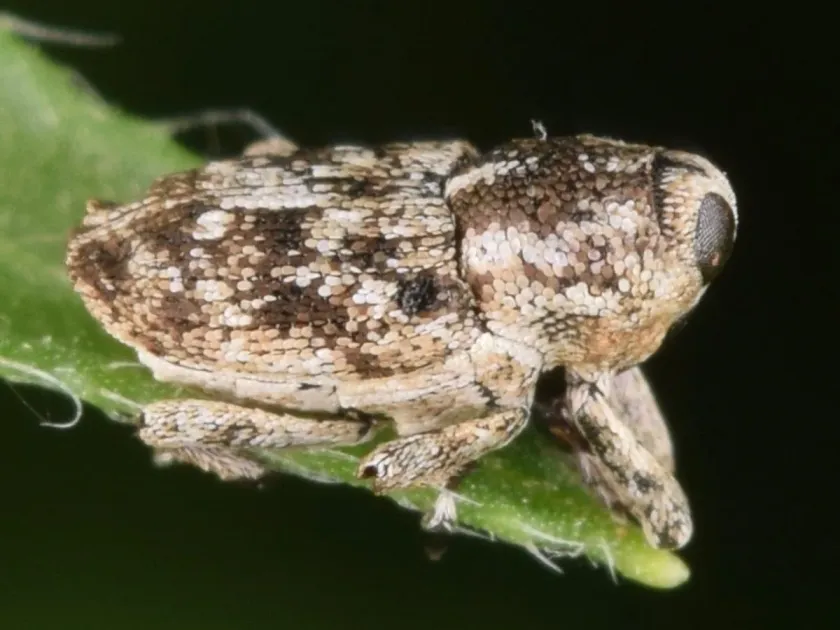
Eaton's weevil (Cylindrocopturus eatoni) is a small beetle belonging to the Curculionidae family. It is recognized as a significant pest within the order Coleoptera, specifically targeting coniferous tree species.
The adult beetle possesses an elongated rostrum typical of the Conotrachelinae subfamily. This feature is vital for the weevil to feed on the inner bark of its host trees, which is its primary nutritional source.
The larvae are small, white, legless grubs with a prominent, hardened head capsule. They are almost exclusively found hidden deep within the bark tissues, making their presence difficult to detect from the outside.
Pupation takes place in specialized chambers excavated by the larvae beneath the bark. This protected environment ensures the survival of the pupae until the transition to the adult form is complete.
Identification often relies on observing the specific host tree symptoms rather than spotting the insects themselves, due to their cryptic lifestyle and effective natural camouflage.
What it damages
Eaton's weevil primarily infests conifers, with a particular affinity for young pine trees (Pinus). These infestations are frequently observed in forest plantations and tree nurseries.
Adults feed on the thin bark of tender twigs. This feeding activity disrupts the vascular system, leading to the wilting and eventual dieback of the damaged tree branches.
Larval feeding beneath the bark surface in the phloem and cambium layers effectively girdles the tree. This process restricts the flow of water and nutrients, leading to poor growth or mortality in younger specimens.
Heavy infestations can cause widespread needle discoloration and limb death, significantly reducing the vigor and commercial value of the affected pine stands.
Trees stressed by the weevil's activity become secondary targets for other opportunistic pests and pathogens, accelerating the decline and total loss of young forests.
When it appears
The life cycle of Cylindrocopturus eatoni is closely regulated by seasonal temperatures. Adult activity typically commences in the early spring as temperatures rise.
Egg-laying begins in late spring and continues into early summer. Females deposit eggs into small niches chewed into the bark of developing branches.
Larval development is most intense during the summer months when sap flow is high. This is the period when the most significant physiological damage to the host trees occurs.
Pupation generally concludes by early autumn. The newly emerged adults may either emerge to feed or prepare for overwintering, depending on the climatic conditions of the area.
Overwintering occurs in the adult stage. Weevils seek refuge under thick bark, within forest litter, or in tree crevices, where they remain dormant until the following spring.
Signs of infestation
The most early diagnostic sign of Eaton's weevil is the presence of small, puncture-like holes on the bark surface caused by adult feeding.
Visually, the presence of the pest is signaled by the yellowing and browning of needles on specific branches, which eventually leads to localized limb dieback.
Resinosis (excessive sap bleeding) at the injury sites is a common defensive response by the tree, often observed as hardened sap droplets on the bark.
Characteristic exit holes appear once the adult beetles emerge from the bark. These holes are clear indicators that the infestation has reached its full reproductive cycle.
The presence of meandering larval tunnels, or galleries, packed with "frass" (a mixture of excrement and wood shavings) under the bark confirms a severe infestation.
Control measures
The primary control strategy involves sound silvicultural practices, including the timely removal and destruction of heavily infested trees to reduce the population density.
Systemic insecticides are the most effective chemical control method, as they are absorbed by the tree and target the larvae feeding beneath the bark surface.
Biological control options, such as the application of entomopathogenic fungi or beneficial nematodes, can offer a sustainable alternative for managing populations in sensitive areas.
Regular monitoring using traps can assist forest managers in detecting early flight activity, allowing for timely application of protective measures before mass infestation occurs.
Promoting tree health through adequate spacing and fertilization helps trees better withstand pest pressure, reducing the overall impact of Cylindrocopturus eatoni.
Taxonomy
- Latin name
- Cylindrocopturus eatoni
- Order
- Coleoptera (beetles)
- Family
- Curculionidae
- EPPO code
- CYLPEA
Discussion
No discussions yet — be the first.