
Sunflower stem weevil
Cylindrocopturus adspersus
Description
How to identify
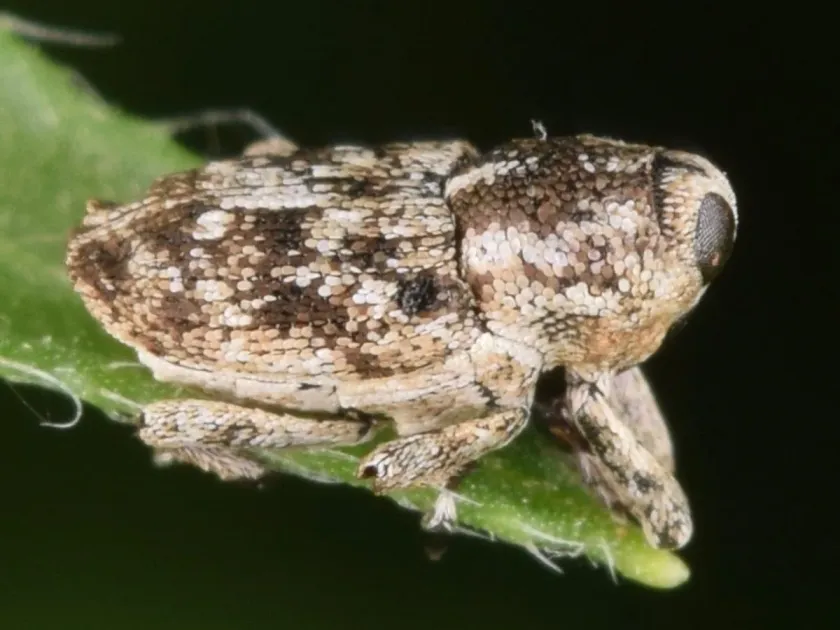
The sunflower stem weevil Cylindrocopturus adspersus is a member of the Curculionidae family. The adult beetle is small, about 4–5 mm long, with a greyish-brown body mottled with dark spots, which allows it to blend perfectly into the stems of the sunflower plants.
The larvae are white or cream-colored, legless, and have a distinct brown head. Measuring approximately 6–7 mm in length, they are curved in shape and spend their entire developmental cycle inside the plant, making them difficult to detect without careful inspection.
What it damages
The primary host for this pest is the cultivated sunflower Helianthus annuus. It can also infest various wild Asteraceae species, which serve as alternative hosts during the growing season.
Adults cause minor leaf feeding, but the larvae are the main culprits. They tunnel through the pith of the stem, consuming the tissue, which severely limits the plant's ability to transport nutrients and moisture, resulting in stunted growth and yield loss.
When it appears
This species completes one generation per year. Adult weevils overwinter in the soil or in crop debris, emerging in the spring when temperatures rise to initiate feeding and mating activities.
Egg-laying typically occurs during the budding stage of the sunflower. Females deposit eggs into small punctures made in the lower part of the stem, and larvae hatch within a week to begin their internal feeding cycle.
Signs of infestation
Evidence of infestation includes small puncture marks at the base of the stem, often surrounded by brownish larval frass. As larvae feed, they create elaborate tunnels inside the stem, weakening the plant structure significantly.
A major symptom is premature lodging of the sunflowers, particularly in windy conditions, due to the compromised integrity of the stem. Heavily infested plants may also show signs of premature wilting and reduced seed set.
Control measures
Managing the sunflower stem weevil requires a combination of cultural practices and chemical control. The most effective cultural method is to bury crop residues deep in the soil immediately after harvest to disrupt the wintering cycle of the larvae.
Crop rotation and the management of wild Asteraceae weeds around the field margins are essential to reduce local pest pressure. Chemical control is most effective when applied just as adults begin to appear in the field.
- Applying systemic insecticides during the budding stage.
- Incorporating crop debris deeply via tillage.
- Scouting field edges regularly for adult beetle activity.
- Ensuring proper crop rotation intervals.
- Maintaining field sanitation to minimize alternative hosts.
Taxonomy
- Latin name
- Cylindrocopturus adspersus
- Order
- Coleoptera (beetles)
- Family
- Curculionidae
- EPPO code
- CYLPAD
Discussion
No discussions yet — be the first.