
Cylindrocopturus
Cylindrocopturus
Description
How to identify
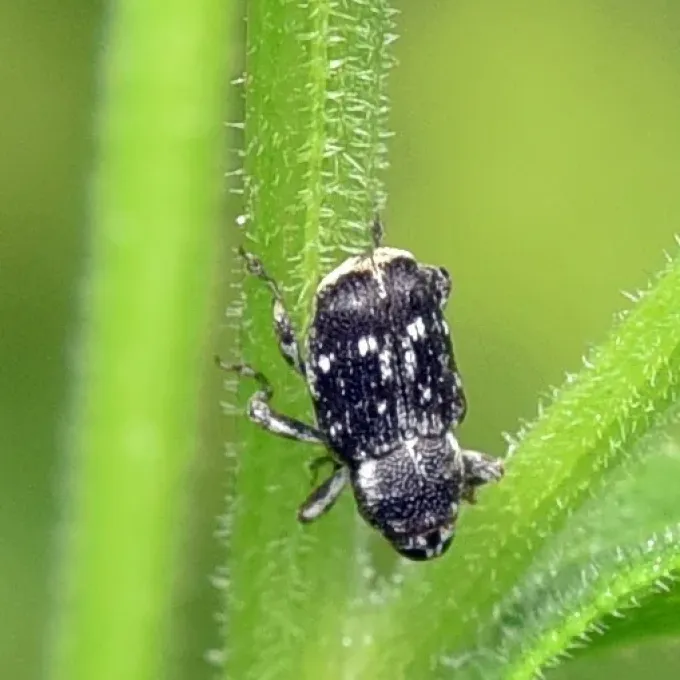
Cylindrocopturus is a genus of weevils (family Curculionidae) known for their ability to thrive in various plant tissues. These beetles are relatively small, often matching their surroundings through camouflage.
Adult beetles possess the characteristic snout of the weevil family. Their bodies are covered in scales, which provide effective protection and mimic the texture of plant bark or dry stems.
The larvae are legless, white, or cream-colored, with a robust head capsule designed for boring through plant stems. They complete their larval stage deep within the host plant.
Identifying these insects accurately in the field can be challenging due to their small size and the secretive nature of their behavior during the larval stage.
Species in this genus are found across diverse environments, often showing a preference for specific botanical families, including Chenopodiaceae and Asteraceae.
What it damages
Cylindrocopturus species are significant pests for sugar beets, sunflowers, and several other industrial crops. Their impact can lead to substantial agricultural loss.
Adult beetles feed on the cotyledons and stems of seedlings, which can cause severe crop stand reduction during the critical early growth stage of the season.
The most destructive phase is the larval development within the plant. Larvae burrow into the root system and the base of the stem, effectively disrupting nutrient uptake.
Infested plants exhibit severe physiological stress, stunted growth, and susceptibility to wilting, especially during hot and dry weather conditions.
Feeding galleries created by the larvae also introduce secondary pathogens, such as fungi, which accelerate the decay of the plant root system and cause premature plant death.
When it appears
The overwintering strategy of the adult beetle involves hiding in the soil or under surface debris, remaining inactive until the environmental conditions improve in the spring.
Activity begins with the onset of warmer temperatures. Adults emerge and initiate feeding on available hosts, starting their reproductive cycle almost immediately.
The egg-laying period spans several weeks, with females depositing eggs into protected plant tissue, typically near the soil level or on the lower stem sections.
Larvae emerge and immediately begin to bore into the plant. They remain protected within the plant structure throughout their development cycle, away from predators.
By late summer, the new generation of adults completes development. They continue to feed moderately before seeking out suitable sites in the soil for overwintering.
Signs of infestation
The earliest signs of infestation are often small, circular entry holes at the base of the stem, accompanied by minor surface scarring from adult feeding activity.
In the field, infested plants can be detected by their sickly appearance. Leaves may droop or lose turgor during the warmest parts of the day, signaling water stress.
A closer inspection of the plant's root neck often reveals internal tunnels filled with larval frass. This material blocks the vascular tissue and disrupts photosynthesis.
If the root system is examined in severely affected plants, it often appears decayed or hollowed out, which is a definitive sign of severe larval infestation.
- Wilting during the middle of the day.
- Reduced vigor compared to healthy neighboring plants.
- Internal galleries found inside the root crown.
Control measures
Cultural control measures, such as deep autumn tillage, are highly effective as they expose overwintering beetles to adverse weather conditions and natural predators.
Crop rotation is essential for managing Cylindrocopturus. Avoiding the planting of susceptible hosts on the same field for consecutive years breaks the pest's life cycle.
Seed treatments with systemic insecticides are recommended to protect the crop during the germination phase, providing a shield against early adult feeding damage.
If population thresholds are exceeded during the growing season, professional application of systemic insecticides can help manage the infestation before significant damage occurs.
Maintaining clean field borders by controlling weeds helps reduce alternative host sites, limiting the potential for pest population buildup during the off-season.
Taxonomy
- Latin name
- Cylindrocopturus
- Order
- Coleoptera (beetles)
- Family
- Curculionidae
- EPPO code
- CYLPSP
Discussion
No discussions yet — be the first.