
Pine seed moth
Cydia toreuta
Description
How to identify
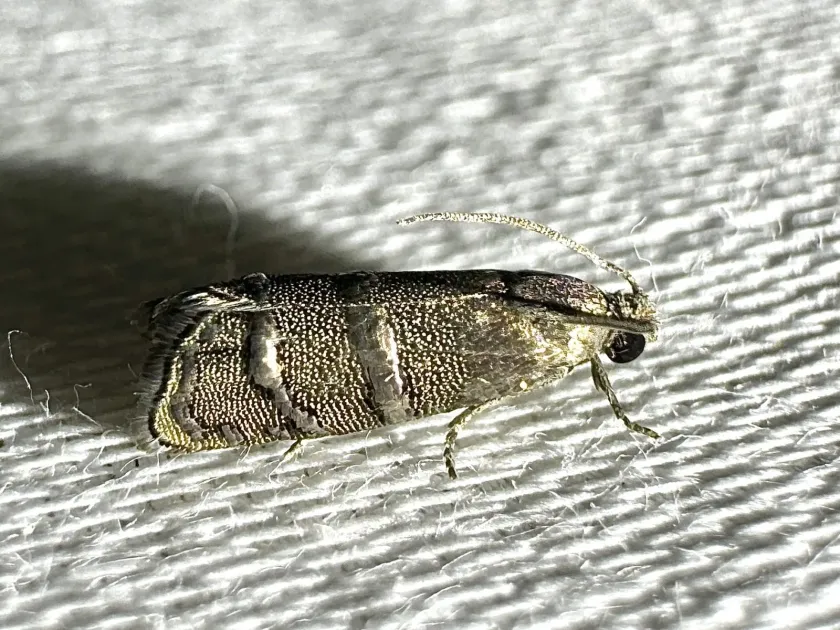
The Pine seed moth (Cydia toreuta) is a small moth belonging to the family Tortricidae. Adults typically have a wingspan of 12 to 16 mm, with grayish-brown forewings featuring intricate, darker patterns that provide excellent camouflage on pine bark.
Larvae pass through several instars, initially appearing pale yellow and eventually turning a distinctive reddish or pinkish color. The larval head capsule is dark brown, which is a key identification feature when inspecting the interior of damaged cones.
Pupation occurs within the interior of the infested cones. The pupae are brown and elongated, typically found within chambers excavated by the larvae in the cone axis or near the base of the scales.
As a specialist of pine reproductive organs, this moth is a significant factor in seed ecology. Its life history is strictly synchronized with the phenology of pine flowering and cone development.
Due to the cryptic nature of their larvae and the nocturnal habits of adults, detection is best achieved through systematic monitoring using pheromone-baited traps during the adult flight period.
What it damages
The primary host for this pest is the Scots pine (Pinus sylvestris). The larvae cause damage by feeding internally on the developing seeds and the cone axis, which prevents the seeds from maturing properly.
Feeding activity often results in the premature drying and dropping of cones. When infested cones remain on the tree, they often fail to open correctly, causing a significant loss of viable seeds.
Heavy infestations can lead to the loss of a vast majority of the annual seed crop, posing a major threat to seed orchards and natural forest regeneration efforts.
In addition to direct seed loss, larval boring weakens the structure of the cone, making it susceptible to secondary pathogens and further decay, which can render even undamaged seeds unviable.
The presence of larvae is usually marked by accumulated frass mixed with resin, which is forced out of the entrance holes, creating visible lumps on the cone surface.
When it appears
Cydia toreuta follows a univoltine life cycle, meaning it completes one generation per year. Adult emergence typically occurs in the spring, coinciding with the receptive period of pine conelets.
Females deposit eggs on the surface of young, developing cones. Upon hatching, the larvae quickly bore into the cone, gaining protection from environmental factors and predators within the cone tissues.
Throughout the summer, the larvae move within the cone, systematically consuming seeds and boring through the axis. This feeding stage is the most destructive phase of their life cycle.
The insects overwinter as mature larvae inside the cones. They remain in this dormant state until the following spring, when they undergo pupation just before the emergence of the next generation of adults.
Environmental conditions, particularly spring temperatures, play a crucial role in determining the timing of adult emergence and the subsequent success of larval colonization.
Signs of infestation
The earliest signs of infestation are small, circular entry holes on the surface of young cones, often accompanied by small droplets or streaks of resin.
Infested cones often exhibit premature browning or yellowing compared to healthy ones. They may also appear stunted or deformed, reflecting the internal damage caused by larval feeding.
Upon cutting open a suspect cone, one will find internal galleries filled with fine, powdery frass and destroyed seed remains, indicating active or past larval presence.
- Resin beads on the surface of developing cones.
- Accumulation of light brown frass around entry holes.
- Premature cone drop during mid-summer.
- Malformed or underdeveloped cones with internal tunneling.
Regular sampling and dissection of cones during the growing season is the most accurate method to assess the infestation level within a specific forest stand.
Control measures
Integrated Pest Management (IPM) for this species focuses on reducing the population density through silvicultural and chemical methods.
The most practical control measure is the collection and destruction of infested cones before the insects emerge, which helps reduce the localized population pressure for the next season.
In high-value seed orchards, chemical control using systemic insecticides can be applied; however, timing is critical, targeting the window between adult flight and larval entry into the cones.
Monitoring using pheromone traps provides essential data to guide the timing of management interventions, ensuring that applications are effective and environmentally responsible.
Research into biological controls, such as the use of specific parasitoids or microbial pathogens, offers a sustainable alternative to chemical insecticides for long-term population suppression.
Taxonomy
- Latin name
- Cydia toreuta
- Order
- Lepidoptera (butterflies)
- Family
- Tortricidae
- EPPO code
- LASPTO
Discussion
No discussions yet — be the first.