
Hemp moth
Cydia sinana
Description
How to identify
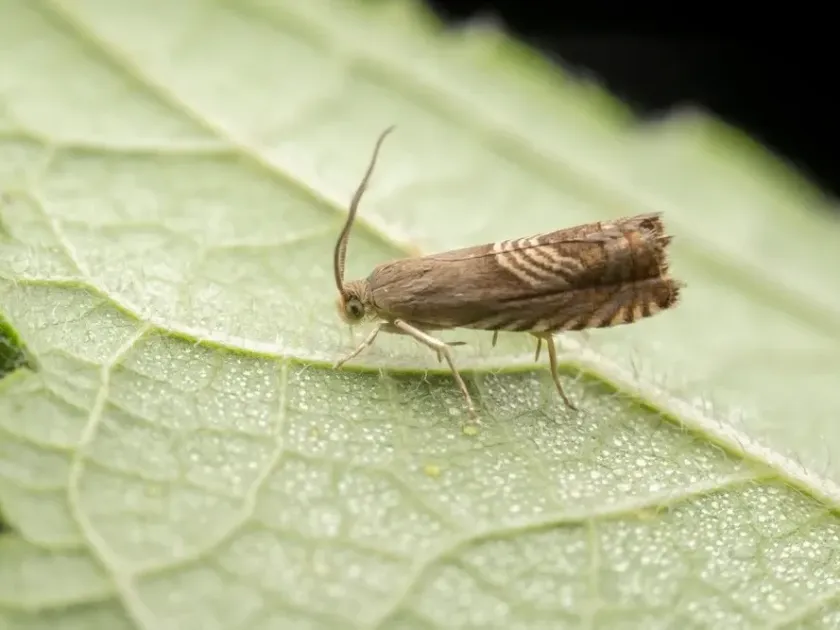
The hemp moth (Cydia sinana) is a small moth belonging to the Tortricidae family. The wingspan of the adult typically ranges between 12 and 16 mm, with greyish-brown forewings that feature intricate patterns for camouflage.
The larvae, or caterpillars, evolve through several instars. They are characterized by a cylindrical body that transitions from pale yellow to a distinctive pink hue, equipped with a brown head capsule.
The lifecycle begins when females deposit eggs on the flower buds, bracts, or terminal leaves of the hemp plant. These eggs are small and circular, blending into the plant tissues.
Pupation occurs within a silken cocoon constructed by the mature larvae. These cocoons can often be found hidden in plant debris or just below the soil surface during the overwintering phase.
As a member of the Order Lepidoptera, Cydia sinana has a specialized relationship with its host plant, Cannabis sativa, which provides the necessary nutrients for the development of its larvae.
What it damages
The primary host for this pest is Cannabis sativa. The damage is primarily inflicted by the larvae, which target the reproductive structures of the plant during the flowering and seed-set stages.
By boring into the flower buds and seed heads, the larvae consume vital tissues, thereby reducing both the yield and the viability of the seeds produced by the plant.
In addition to feeding on seeds, larvae frequently tunnel into the stems or floral stalks. This disruption of vascular transport can cause wilting, stunted growth, and death of the upper plant parts.
The feeding sites create entry points for secondary pathogens, such as fungi or bacteria, which can lead to bud rot and further diminish the quality of the harvested product.
High infestation rates can lead to substantial economic losses, especially in crops grown for seed production, where the integrity of the floral organs is of primary importance.
Signs of infestation
One of the earliest signs of infestation is the presence of fine webbing covering the flower heads, as larvae use silk to bind plant parts together for protection.
The accumulation of frass (larval excrement) on the surface of the flowers or at the base of leaves is a clear indicator that larvae are actively feeding within the plant tissue.
Discolored, yellowing, or prematurely drying terminal buds that stand out from the surrounding green foliage often signal the presence of internal larval activity.
Upon closer inspection or dissection of the floral clusters, one can find the larvae themselves or the characteristic tunnels they have created while feeding.
An increased presence of adult moths during the evening, observable via light traps or visual inspection, confirms the active flight period and impending risk of egg deposition.
Control measures
Cultural control methods, such as thorough post-harvest tillage, are essential to disrupt the overwintering cycle of the moth by burying the pupae located in the soil.
Effective crop rotation practices help break the life cycle of the pest, preventing it from establishing a persistent population in the same field year after year.
Chemical control involving selective insecticides should be applied at the peak of egg-hatching to ensure maximum efficacy while minimizing the impact on non-target species.
Biological control strategies, including the release of egg parasitoids like Trichogramma species, provide a sustainable alternative for managing populations in both organic and conventional fields.
Monitoring using pheromone traps is highly recommended to pinpoint the exact timing of adult emergence, which allows for the precise and efficient application of control measures.
Taxonomy
- Latin name
- Cydia sinana
- Order
- Lepidoptera (butterflies)
- Family
- Tortricidae
- EPPO code
- CYDISI
Discussion
No discussions yet — be the first.