
Fir shoot moth
Cydia molybdana
Description
How to identify
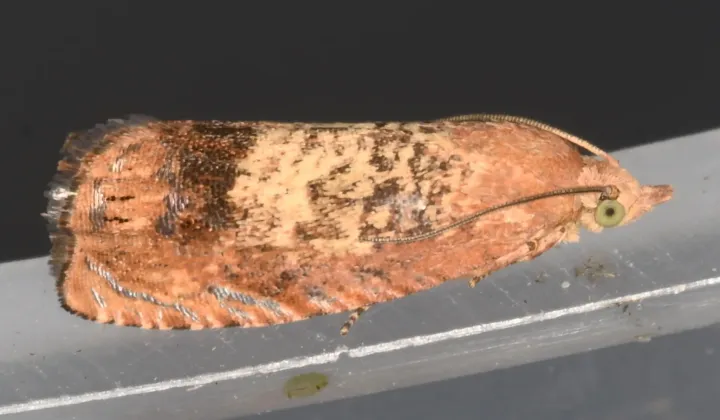
The Fir shoot moth (Cydia molybdana) is a small moth belonging to the family Tortricidae. It is recognized by its distinct wing pattern, which features metallic, lead-gray streaks, serving as a primary identifier for this specific species.
The adult moth has a wingspan of approximately 12 to 15 millimeters. The larvae, or caterpillars, are typical of the Cydia genus, possessing a light-colored body with a dark, sclerotized head capsule, reaching a length of 10-12 millimeters at maturity.
As a member of the order Lepidoptera, it undergoes complete metamorphosis. Adults are primarily nocturnal, making them difficult to observe during daylight hours within the coniferous canopy.
Professional monitoring relies on pheromone traps designed to attract males, providing data on the flight period and population density of the moth in the affected areas.
Accurate identification is crucial, as morphological similarities with other tortricid moths can lead to misdiagnosis without the use of specialized trapping methods or microscopic examination.
What it damages
The primary hosts for the Fir shoot moth are species of the Abies genus (firs). The larvae cause significant damage by boring into young shoots and buds, which are vital for the tree's vertical growth.
By consuming the internal tissues of the shoots, the larvae cause the tips of the branches to wither, turn brown, and eventually die, leading to stunted or deformed growth in young trees.
In forest nurseries, the damage caused by Cydia molybdana is economically significant, as it degrades the aesthetic quality of saplings and reduces the growth rate of young plantations.
Beyond shoot damage, larvae may also feed on developing cones, destroying seeds and impacting the natural regeneration and forest seed production capacity of the fir trees.
The severity of the damage is often correlated with the intensity of infestation, with young, vigorous trees being the most susceptible to long-term structural deformation.
When it appears
The flight period of the adult moth typically occurs in the spring, coinciding with the initiation of the host tree's growth phase. This synchronization ensures that newly hatched larvae have immediate access to succulent food sources.
After mating, females oviposit on young needles or at the base of buds. The egg stage is relatively short, allowing for rapid colonization of the host plant as the spring temperatures rise.
Larval emergence is timed with the expansion of terminal and lateral buds. This is the period of greatest vulnerability for the host tree and the optimal window for targeted pest control interventions.
The winter is typically spent in the larval stage, inside a protective cocoon fashioned in bark crevices or forest litter, demonstrating a robust survival strategy against low winter temperatures.
In most regions, Cydia molybdana is univoltine, meaning it completes one generation per year, although warmer microclimates may occasionally influence the speed of its life cycle.
Signs of infestation
The initial signs of infestation include the presence of frass (larval excrement) mixed with wood particles at the entrance holes of the buds, often held together by fine silk strands.
As the larvae bore deeper, the affected shoots begin to exhibit flagging, where the tips turn yellow or brown. This change in color is a clear indicator of interior feeding damage.
Deformation of the leader shoot is a long-term indicator of past infestation, resulting in a crooked trunk or a "bushy" appearance as the tree attempts to compensate for the lost terminal growth.
Observing resin exudation at the sites of larval entry is another common sign, as the tree attempts to defend itself against the burrowing activity of the caterpillar.
- fine webbing visible on young buds;
- premature needle drop on damaged shoots;
- wilting of the terminal leader;
- stunted growth patterns in young saplings.
Control measures
Silvicultural measures are the first line of defense; pruning and burning infested shoots before the larvae emerge can significantly reduce the local population pressure.
Biological control using Bacillus thuringiensis sprays is effective if applied early in the larval stage, offering a safer alternative to broad-spectrum insecticides for the surrounding environment.
Chemical control with systemic insecticides should be timed precisely with the larval hatch period to ensure the larvae consume the toxin before entering the protective tissue of the shoot.
Integrated Pest Management (IPM) strategies emphasize the use of pheromone-based monitoring to determine whether the population threshold warrants intervention, preventing unnecessary chemical use.
Encouraging the presence of natural enemies, including predatory beetles and parasitic wasps, provides a long-term stabilizing effect on the population of the Fir shoot moth within the ecosystem.
Taxonomy
- Latin name
- Cydia molybdana
- Order
- Lepidoptera (butterflies)
- Family
- Tortricidae
- EPPO code
- CYDIMO
Discussion
No discussions yet — be the first.