
Acorn moth
Cydia latiferreana
Description
How to identify
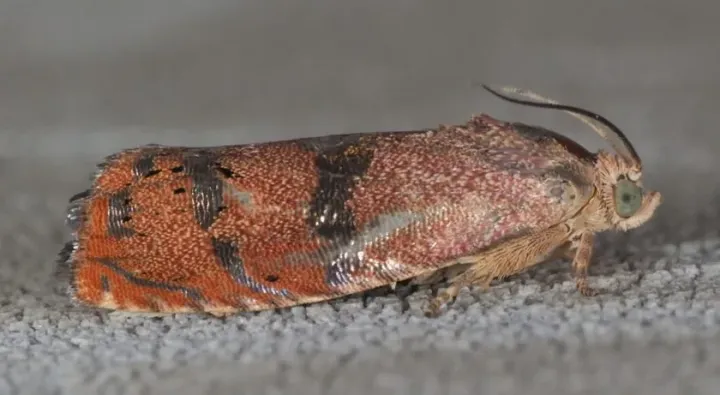
The acorn moth (Cydia latiferreana) is a small lepidopteran belonging to the Tortricidae family. The adult moth has a wingspan ranging from 12 to 18 mm, with brownish-gray forewings featuring a metallic sheen and subtle dark markings.
The larvae, or caterpillars, typically grow to about 10–12 mm in length. They possess a pale or pinkish body with a distinct dark head capsule. Their bodies are covered with fine, sparse hairs, which is a key diagnostic feature for identification.
The moth lays tiny, flattened eggs singly on the surface of developing acorns. These eggs are cryptic and blend well with the texture of the host plant, making them very difficult to spot during routine inspections.
The pupal stage occurs within a dense silken cocoon located in the soil or leaf litter beneath the host tree. They overwinter in this state, allowing the species to survive the harsh conditions of its temperate climate range.
The moth's biology is tightly synchronized with the development of oak trees. Adults are nocturnal, preferring to spend the daylight hours hidden in the canopy, which poses challenges for visual population monitoring.
What it damages
The primary food source for the larvae is the acorn of the oak tree. The larvae bore into the fruit and consume the cotyledons, effectively destroying the seed and rendering it non-viable for future growth or reforestation efforts.
During outbreak years, this moth can infest up to 90% of an acorn crop, severely impacting the natural regeneration of oak woodlands. This loss also significantly affects the food supply for wildlife that depends on acorns.
In addition to oaks, the moth may also target chestnut trees. Upon entering the acorn, the larva creates a tunnel and leaves behind frass and webbing, which are clear indicators of internal infestation.
Infested acorns often fall prematurely, a behavior commonly used to track the pest's presence in a grove. Even if an acorn remains on the branch, its nutritional value is destroyed, and it quickly becomes a vector for rot.
For forestry nurseries, the presence of the acorn moth represents a serious economic risk, as it reduces the yield of healthy seeds required for sustaining healthy forest plantations.
When it appears
The flight period of adult moths begins in mid-summer, typically from June through August. This timing coincides with the period when oak trees form young acorns, providing the necessary substrates for oviposition.
Larval development inside the fruit lasts between three and six weeks. Once mature, the larva bores a round exit hole through the shell, drops to the ground, and burrows into the soil to begin the pupation process.
The insect spends the winter months as a pre-pupal larva within a cocoon in the soil. Pupation happens in the spring just before the next cycle begins, ensuring the survival of the population through the winter season.
Field monitoring is performed using pheromone traps placed in the canopy. This allows foresters to track the peak emergence of adults and determine the precise timing for potential interventions.
Environmental factors like soil temperature and moisture levels play a critical role in the timing of emergence. Professionals monitor these variables to predict the intensity of the pest population for the upcoming season.
Signs of infestation
Initial signs of infestation include tiny, inconspicuous entrance holes on the acorn's shell, often surrounded by small piles of sawdust-like frass. The skin around the entrance may show signs of darkening.
The premature drop of green acorns during the summer is a definitive indicator of an active infestation. Opening these fallen acorns typically reveals internal tunneling and larvae feeding on the seed.
Round exit holes measuring approximately 2 mm in diameter indicate that the larva has completed its feeding cycle and vacated the acorn. Such seeds are empty and useless for forestry purposes.
In cases of heavy infestation, webs might be visible where larvae have spun together multiple acorns or leaves within the canopy, providing cover during their development.
Light trapping at night is a standard survey technique to confirm the presence and density of adult moths, providing early warning before widespread egg-laying occurs.
Control measures
The most practical management strategy is the sanitation of the forest floor, involving the collection and destruction of fallen acorns before the larvae have a chance to exit and pupate in the soil.
Biological control using Bacillus thuringiensis (Bt) sprays can be highly effective when applied during the egg-hatch stage. These treatments are environmentally friendly and minimize damage to non-target insect species.
When populations are extremely high, systemic insecticides might be required. Applications are strictly timed to coincide with the moth flight period to ensure maximum efficacy against emerging larvae.
Mechanical disturbance of the soil, such as shallow tilling under the tree canopy in the autumn, can help destroy overwintering cocoons, thereby significantly reducing the number of moths in the following spring.
- Sanitation by removing infested acorns.
- Tilling soil to disrupt overwintering sites.
- Monitoring with pheromone traps.
- Biological control using targeted sprays.
- Selecting resistant oak cultivars for planting.
Taxonomy
- Latin name
- Cydia latiferreana
- Order
- Lepidoptera (butterflies)
- Family
- Tortricidae
- EPPO code
- MELSLA
Discussion
No discussions yet — be the first.