
Larch cone moth
Cydia illutana
Description
How to identify
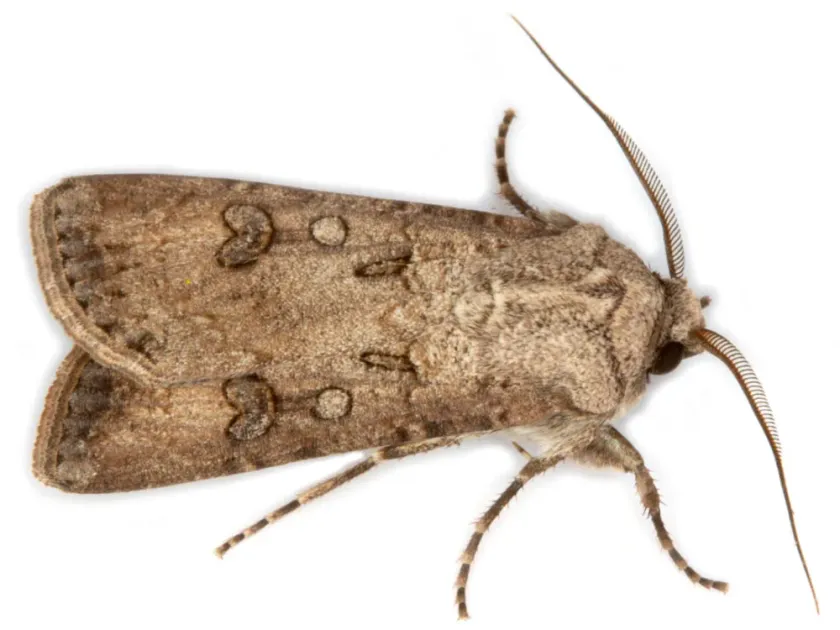
The larch cone moth (Cydia illutana) is a small moth species belonging to the Tortricidae family within the order Lepidoptera. Adults have a wingspan of approximately 12–15 mm and possess greyish-brown forewings with distinct transverse patterns.
The larvae are small, reaching 10–12 mm in length, with a light pinkish or yellowish body and a darker head capsule. They are specialized feeders adapted for boring into the dense tissues of coniferous cones.
This species is highly host-specific, primarily targeting Larix species. Its entire life cycle is tightly synchronized with the development of larch reproductive organs, making it a significant specialist pest.
The species overwinters as a larva in a silk cocoon hidden within bark crevices or organic debris on the forest floor. Pupation occurs in the spring, followed by the emergence of adults, which marks the start of the breeding season.
Environmental conditions, particularly temperature and spring precipitation, play a crucial role in the survival rate of the pupae and the timing of adult emergence, which can vary annually.
What it damages
The larch cone moth infests various larch species, including the European larch (Larix decidua) and the Siberian larch (Larix sibirica). Larvae feed directly on the developing seeds within the cones.
The pest poses a severe threat to forestry, particularly in seed orchards, where it can destroy a significant portion of the annual crop. In outbreak years, infestation levels can reach over 50% of total cone production.
Larval feeding creates tunnels through the cone axis and scales, which compromises the structural integrity of the cone. This leads to premature cone shedding, deformation, and loss of seed viability.
Secondary damage occurs when tunnels become entry points for pathogens, such as fungi or bacteria, which can further decay the remaining seeds or affect the tree's overall cone-bearing health.
The economic impact is particularly felt in timber production programs that rely on high-quality, abundant seed yields to replenish forests and ensure successful reforestation efforts.
Signs of infestation
The most visible sign of infestation is the presence of resin flow on the exterior of the cone. Larvae puncture the scales, causing the tree to exude resin as a defense mechanism, which often mixes with frass.
Small, dark piles of larval excrement (frass) often accumulate near the entrance holes or at the base of the cone scales. These signs are indicators of active feeding within the cone tissue.
Premature browning or wilting of individual cones during the summer months is a strong diagnostic feature. Such cones often fall to the ground early, prematurely ending their development cycle.
Careful inspection of fallen cones may reveal silk webbing between the scales, which the larvae produce while constructing tunnels and protecting themselves from external predators.
In late autumn, careful examination of tree trunks near the base may reveal small, silk-lined cocoons hidden in the bark, indicating the presence of the pest preparing for overwintering.
Control measures
Systemic insecticides can be effective if applied during the adult flight period and the peak egg-laying phase. Timing is critical to ensure larvae are targeted before they bore deep into the cones.
Sanitation practices are essential for long-term control. This includes collecting and destroying infested fallen cones to break the life cycle and prevent the larvae from pupating successfully.
Biological control methods, such as releasing egg parasitoids like Trichogramma, provide a sustainable and eco-friendly alternative for managing moth populations in large-scale plantations.
Using pheromone traps helps foresters monitor population levels of adult moths. This data is invaluable for predicting outbreak risks and determining the necessity and timing of intervention.
Encouraging the presence of natural predators, such as birds and beneficial insects, helps maintain a natural equilibrium, which can keep larch cone moth populations below the threshold of economic damage.
Taxonomy
- Latin name
- Cydia illutana
- Order
- Lepidoptera (butterflies)
- Family
- Tortricidae
- EPPO code
- LASPIL
Discussion
No discussions yet — be the first.