
Jumping bean
Cydia deshaisiana
Description
How to identify
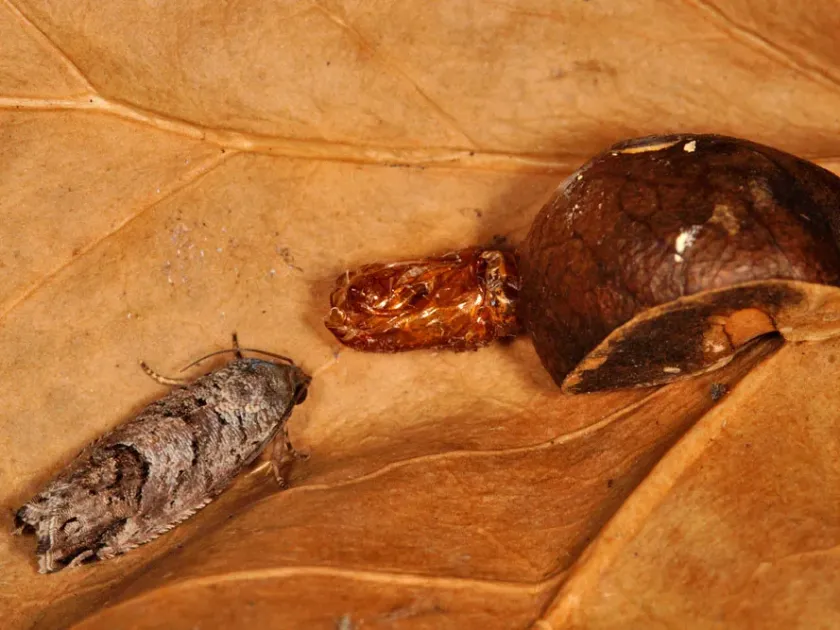
The jumping bean is the common name for seeds of the Sebastiania shrub that contain the larva of the moth Cydia deshaisiana. This insect belongs to the family Tortricidae, known for its leaf-rolling habits.
The most distinctive feature of this pest is the movement of the seed. The larva, by snapping its body against the inner walls of the seed, causes the bean to move or "jump" across a surface, often as a response to heat or sudden vibration.
An infested seed often looks normal from the outside but may show a small, thin, silk-covered hole. Inside, the larva consumes the seed's interior, turning it into a temporary habitat for its development.
Taxonomically, Cydia deshaisiana is a lepidopteran. It is a highly specialized species endemic to specific regions in Mexico, where its host plants grow naturally.
Adult moths are small, brown, and inconspicuous, typical of the leaf-roller family. They are rarely seen, as the vast majority of the insect's life cycle occurs within the seed.
What it damages
The larvae feed exclusively on the seeds of the Sebastiania shrub. They consume the internal tissues, effectively destroying the germination potential of the seed.
This insect is not considered a threat to commercial agricultural crops like legumes, beans, or grains, as its diet is strictly limited to its specific host plants.
In its native environment, the damage can impact the reproductive success of the Sebastiania population, as a significant number of seeds may be destroyed before they can sprout.
Because the insect is host-specific, it does not represent an invasive danger to most agricultural landscapes, keeping its ecological footprint localized.
Economic damage is generally negligible, aside from the loss of seed material in indigenous plants or the aesthetic damage to plant samples meant for sale as natural curiosities.
When it appears
The life cycle begins when a female moth lays an egg on the surface of a developing seed capsule. Upon hatching, the larva bores its way inside the seed.
The larva spends months feeding on the seed's interior. The "jumping" behavior is most prominent during the larval stage and serves as a defense mechanism to move the seed into cooler, shaded areas.
Before pupation, the larva constructs a trapdoor-like exit using silk. This ensures that the emerging moth can exit the hard shell of the seed safely.
The timing of the cycle is tightly linked to seasonal climate changes in the native Mexican habitat, allowing the insect to time its emergence for optimal mating.
The pupal stage occurs inside the shell, effectively protected from predators and harsh environmental conditions until the moth eventually emerges as an adult.
Control measures
The primary method of control is phytosanitary inspection of imported seeds. It is crucial to prevent the accidental introduction of this moth into non-native ecosystems.
Manual removal and destruction (e.g., burning) of infested seeds are highly effective in limiting the localized population of the pest.
Fumigation of imported plant materials in trade is a standard practice to ensure no living larvae are present in the seed stock.
Biological control using chemicals is rarely necessary and generally discouraged, as the pest poses little to no threat to global agricultural interests.
Educational awareness for hobbyists and exotic plant collectors is the best approach to ensure that "jumping beans" remain a novelty rather than a widespread agricultural pest.
Taxonomy
- Latin name
- Cydia deshaisiana
- Order
- Lepidoptera (butterflies)
- Family
- Tortricidae
- EPPO code
- LASPSI
Discussion
No discussions yet — be the first.