
Black Pine Tortrix
Cydia cosmophorana
Description
How to identify
The Black Pine Tortrix (Cydia cosmophorana) is a moth belonging to the order Lepidoptera and the family Tortricidae. This species is known for its relatively small size and nocturnal activity patterns.
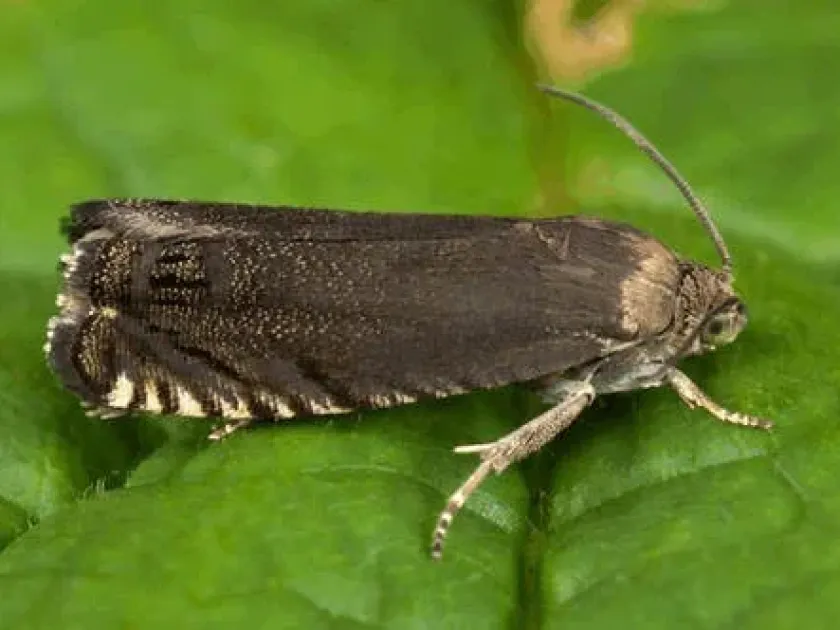
Adult moths possess dark brown to black forewings, providing excellent camouflage against the bark of pine trees. The typical wingspan of this species ranges between 10 and 14 millimeters.
The larvae are small caterpillars that undergo several molts during their development. They possess specialized mouthparts used for boring into the woody tissues of their host plants.
Taxonomically, this insect is a specialized pest adapted to survive in coniferous forest ecosystems, playing a specific ecological role as a xylophagous organism.
The lifecycle includes distinct stages: egg, larva, pupa, and adult. The species typically completes one or more generations per year depending on the climatic conditions of its range.
What it damages
The primary hosts of the Black Pine Tortrix are various species within the Pinus genus. It poses a significant threat to young plantations and weakened forest stands.
Larvae cause damage by boring into the bark of trunks and branches. They feed primarily on the phloem and cambium layers, which are essential for nutrient transport.
This feeding activity often induces the tree to release resin as a defense mechanism, resulting in the formation of characteristic resin galls on the surface of the bark.
Severe infestations disrupt the tree's vascular system, leading to weakened growth, thinning foliage, and susceptibility to secondary pests like bark beetles.
In cases of heavy infestation, the cumulative damage can lead to the death of individual branches or the entire tree if the larvae girdle the main stem.
When it appears
Adult moths usually emerge in late spring or early summer. Their flight activity is strictly correlated with temperature patterns and moisture levels in the forest canopy.
Females deposit their eggs on the bark of shoots or near existing wounds. This placement ensures that newly hatched larvae have immediate access to suitable feeding sites.
Larval activity reaches its peak during the summer months, as they feed and grow to prepare for the overwintering stage within the bark galleries.
The winter is passed in the larval stage. They overwinter in protected chambers under the bark, which provides insulation against harsh environmental conditions.
Effective monitoring involves placing pheromone-baited traps in the forest stands just before the expected flight period to assess population density.
Signs of infestation
The most visible indicator of an infestation is the presence of hardened resin drops or galls on the bark surface, which are often accompanied by reddish-brown frass.
Foliage on the infested branches may begin to yellow or turn brown prematurely, indicating that the vascular tissues have been significantly compromised by larval feeding.
Small holes in the bark are indicative of larval entrance or exit points. These spots are often surrounded by debris consisting of bark particles mixed with resin.
The presence of fine webbing covering the entrance holes or holding dead needles against the bark is another common sign of larval activity.
A general decline in the vitality of young pine trees, including reduced terminal growth, is a strong signal that an infestation may be present.
Control measures
Sanitary forest management is the primary control measure. This involves the timely identification and removal of heavily infested trees to reduce the breeding population.
Systemic insecticides can be applied during the early larval stage to target the insects before they burrow deeply into the protective layers of the bark.
Biological control methods, such as encouraging natural predators and parasitoid wasps, play a crucial role in maintaining the population below economic damage thresholds.
Maintaining high forest health through proper silvicultural practices, including thinning and adequate spacing, reduces tree stress and discourages pest colonization.
For high-value trees in ornamental settings, manual removal of infested bark sections followed by wound treatment can help save the specimen from further damage.
Taxonomy
- Latin name
- Cydia cosmophorana
- Order
- Lepidoptera (butterflies)
- Family
- Tortricidae
- EPPO code
- LASPCS
Discussion
No discussions yet — be the first.