
Orange fruit moth
Cydia anaranjada
Description
How to identify
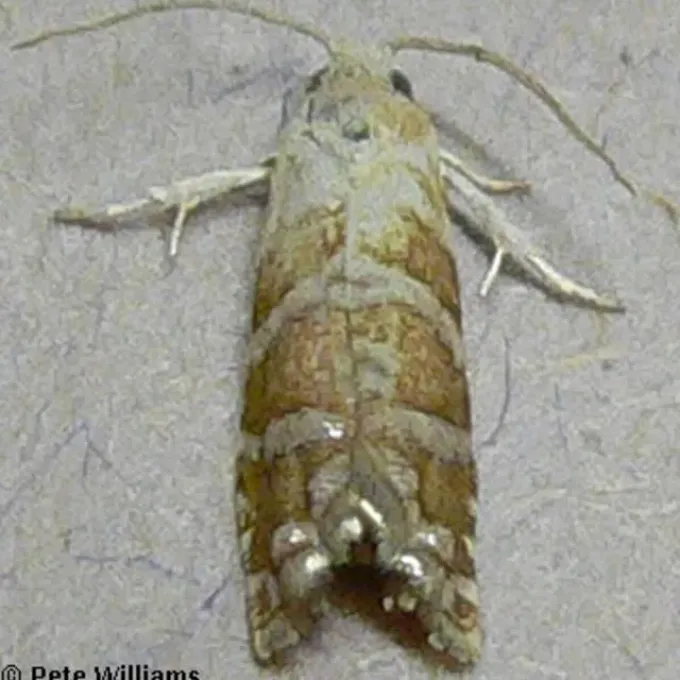
The orange fruit moth (Cydia anaranjada) belongs to the Tortricidae family within the order Lepidoptera. The adult moth features orange-brown wings that provide excellent camouflage against tree bark and fruit surfaces.
The larvae are typically cream or pinkish in color with a dark, sclerotized head capsule. Reaching lengths of 10 to 15 millimeters, these larvae are specialized in internal feeding, making them difficult to detect externally.
Females lay eggs singly or in small clusters on the fruit surface, often near the calyx or stem base. The eggs are flattened and translucent, darkening slightly as the embryo matures.
The species exhibits strong biological adaptation, linking its lifecycle to the host plant's phenology. This flexibility allows the pest to thrive across varying agricultural environments.
Overwintering occurs primarily in the pupal stage within silken cocoons. Common overwintering sites include bark crevices, accumulated leaf litter, and the upper soil layers under the canopy.
What it damages
The larvae of Cydia anaranjada primarily damage pome and citrus fruits by feeding on the flesh and seed contents. This internal feeding causes significant losses in commercial orchards.
After hatching, larvae bore through the fruit skin, creating tunnels that lead directly to the core. This activity causes premature fruit drop and makes the fruit unsuitable for human consumption.
The entry points created by the larvae often facilitate the entry of secondary pathogens. Rot-causing fungi and bacteria exploit these damaged areas, leading to rapid spoilage during transport and storage.
High infestation levels in arid years can result in a loss of over 50% of the harvest. The hidden nature of the infestation makes damage assessment difficult until the fruit reaches maturity.
Because the larvae consume the internal structures, the fruit may appear visually acceptable from the outside while being entirely compromised internally, leading to quality control issues.
When it appears
Adult flight typically begins in spring once average daily temperatures exceed 15 degrees Celsius. This emergence is often synchronized with the post-blossom period of the host trees.
The reproductive period is extended, which requires repeated monitoring and treatment. Adults are primarily nocturnal and crepuscular, making them difficult to observe during daylight hours.
Larval development generally lasts three to five weeks, depending on ambient temperatures. Once feeding is complete, larvae exit the fruit to find a suitable location for pupation.
The moth may complete multiple generations within a single growing season. The final generation of the year is usually the most critical for overwintering success and survival.
Fall monitoring is essential for predicting next year's infestation pressure. Identifying larval presence in late-season fruits can provide data for adjusting the following season's management program.
Signs of infestation
The most common sign is the presence of small entry holes, often accompanied by frass (larval excrement) on the surface of the fruit. These holes tend to darken and discolor over time.
- Premature yellowing and dropping of fruits that otherwise look healthy.
- Silken webbing found around the stem connection point or within the calyx.
- Soft, discolored patches on the fruit skin indicative of internal tunneling and subsequent rot.
Dissecting an infested fruit typically reveals internal tunnels filled with waste. The seed chamber is usually partially or completely destroyed by the larval feeding process.
Observing silken cocoons tucked into bark crevices is a clear indication of overwintering populations. This sign confirms the presence of the pest even during dormant months.
Pheromone traps are highly effective for detecting early-season activity. Regular inspection of these traps is vital for timing protective applications accurately.
Control measures
Cultural control practices, such as removing fallen fruit, cleaning tree bark, and cultivating the soil beneath the canopy, effectively reduce the number of overwintering larvae.
Biological control involves the use of egg parasitoids like Trichogramma, which can significantly decrease pest populations. Entomopathogenic fungi also provide a natural method for population suppression.
Chemical control must be timed precisely to coincide with the larval hatch period, before the pests burrow into the fruit. Application should be limited to the critical window of egg-laying activity.
Mating disruption using pheromone dispensers is a sophisticated method to reduce infestation levels. By saturating the orchard with pheromones, male moths are unable to locate females, lowering reproductive success.
A rotational program of insecticides is crucial to prevent the development of resistance. Monitoring pest populations throughout the season ensures that control measures remain responsive to local conditions.
Taxonomy
- Latin name
- Cydia anaranjada
- Order
- Lepidoptera (butterflies)
- Family
- Tortricidae
- EPPO code
- LASPAN
Discussion
No discussions yet — be the first.