
Cyclorhipidion distinguendum
Cyclorhipidion distinguendum
Description
How to identify
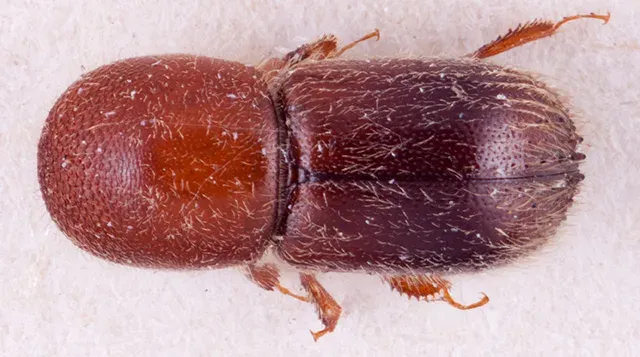
Cyclorhipidion distinguendum is a species of ambrosia beetle belonging to the Curculionidae family and the Scolytinae subfamily. These beetles are extremely small, typically measuring between 2 to 3 mm in length.
Their bodies are cylindrical and dark in color, perfectly adapted for tunneling into the trunks and branches of host trees. They belong to a specialized group known as xylomycetophagous beetles.
Unlike traditional bark beetles that feed directly on wood tissues, these beetles cultivate symbiotic fungi. They transport these fungal spores in specialized organs called mycangia to colonize their galleries.
The larvae are white, legless grubs that feed exclusively on the fungal mats growing on the gallery walls. This biological dependency makes them highly specialized pests of woody plants.
Adult females are primarily responsible for boring new galleries, where they lay eggs and introduce the fungal inoculum necessary for the development of their offspring.
What it damages
This beetle species primarily infests deciduous trees, with a notable preference for fruit-bearing trees such as apples, pears, and various stone fruits in orchards.
The insects are attracted to trees that are already physiologically stressed due to drought, frost injury, or poor structural health, although mass attacks can occur on weakened but living trees.
Improper orchard management, such as high-density planting without adequate airflow or neglect of pruning, creates ideal microclimatic conditions for beetle colonization.
While a single gallery rarely kills a tree, the cumulative effect of multiple tunnels disrupts nutrient and water transport, causing dieback of branches and reduced fruit production.
In forest nurseries and plantations, the beetle can cause significant economic losses by compromising the structural integrity of young saplings, often leading to total tree mortality.
Signs of infestation
The most recognizable sign of an infestation is the presence of tiny, circular entry holes on the bark surface, usually accompanied by small piles of sawdust or frass.
Internally, the galleries are easily identified by their darkened walls, which result from the growth of the symbiotic fungus that the beetle introduces into the wood.
Externally, affected trees may exhibit signs of stress, such as yellowing foliage, premature leaf drop, and the sudden wilting of specific branches during the growing season.
In cases of severe infestation, the bark may show localized areas of necrosis around the entry points, which are often exacerbated by the secondary infection of opportunistic pathogens.
- Small entry holes (1-2 mm) on the bark.
- Accumulation of fine wood dust at the base of the trunk.
- Dark staining of the internal wood within the tunnels.
- Branch dieback and foliage discoloration.
Control measures
The primary control strategy is cultural management, which includes maintaining tree vigor through adequate fertilization, irrigation, and proper canopy management to avoid stress.
Sanitation is critical; all dead or heavily infested wood must be pruned and burned or chipped to eliminate reservoirs of the beetle population from the orchard.
Chemical control is challenging due to the beetle's protected life cycle within the wood. Contact insecticides are only effective during the short windows when adults are active on the surface.
The use of pheromone-baited traps is recommended for monitoring flight activity and timing protective treatments, as well as for reducing local adult beetle populations.
Wound treatment for frost cracks or mechanical injuries is essential, as these damaged areas serve as primary entry points for adult beetles seeking to colonize the wood.
Taxonomy
- Latin name
- Cyclorhipidion distinguendum
- Order
- Coleoptera (beetles)
- Family
- Curculionidae
- EPPO code
- CYCRFU
Discussion
No discussions yet — be the first.