
Cyclorhipidion bodoanum
Cyclorhipidion bodoanum
Description
How to identify
Cyclorhipidion bodoanum is a small wood-boring beetle belonging to the Scolytinae subfamily. These insects are commonly known as ambrosia beetles due to their unique relationship with symbiotic fungi.
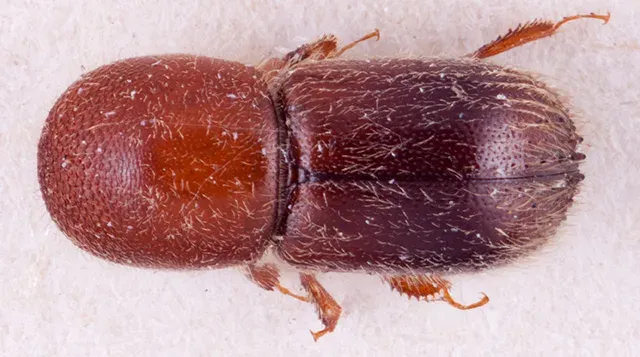
The adults are typically cylindrical, dark brown to black, and measure approximately 2–3 millimeters in length. They are specialized for living within woody tissues, spending most of their life cycle protected inside the plant.
A distinctive feature of this species is the presence of mycangia, specialized structures used to transport fungal spores from their natal tree to new hosts, ensuring the food supply for their offspring.
Identification often requires careful examination under a microscope, as many ambrosia beetle species share similar morphological traits. Field identification is primarily based on the entry patterns and the resulting damage to the wood.
These beetles are essential parts of forest ecosystems, playing a role in decomposition, but they can become significant pests when they infest managed forests or fruit orchards.
What it damages
This beetle primarily targets deciduous trees. They are particularly attracted to weakened or stressed trees, which may be suffering from environmental factors like drought, root damage, or other diseases.
The damage is caused by the construction of tunnels within the sapwood and heartwood. While the beetles do not consume the wood directly, the fungi they cultivate cause discoloration and decay, compromising the tree's health.
As the tunnel network expands, it disrupts the tree's vascular system. This blockage prevents the proper transport of water and nutrients, leading to yellowing leaves, branch dieback, and eventually the death of the tree.
In economic terms, infestation by Cyclorhipidion bodoanum significantly degrades the quality of timber. The tunnels (often called galleries) and fungal staining make the wood unsuitable for construction or high-quality furniture.
In ornamental and fruit trees, the pest can cause significant aesthetic damage and reduce fruit yields, making proactive management crucial for high-value plantings.
Signs of infestation
The most visible sign of an infestation is the presence of tiny, circular entry holes on the bark. These are often accompanied by piles of frass, a powdery wood dust produced by the beetles during tunneling.
Tree decline is a key indicator, starting with wilted leaves and thinning canopy. In severe cases, branches will become brittle and die prematurely, a condition often referred to as "dieback."
Removing a piece of bark will reveal the extent of the damage. Galleries will be visible, often lined with a dark, soot-like substance, which is the fungal growth cultivated by the beetles.
Some tree species may exhibit resin flow or sap weeping around the entry points. This is a common physiological response as the tree attempts to seal the wounds and push the beetles out.
Internally, the wood may show signs of staining, where the symbiotic fungi have spread into the surrounding vascular tissues, creating localized zones of decay.
Control measures
The primary control strategy involves sanitation. Removing and destroying infested trees is the most effective way to prevent the beetle population from spreading to healthy trees in the surrounding area.
Pheromone traps are highly effective for monitoring flight periods. By tracking when the beetles are active and searching for new hosts, growers can time their interventions for maximum efficiency.
Good cultural practices, such as proper irrigation and fertilization, are vital. A healthy, vigorous tree is much better at producing defensive compounds that deter beetles from successfully colonizing the bark.
Systemic insecticides can be used as a preventative measure during the flight season, applying them to the bark to create a chemical barrier that stops the beetles from boring into the wood.
- Regular inspections of tree trunks during spring and summer.
- Prompt removal of storm-damaged branches and deadwood.
- Encouraging natural predators, such as woodpeckers, which can significantly reduce beetle populations.
Taxonomy
- Latin name
- Cyclorhipidion bodoanum
- Order
- Coleoptera (beetles)
- Family
- Curculionidae
- EPPO code
- XYLBCA
Discussion
No discussions yet — be the first.