
Philippine sweet potato weevil
Curculio sulcatulus
Description
How to identify
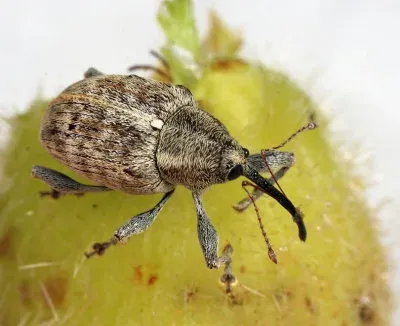
The Philippine sweet potato weevil (Curculio sulcatulus) belongs to the Curculionidae family, order Coleoptera. This insect is identified by its characteristic snout, which is typical of all weevil species.
Adult insects are small and possess cryptic coloration, which helps them blend into soil particles and plant debris. The body is robust and covered in fine setae, with noticeable longitudinal ridges on the elytra.
The species is well-adapted to tropical climates. The larval stages are cryptic and develop entirely within plant tissues, making early identification of an infestation quite challenging for farmers.
The life cycle undergoes complete metamorphosis, consisting of the egg, larva, pupa, and adult stages. Adults are capable of active movement, allowing the population to spread across fields during the growing season.
Reproduction typically occurs within the soil or the fleshy roots of the host plants, where females deposit eggs, ensuring the larvae have immediate access to a food source upon hatching.
What it damages
The primary host of this pest is the sweet potato (Ipomoea batatas), making it a major threat to sweet potato production and food security in endemic regions.
Larvae bore extensive tunnels within the tubers, rendering them unfit for human consumption or market sale. These wounds also serve as entry points for secondary fungal and bacterial pathogens.
Adult weevils feed on foliage and young stems, which can weaken the plant and reduce its overall photosynthetic capacity. Heavy infestations can lead to stunted growth and premature plant death.
Economic impact is severe, encompassing both direct yield loss and the high costs associated with labor-intensive sorting of damaged tubers at harvest time.
The extent of damage is often exacerbated by consecutive cropping of sweet potatoes without proper rotation, which allows the pest population to build up rapidly.
Signs of infestation
The most visible sign of Curculio sulcatulus presence is the appearance of small, round entry holes on the skin of harvested sweet potato tubers.
Upon slicing into an infested tuber, one can find internal tunnels filled with frass and creamy-colored larvae. The affected tissue usually darkens and develops a bitter taste due to chemical changes.
Above-ground symptoms include wilting, chlorosis, and general unthriftiness of the vines, which often result from subterranean damage to the root system and crowns.
During twilight hours, adults may be observed moving on the foliage or the soil surface near the base of the plant. Field monitoring should be concentrated in these areas.
Pheromone traps are highly effective tools for detecting the onset of adult activity, providing crucial data for scheduling insecticide applications before egg-laying reaches its peak.
Control measures
The foundation of effective management is rigorous crop rotation, where sweet potatoes are not grown on the same land for at least three to four consecutive seasons.
Deep plowing after harvest is essential to expose larvae and pupae to desiccation and predators. Removing all crop debris and weeds from the field helps significantly reduce the population density.
Using certified, pest-free planting material is the most important preventive measure. Dipping vines or slips in systemic insecticides before planting can provide temporary protection during the early growth phase.
Chemical control should be applied judiciously, adhering strictly to pre-harvest intervals to ensure the final product is safe for consumption. Systemic insecticides are preferred for their ability to reach internal feeders.
Integrated Pest Management (IPM), which combines biological control agents such as entomopathogenic fungi and pheromone-based monitoring, offers the most sustainable path for controlling this weevil.
Taxonomy
- Latin name
- Curculio sulcatulus
- Order
- Coleoptera (beetles)
- Family
- Curculionidae
- EPPO code
- CURCSU
Discussion
No discussions yet — be the first.