
Acorn weevil
Curculio rectus
Description
How to identify
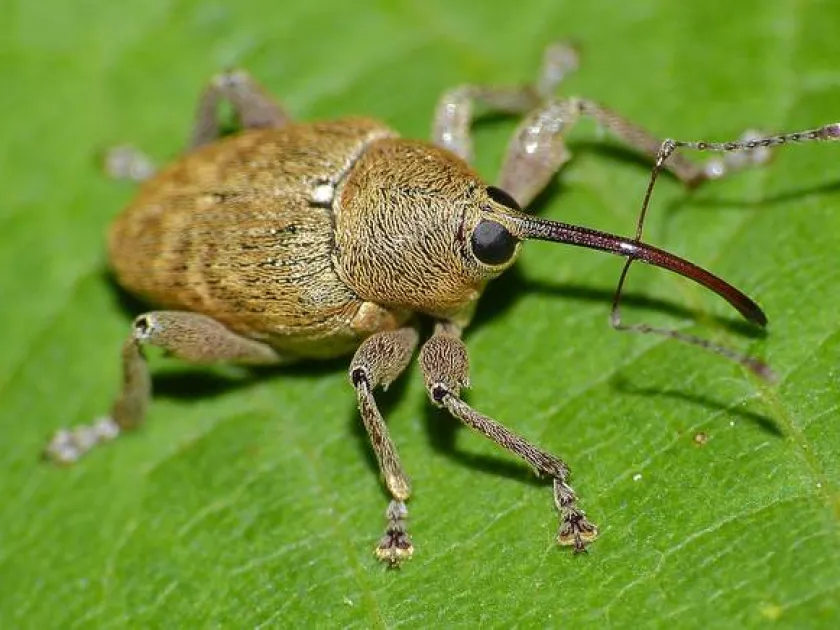
The Acorn weevil (Curculio rectus) is a species of snout beetle belonging to the Curculionidae family. It is easily recognized by its exceptionally long, straight rostrum, which is a key identifying characteristic of the species.
The body is covered with fine, dense hairs, typically ranging in color from yellowish-brown to grayish-brown, which allows the insect to blend perfectly with the bark of oak trees.
The insect undergoes complete metamorphosis, consisting of egg, larval, pupal, and adult stages. The larvae are legless, cream-colored grubs that grow inside the fruits of host trees.
Adult beetles spend the winter in the soil at depths of 15 to 20 centimeters. They emerge in the spring, coinciding with the flowering and fruit-setting period of their host plants.
The long rostrum is primarily used by females to bore deep holes into hard acorns, where they deposit their eggs to ensure the protection and nutrition of their offspring.
What it damages
The primary host plants for Curculio rectus are oak trees. The weevil is highly specialized, focusing its life cycle on the development of larvae within acorns.
Occasionally, these weevils may be found on related tree species, provided the fruit offers a sufficiently hard shell and nutritional profile for larval development.
The larvae feed on the interior of the acorn, destroying the germ and rendering the seed unviable, which poses a significant threat to forest regeneration.
Heavy infestations can lead to the loss of almost the entire seed crop, which directly impacts the food supply for various wildlife species that rely on acorns.
In addition to destroying the seed, the burrowing activity can introduce fungal pathogens that cause the fruit to rot prematurely, further degrading the harvest.
Signs of infestation
The most distinctive sign of an infestation is the presence of perfectly round exit holes on the surface of acorns, created by the larvae when they emerge to burrow into the soil.
Prematurely dropped acorns, which may look relatively intact but feel light or hollow, are a strong indicator of larval activity occurring inside the fruit.
Brown, decaying areas on the shell often indicate that the larva has been active for some time and the interior tissue is breaking down due to feeding and contamination.
Finding white, curved grubs inside opened acorns confirms the presence of the pest, especially during the late summer and early autumn months.
- Circular holes in acorn shells.
- Early fruit drop from oak trees.
- Hollow or lightweight nuts.
- Presence of larvae upon opening acorns.
Control measures
Sanitation is the most effective management strategy: gathering and destroying fallen acorns immediately prevents larvae from reaching the soil to pupate.
Tilling the soil beneath the trees in autumn can expose and destroy pupae, significantly reducing the population of emerging adults for the following season.
In nursery settings, systemic or contact insecticides can be applied during the peak emergence of adults to prevent them from laying eggs in developing nuts.
Pheromone traps serve as excellent monitoring tools, helping to determine the precise timing for protective measures based on the arrival of adult beetles.
Encouraging natural bird populations and protecting ground-dwelling predators can help keep beetle populations in check in natural and park environments.
Taxonomy
- Latin name
- Curculio rectus
- Order
- Coleoptera (beetles)
- Family
- Curculionidae
- EPPO code
- CURCRE
Discussion
No discussions yet — be the first.