
Chestnut weevil
Curculio proboscidens
Description
How to identify
The chestnut weevil (Curculio proboscidens) belongs to the Curculionidae family within the order Coleoptera. This species is easily identified by its extremely long, slender rostrum (snout), which is a key diagnostic feature.
The adult beetle is typically brown or yellowish-brown, covered with fine scales that allow it to blend into the bark of its host trees. They measure between 6 and 10 mm in length.
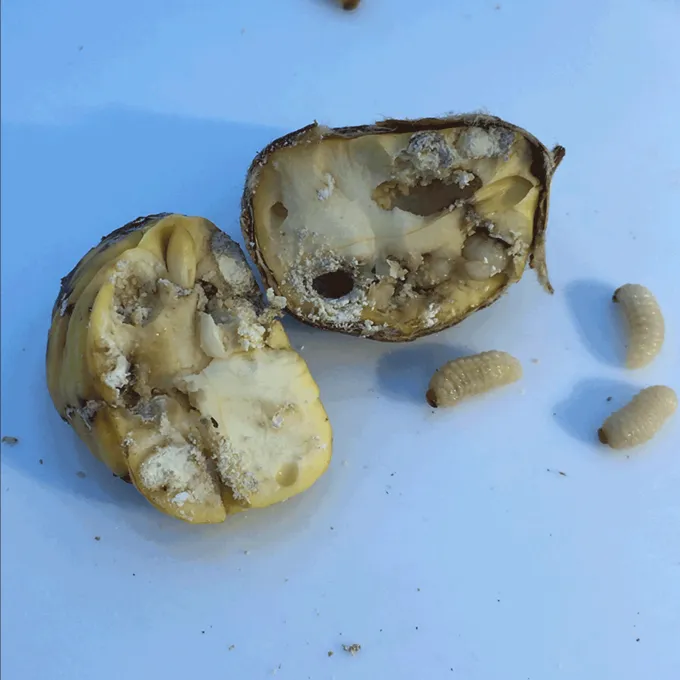
The larvae are cream-colored, legless, and C-shaped with a distinctive dark brown head capsule. They are exclusively adapted for development inside the nutrient-rich environment of a chestnut kernel.
Adult beetles are capable of flight, enabling them to disperse effectively throughout chestnut orchards. They are most active during the spring and summer when temperatures reach favorable levels.
Sexual dimorphism is evident in the length of the snout; females possess a significantly longer snout compared to males, which is essential for penetrating the hardened shell of nuts during oviposition.
What it damages
Chestnut trees, particularly Castanea species, are the primary hosts for this pest. The weevil poses a major threat to commercial chestnut production globally.
Larval feeding causes the destruction of the nut kernel. As they mature, the larvae consume the interior of the nut, rendering it useless for both consumption and commercial processing.
Damaged chestnuts are often susceptible to premature drop and secondary infections by molds and bacteria, which rapidly decay the internal tissues of the fallen fruit.
In cases of high infestation, the damage can be catastrophic, with over 50% of the harvest rendered unmarketable. This represents a significant economic burden for chestnut growers.
The impact is cumulative; high pest pressure in a single season can weaken the overall vigor of the tree and impact the quality of subsequent yields if not managed properly.
When it appears
The life cycle commences in the spring, triggered by rising temperatures. Adults emerge from the soil and move into the canopy to feed on foliage and developing flower buds.
Mating occurs during the early summer, followed by the female boring into the young, developing nut to deposit her eggs. Each female can lay dozens of eggs throughout the season.
Once hatched, the larvae feed inside the chestnut for several weeks. Their growth is synchronized with the maturation of the nut, ensuring they have sufficient resources to complete development.
By late summer or autumn, mature larvae exit the nut through a small, neat hole and burrow into the soil, where they construct an earthen chamber for overwintering.
The species may exhibit a two-year life cycle in certain climatic conditions, spending most of its life in the soil as a diapausing larva before pupating into an adult.
Signs of infestation
The most reliable sign of a chestnut weevil infestation is the presence of small, circular exit holes in the shell of fallen chestnuts, indicating that the larva has emerged.
Upon cracking open an infested nut, one can see the larval tunnels, frass (excrement), and the larvae themselves, which confirm the presence of the pest.
Premature nut drop during the mid-summer season, even when the nuts appear healthy on the outside, is often an indicator of active weevil infestation in the orchard.
Secondary signs include the presence of fungal growth emerging from the exit holes, which often occurs in damp conditions after the larva has exited the nut.
Visual scouting using a white cloth placed under the branches during the morning can help detect adult beetles resting in the tree canopy before they lay eggs.
Control measures
Cultural control is the most effective first line of defense. Growers must collect and destroy all fallen nuts daily to prevent larvae from exiting the fruit and entering the soil to pupate.
Cultivating or tilling the soil beneath the trees in the autumn can disturb the overwintering chambers, exposing the larvae to predators and harsh weather conditions.
Chemical control involving targeted insecticide applications during the adult emergence phase is common in commercial settings to reduce the initial population before oviposition.
Pheromone traps are highly effective for monitoring adult activity, allowing growers to time their insecticide applications precisely and avoid unnecessary chemical use.
- Regular collection and destruction of fallen chestnuts.
- Autumn soil cultivation to disrupt pupal chambers.
- Timed insecticide sprays during adult flight periods.
- Deployment of pheromone traps for population monitoring.
- Selecting resistant varieties to reduce pest attraction.
Taxonomy
- Latin name
- Curculio proboscidens
- Order
- Coleoptera (beetles)
- Family
- Curculionidae
- EPPO code
- CURCPR
Discussion
No discussions yet — be the first.