
Acorn weevil
Curculio nasicus
Description
How to identify
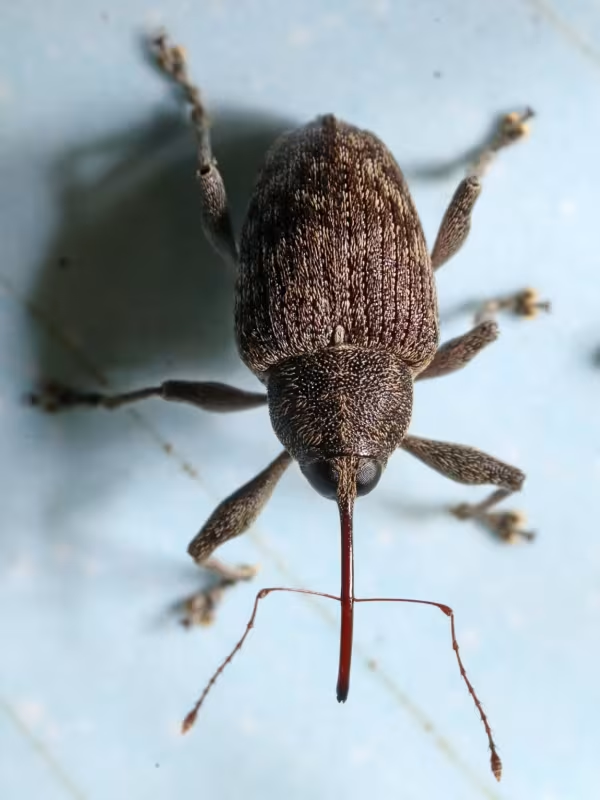
The acorn weevil belongs to the family Curculionidae (true weevils) within the order Coleoptera. It is characterized by a distinctive, exceptionally long, and slender snout, or rostrum, which in females is often longer than the body itself.
The adult beetle typically measures between 5 and 9 mm in length. Its body is covered with fine scales, providing a mottled brown or grayish color that serves as effective camouflage against tree bark and leaf litter.
The larva is a legless, C-shaped grub, white to creamy in color with a dark brown head capsule. It is specifically adapted to consume the interior of acorns, spending its entire larval stage inside the fruit.
The life cycle involves complete metamorphosis: egg, larva, pupa, and adult. A notable biological feature is the ability of the larva to remain in the soil for several years in a state of diapause before pupating.
Adults are most active during the spring, emerging just as oak trees begin to flower and develop young acorns, which are the essential requirements for their reproductive success.
What it damages
The primary hosts of the acorn weevil are trees of the genus Quercus (oaks). While they are specialized to oaks, they can occasionally be found affecting hazelnuts or chestnuts if they are present in the vicinity.
Adult beetles cause minor damage by feeding on young foliage and the buds of developing acorns, but this impact is usually negligible compared to the damage inflicted by the larval stage.
The real economic damage occurs when the female lays an egg inside the developing acorn. The hatching larva consumes the seed's cotyledons, effectively destroying the embryo and rendering the acorn unviable.
Severe infestations result in a high rate of premature acorn drop, which significantly impacts natural forest regeneration and the collection of seeds for commercial nurseries.
Beyond direct seed consumption, the tunnels created by larvae allow moisture and opportunistic fungi to enter the acorn, leading to rot and further reducing the quality of the mast.
When it appears
Adults emerge from the soil in late spring or early summer. They undergo a brief period of supplemental feeding before moving on to the reproductive phase of their cycle.
Females use their long snouts to drill deep holes into young, developing acorns. They deposit a single egg into each hole, sealing it afterward. Egg-laying continues throughout the summer months.
Larval development inside the acorn typically lasts for about three to four weeks. Once the larva has finished feeding, it chews a clean exit hole in the shell and drops to the ground.
Upon reaching the soil, the larva burrows to a depth of 10 to 20 cm to build a pupal chamber. It may remain as a prepupa in the soil for one or more seasons before finally transforming into a beetle.
This staggered developmental cycle serves as a survival strategy, ensuring that a portion of the population survives even in years when local oak mast production fails.
Signs of infestation
The earliest signs of infestation are small, pinpoint punctures on the surface of green, developing acorns, which indicate where a female has deposited an egg.
Heavy premature acorn drop in mid-to-late summer is a primary indicator of a significant weevil population within the stand, as infested fruits are shed before they reach maturity.
Observing small, perfectly round holes in fallen acorns is definitive proof of larval exit. If these acorns are cut open, they typically contain larval frass and signs of decay.
In spring, vigilant scouting of oak branches can reveal the adults themselves, as they feed on leaves and cluster on the tree canopy during the early stages of the season.
For forestry operations, nursery inspections often reveal the presence of weevils when sorting through acorns for planting, identifying hollow or partially consumed seeds.
Control measures
Integrated pest management for the acorn weevil focuses on both cultural practices and targeted chemical interventions to protect vital seed sources.
Sanitation is critical; collecting and destroying infested acorns promptly after they fall prevents larvae from escaping into the soil and beginning the next generation's cycle.
Tillage and soil cultivation in nurseries during the autumn or early spring can disrupt the soil pupal chambers, exposing larvae to predators and environmental stress.
- Applying systemic insecticides to the canopy during the adult emergence phase.
- Using pheromone traps for population monitoring and timing of management actions.
- Encouraging natural predators, such as birds and parasitoid wasps, in forest environments.
In high-value seed orchards, persistent monitoring and localized spraying are necessary to ensure that a sufficient quantity of viable acorns is available for future forest restoration efforts.
Taxonomy
- Latin name
- Curculio nasicus
- Order
- Coleoptera (beetles)
- Family
- Curculionidae
- EPPO code
- CURCNA
Discussion
No discussions yet — be the first.