
Acorn weevil
Curculio glandium
Description
How to identify
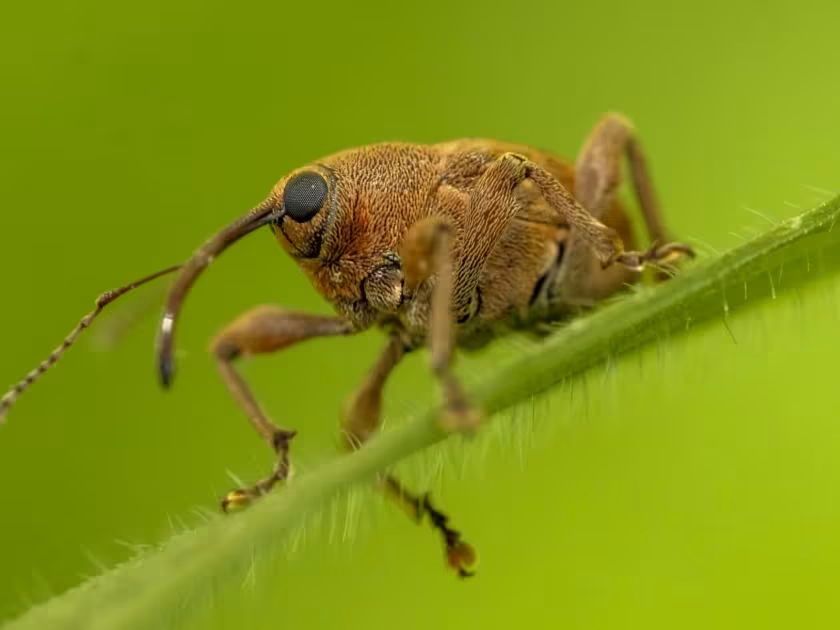
The adult acorn weevil is easily recognizable by its small, rounded body, typically measuring 4 to 8 mm in length. Its most striking feature is an exceptionally long, thin, and slightly curved rostrum (snout), which in females can be as long as the entire body.
The coloration of the beetle ranges from light brown to dark gray, allowing it to blend seamlessly with oak bark. The larvae are legless, C-shaped, creamy-white grubs with a distinct brown head capsule.
The life cycle involves a complete metamorphosis. Pupation generally occurs in the soil beneath the host tree, where the insect develops inside a small, protective earthen chamber.
Taxonomically, the species is classified within the order Coleoptera and the family Curculionidae. It is a highly specialized pest with a lifecycle strictly synchronized with the fruiting phenology of its host plants.
Adult weevils are diurnal and capable of flight, which facilitates their movement between tree canopies to locate food and mates during the reproductive season.
What it damages
The acorn weevil specifically targets oak acorns. Both the adults and the larvae contribute to the damage, though the larvae are responsible for the most significant economic and ecological losses.
Adult weevils feed on the developing acorns by piercing the pericarp with their snouts, which often leads to the premature abortion of the fruit. However, the true destruction happens when the larvae consume the internal tissues.
While oaks are the primary host, the beetle may also infest the nuts of related species like sweet chestnut or beech if they are in close proximity to infested oak groves.
In forestry, the damage is severe as it renders the acorns non-viable for nursery use and natural forest regeneration. A high infestation rate can lead to the loss of nearly the entire annual crop.
Beyond forestry, the loss of healthy acorns deprives local wildlife—such as squirrels, jays, and deer—of a crucial high-energy food source needed for winter survival.
When it appears
Adults emerge from the soil in late spring or early June, coinciding with the flowering period of oak trees. This emergence period is crucial for their survival as they need to feed on young leaves before mating.
Egg-laying takes place in mid-to-late summer when the developing acorns are large enough to support the larvae. The female drills a hole and deposits a single egg into the seed.
Larval development inside the acorn lasts approximately three to five weeks. Once the larva matures, it chews a perfectly circular exit hole in the shell to emerge and burrow into the soil.
Once in the soil, the larvae construct an earthen cell to overwinter. Some individuals remain in this state for two years, demonstrating a form of diapause that ensures the survival of the population.
Pupation occurs in the following spring, leading to the emergence of the next generation of adults. The lifecycle is typically univoltine, though it can span two years in some environments.
Signs of infestation
The most unmistakable sign of an acorn weevil infestation is the presence of small, perfectly circular exit holes on the surface of fallen acorns.
During the growing season, early signs of damage include dark, necrotic spots or localized wilting on the acorn shell where the female has punctured the skin to lay an egg.
A sudden and heavy premature drop of immature acorns during the summer months is a strong indicator of a high infestation level within the tree canopy.
If you split an infested acorn, you will find it partially or completely hollowed out and filled with fine, brown, powdery frass left behind by the developing larva.
Visual inspections of the lower trunk during the evening can occasionally reveal the adults, although their camouflaged appearance makes them quite difficult to spot.
Control measures
Chemical control in managed forest nurseries involves the application of targeted insecticides during the beetle emergence period to prevent egg-laying.
A simple yet effective cultural control method is the prompt collection and removal of fallen acorns before the larvae have the chance to exit and bury themselves in the soil.
For seed preservation, treating collected acorns with warm water at approximately 40-45°C effectively kills the larvae inside without harming the embryo, ensuring the acorns remain viable for planting.
Mechanical disturbance of the soil under the tree crowns during the pupation period can help destroy the larval cells in the ground, significantly reducing the population density.
Encouraging natural predators such as insectivorous birds is a sustainable management practice that helps keep the acorn weevil population within manageable limits in natural forest ecosystems.
Taxonomy
- Latin name
- Curculio glandium
- Order
- Coleoptera (beetles)
- Family
- Curculionidae
- EPPO code
- CURCGL
Discussion
No discussions yet — be the first.