
Cherry fruit weevil
Curculio cerasorum
Description
How to identify
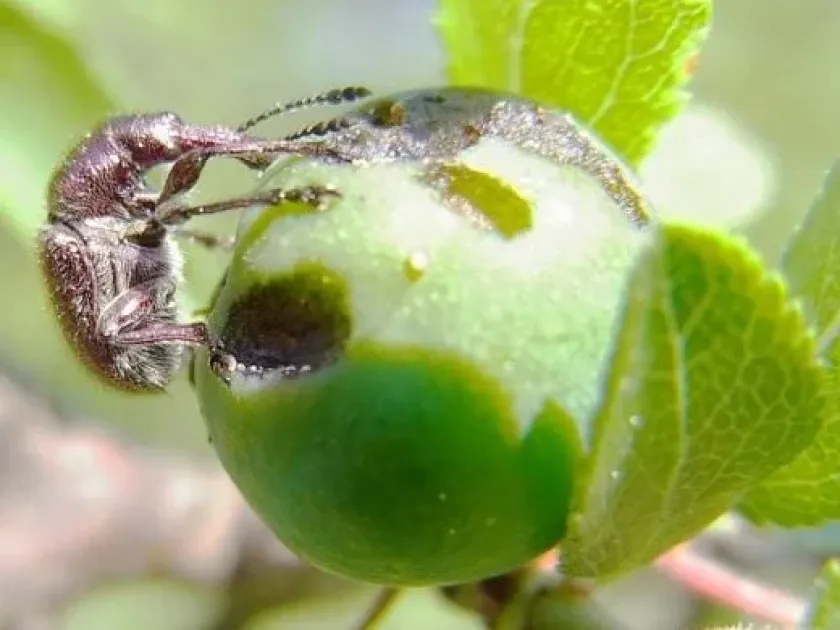
The cherry fruit weevil (Curculio cerasorum) is a small beetle belonging to the Curculionidae family. Adults typically measure about 4–5 mm in length and possess a characteristic long, slender rostrum (snout) which is used for feeding and laying eggs.
The insect’s body is covered with dense, yellowish or brownish hairs, providing camouflage on the bark. The larvae are legless, C-shaped grubs, white in color with a distinctive brown head, and spend their entire life cycle feeding within the fruit.
The life cycle is univoltine, meaning there is one generation per year. Adults hibernate in the soil throughout the winter months, emerging in early spring as temperatures rise to coincide with the budding of host trees.
Reproduction involves the female using her snout to drill a hole into the fruit, depositing a single egg inside. To ensure the survival of the offspring, she often damages the fruit stalk, which stunts the growth of the fruit and keeps it in a suitable condition for the developing larva.
Once the larva completes its development, it emerges from the fruit and burrows into the soil to pupate. The transition from larva to pupa and eventually into an adult happens underground, where the beetle remains until the following spring.
What it damages
The primary hosts for Curculio cerasorum are species within the Prunus genus, most notably cherries and sweet cherries. The pest is a significant threat to fruit orchards across its range.
Secondary hosts may include plums, apricots, and other stone fruits. When infestations are high, the economic impact can be devastating, leading to a substantial reduction in the marketable yield.
Adult weevils cause direct damage by feeding on buds and young leaves early in the season. This feeding activity can lead to poor tree vigor and reduced canopy development.
The most severe damage occurs when larvae consume the internal parts of the cherry, specifically the flesh surrounding the pit. This makes the fruit unsellable and prone to early decay.
Furthermore, the physical damage to the fruit stalk causes premature fruit drop, leading to significant harvesting losses before the intended picking date.
When it appears
Adult weevils emerge from their overwintering sites in the soil when temperatures reach approximately 10–12°C, usually during the bud-burst stage of cherry trees.
The peak period of mating and oviposition (egg-laying) occurs during the flowering stage and early fruit set. This timing is critical for the larvae to access the developing fruit tissue.
Larval development takes about three to four weeks, occurring within the fruit as it expands and matures. This period spans from late spring to early summer.
The migration of larvae from the fruit to the soil for pupation takes place in mid-summer, often during or just after the harvest period. This is a crucial window for orchard sanitation.
Pupation occurs in the soil throughout the remainder of the summer and autumn. The beetles then enter a state of diapause, remaining in the soil during the winter until the next seasonal cycle begins.
Signs of infestation
Early symptoms of infestation include tiny punctures on developing flower buds and leaves. These indicate that adult weevils are feeding and have recently emerged.
The premature yellowing and dropping of young fruit are diagnostic indicators of egg-laying activity. This is often caused by the weevil's habit of damaging the fruit stalk.
Close inspection of ripening fruit may reveal small, dark entry holes or depressions. These are the points where larvae have successfully burrowed into the fruit flesh.
When cherries are opened, the presence of an off-white, C-shaped larva with a brown head confirms the identity of the pest. The fruit flesh around the pit will often be hollowed out.
Shaking tree branches over a white sheet during the cool morning hours can reveal the beetles, as they tend to drop and "play dead" when disturbed, making them easier to count for population monitoring.
Control measures
Effective management requires an integrated approach. Cultivating the soil under the tree canopy in the autumn helps disturb and destroy hibernating larvae and pupae.
Mechanical control through the shaking of branches in the early morning can be highly effective in small orchards to reduce the number of adults before they lay eggs.
Chemical control should be timed to coincide with the pre-bloom or petal-fall stages, targeting the adult weevils before they can damage the fruit. Always follow local safety guidelines regarding pesticide use.
Orchard sanitation is vital. Collecting and destroying all fallen fruit promptly prevents larvae from escaping into the soil, thereby breaking the pest’s life cycle for the following year.
- Application of approved contact and systemic insecticides during the pre-flowering phase.
- Use of sticky traps or physical barriers on tree trunks to intercept migrating weevils.
- Regular removal of infested fruit to minimize the soil-bound population.
Taxonomy
- Latin name
- Curculio cerasorum
- Order
- Coleoptera (beetles)
- Family
- Curculionidae
- EPPO code
- CURCCE
Discussion
No discussions yet — be the first.