
New Zealand brown leafroller
Ctenopseustis obliquana
Description
How to identify
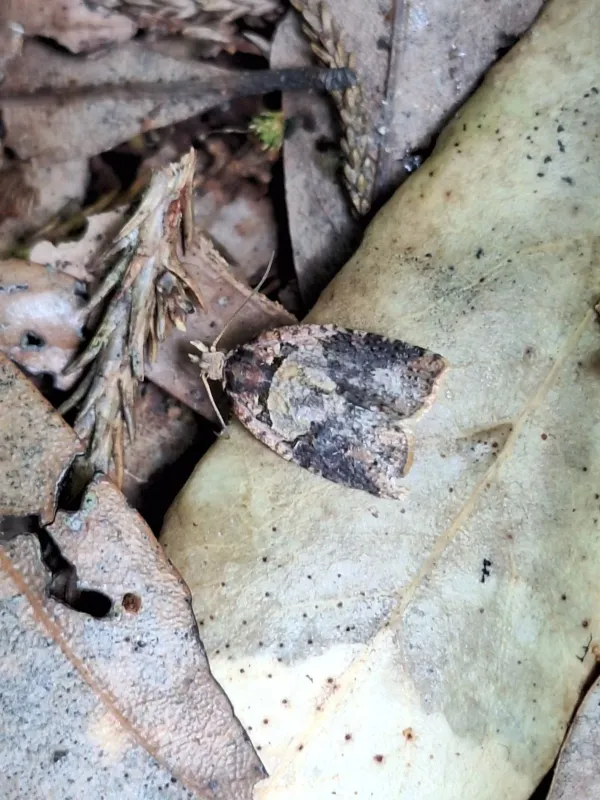
The New Zealand brown leafroller is a member of the Tortricidae family. The adult moths are small, typically with a wingspan ranging from 20 to 25 mm. Their coloration is generally brown, with intricate darker patterns on the forewings that provide camouflage against tree bark.
The larval stage undergoes several instars. Early-stage larvae are often pale or cream-colored, while older larvae exhibit a greenish-brown body with a distinct dark head capsule. They are highly active and will frequently drop from leaves on silk threads when disturbed.
What it damages
As a polyphagous insect, this pest affects a vast array of agricultural and horticultural hosts. It is particularly notorious for causing significant economic losses in pome fruits, stone fruits, and kiwifruit orchards in its native range.
Beyond fruit trees, the larvae are known to feed on grapevines, citrus, and various ornamental nursery plants. The wide range of host plants allows the population to persist in agricultural landscapes throughout the growing season.
When it appears
The life cycle is highly influenced by climatic conditions, often resulting in multiple overlapping generations per year in temperate climates. Adult moths are primarily active during the night and at twilight, engaging in mating and oviposition.
Eggs are typically laid in clusters on the upper or lower leaf surfaces. After hatching, the larvae immediately seek shelter, beginning to web leaves together or mining into the surface of developing fruit, where they remain protected throughout their development.
Signs of infestation
The most visible sign of an infestation is the presence of webbed or tightly rolled leaves. These rolled structures act as protective shelters for the larvae. Close inspection often reveals frass (excrement) within these webbed areas.
Feeding damage on leaves appears as irregular holes or skeletonized tissues. When larvae feed on fruit, they create shallow, irregular surface scars or cavities, which significantly degrades the market quality and shelf life of the harvested produce.
Control measures
Effective management requires a combination of monitoring and targeted interventions. Pheromone traps are essential for tracking moth flights, which allows growers to predict larval emergence and time applications of control measures.
- Application of selective insecticides during the peak period of larval activity.
- Biological control using predators and parasitoids that target specific larval stages.
- Orchard sanitation, including the removal of infested fruit and debris to reduce overwintering sites.
- Utilization of mating disruption technology to reduce successful reproduction of the moth population.
Taxonomy
- Latin name
- Ctenopseustis obliquana
- Order
- Lepidoptera (butterflies)
- Family
- Tortricidae
- EPPO code
- CTEOOB
Discussion
No discussions yet — be the first.