
Crypturgus
Crypturgus
Description
How to identify
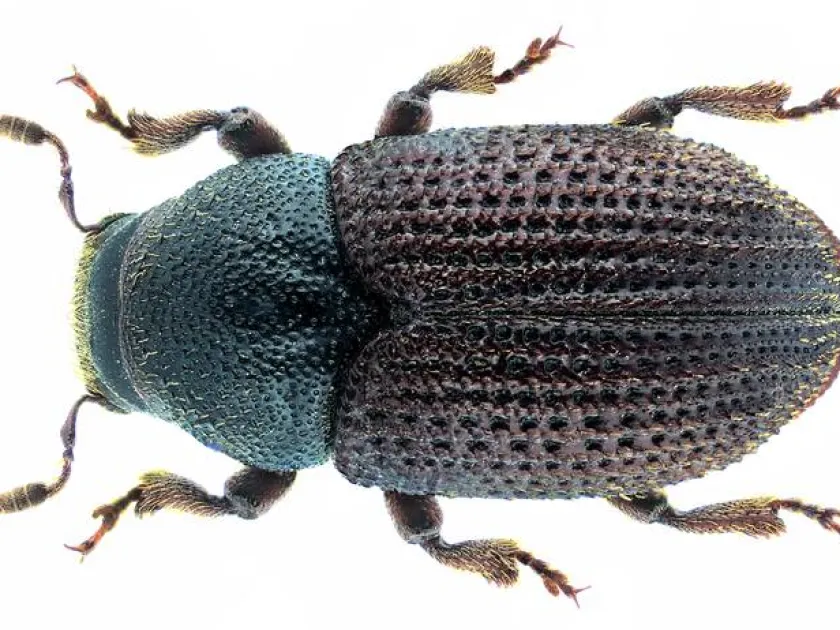
Crypturgus is a genus of minute bark beetles within the Curculionidae family, known for their extremely small size, typically measuring under 1.5 mm in length.
They possess a cylindrical, brown, or reddish-brown body that is sparsely covered with short hairs, making them difficult to spot on tree bark.
These insects are distinct due to their specific antennal structure, which is a key diagnostic feature used by entomologists for precise identification.
They are often considered cryptic pests because they frequently occupy the abandoned galleries of larger bark beetle species to reach the inner bark layers.
Their secretive nature allows them to inhabit thin-barked sections of conifers, where they remain shielded from many predators and environmental stressors.
What it damages
Crypturgus beetles primarily target coniferous tree species, including spruce, pine, and fir, by feeding on the phloem and cambium layers.
By disrupting the flow of nutrients and water within the tree's vascular system, they severely weaken the host plant, often leading to crown thinning.
Their feeding activity is particularly damaging when they colonize trees already stressed by drought, wind damage, or previous infestations by larger beetles.
While individual beetles cause limited damage, mass infestations can facilitate the entry of wood-decay fungi, significantly accelerating the tree's decline.
In silvicultural contexts, their presence can be an indicator of declining forest health and high susceptibility to larger secondary pest attacks.
When it appears
The life cycle of Crypturgus typically begins in the spring when rising temperatures trigger the emergence of overwintering adults to start new galleries.
Adults exhibit peak activity during the warmer summer months, during which they mate and females deposit eggs into the inner bark of host trees.
Larval development takes place within the tree tissue, where they continue to feed and grow through several stages before reaching the pupal stage.
The transition to the adult stage usually occurs by late summer or early autumn, depending on the climatic conditions of the habitat.
Overwintering occurs at the adult stage, with the beetles finding refuge beneath the bark or within the forest duff near the base of the tree.
Signs of infestation
Identifying a Crypturgus infestation is challenging because the entry holes are minute and often obscured by bark fissures or lichen.
A primary indicator is the presence of fine bore dust or frass found on the bark surface or caught in bark crevices during the active season.
Needle discoloration or premature needle drop on individual branches can often serve as an indirect sign of infestation by these sub-cortical insects.
Peeling back small sections of thin bark may reveal a network of winding galleries that are narrow, irregular, and packed with larval frass.
Increased woodpecker activity on specific trees can also hint at the presence of bark beetle populations, including smaller species like Crypturgus.
Control measures
Effective management relies on sanitation logging, which involves the removal of infested or weakened trees to reduce the overall beetle population.
It is critical to remove and process timber before the new generation of adults emerges to prevent further spread within the forest stand.
Monitoring population levels using pheromone-based detection tools helps forest managers identify high-risk areas before significant damage occurs.
Encouraging natural enemies, such as parasitic wasps and predatory beetles, remains a vital part of long-term integrated pest management strategies.
- Prompt removal of storm-damaged or fallen timber.
- Application of trap trees to aggregate and eliminate populations.
- Maintaining stand vigor through appropriate silvicultural thinning.
Taxonomy
- Latin name
- Crypturgus
- Order
- Coleoptera (beetles)
- Family
- Curculionidae
- EPPO code
- CRYUSP
Discussion
No discussions yet — be the first.