
Cryptorhynchus poricollis
Cryptorhynchus poricollis
Description
How to identify
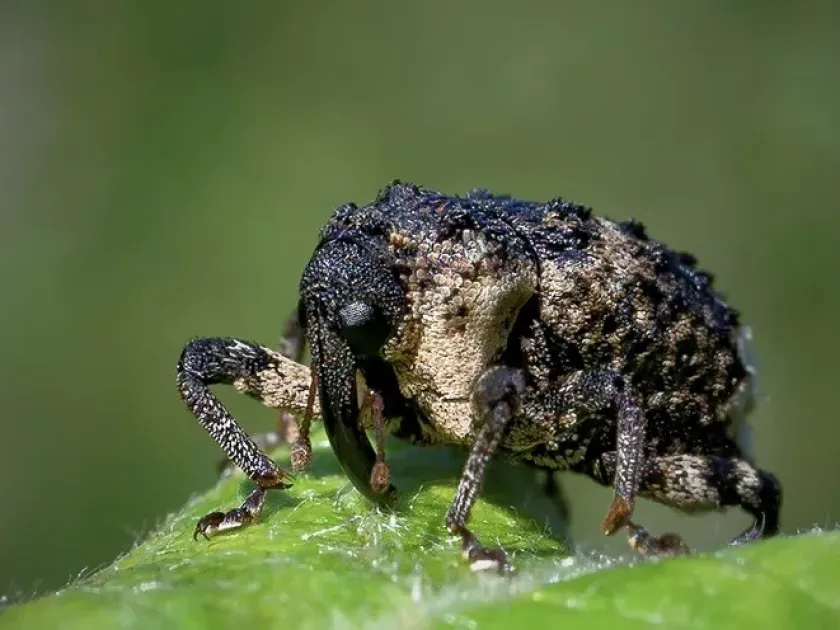
Cryptorhynchus poricollis is a species of beetle belonging to the family Curculionidae (true weevils), order Coleoptera. These insects are characterized by their elongated, dense bodies often covered in scales, which provide effective camouflage against tree bark.
The defining feature of this species is its long, downward-curved rostrum (snout), which houses its mouthparts. The antennae are elbowed, a typical trait for the superfamily Curculionoidea, allowing for precise tactile interaction with the host plant.
The adult beetles are typically dark brown or black, blending in perfectly with the wood surface. While small in size, their structural resilience and behavior make them difficult to detect without careful inspection of the infested plants.
The larvae are legless, C-shaped grubs, typically creamy-white with a brown sclerotized head capsule. They possess strong mandibles capable of boring into stems, branches, and occasionally trunks, depending on the host species.
Pupation occurs within the plant tissue in specialized chambers constructed by the mature larvae. After the transformation, the adult beetle emerges through a clean exit hole, leaving a distinct mark on the host plant.
What it damages
This weevil primarily targets woody plants and shrubs, with a preference for trees that are already stressed or weakened. The larvae are responsible for the vast majority of the damage due to their wood-boring habits.
By excavating tunnels under the bark or within young shoots, the larvae disrupt the vascular system, effectively cutting off the supply of water and nutrients. This results in localized wilting and, in severe cases, the death of individual branches.
Adult beetles contribute to the damage by feeding on buds, leaves, and tender bark. While their feeding is less structurally damaging than that of the larvae, it creates entry points for pathogens and can stunt the growth of young trees.
Physical evidence of damage often includes necrotic spots and sap or gum exudation, as the plant attempts to seal off the wounds caused by the larvae.
Significant infestations can lead to a general decline in the tree's health, making it more susceptible to environmental stress, secondary pests, and various fungal diseases that exploit the damaged areas.
When it appears
The activity of Cryptorhynchus poricollis is highly seasonal and synchronized with the phenological stages of the host plant. Adults typically emerge from overwintering sites in early spring, coinciding with the beginning of sap flow and bud break.
Mating and oviposition occur throughout the spring and early summer. Females are meticulous in selecting sites for egg deposition, ensuring that the larvae have immediate access to plant tissues upon hatching.
Larval development continues throughout the warm months. During this period, the insects are well-protected within the plant, making them difficult to reach with standard contact insecticides or natural predators.
Adults overwinter in various protected niches, including bark crevices, leaf litter at the base of trees, or in the topsoil layers. This overwintering behavior allows them to survive cold temperatures.
The number of generations per year can vary based on local climatic conditions. In warmer regions, the life cycle may be accelerated, requiring sustained monitoring throughout the entire growing season.
Signs of infestation
One of the first signs of infestation is the appearance of small, round holes on the bark surface. These are the exit or entry points, often accompanied by "frass" or boring dust accumulating in bark fissures.
Wilting of foliage on specific branches during the active growing season often indicates that the vascular flow has been obstructed by larval tunneling within that particular branch.
The presence of sap, resin, or gum on the trunks is a primary indicator of tree stress caused by internal boring pests, serving as a sign for the owner to perform a deeper investigation.
Upon peeling back dead or loose bark, one may find intricate winding galleries created by the larvae. These galleries are characteristic evidence of the species' presence and activity level.
Premature yellowing of shoots and general decline in branch vitality are strong indicators that a larval population is active, demanding immediate cultural or chemical intervention.
Control measures
Managing this pest requires an integrated approach that focuses on sanitation and host health. The removal and destruction of infested branches are essential to prevent the spread of the population.
Cultural practices, such as proper irrigation, balanced fertilization, and avoiding physical trauma to the bark, significantly increase a tree's resilience and capacity to repair itself from light damage.
Chemical control can be effective if applied during peak adult activity, such as during the spring emergence or pre-oviposition periods, using systemic or contact insecticides approved for orchard use.
- Sanitary pruning and burning of infested wood material.
- Cleaning loose bark from trunks to remove potential overwintering niches.
- Whitewashing trunks to provide a protective barrier.
- Using biological control agents such as entomopathogenic nematodes or fungi.
When implementing chemical control, it is crucial to follow product labels strictly and avoid spraying during bee foraging hours to minimize the impact on beneficial pollinators and non-target organisms.
Taxonomy
- Latin name
- Cryptorhynchus poricollis
- Order
- Coleoptera (beetles)
- Family
- Curculionidae
- EPPO code
- CRYPPO
Discussion
No discussions yet — be the first.