
Cryptorhynchus
Cryptorhynchus
Description
How to identify
The genus Cryptorhynchus belongs to the family Curculionidae, commonly known as true weevils. These insects are recognized by their characteristic long snout, or rostrum, which is a key identifying feature of the group.
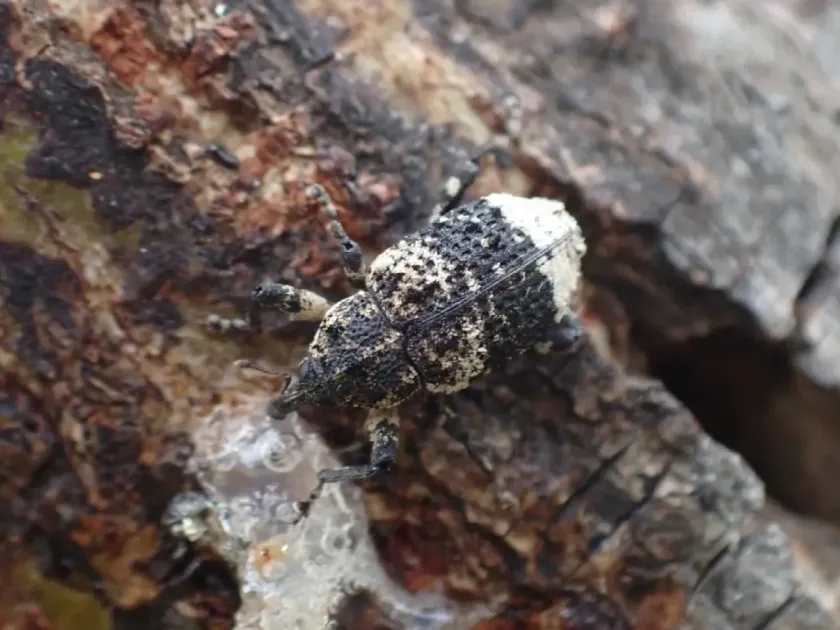
Adult weevils in this genus are typically small, ranging from a few millimeters to about a centimeter in length. Their bodies are often robust, with a mottled or textured appearance that helps them blend into plant stems or bark.
The larvae are legless, C-shaped grubs with a firm, often pale body and a well-developed head. They are rarely seen by farmers as they develop entirely hidden inside plant tissues, such as stems, roots, or fruit.
The life cycle involves complete metamorphosis: egg, larva, pupa, and adult. Most species overwinter as adults in the soil or under debris, emerging in the spring to feed and lay eggs on suitable host plants.
Accurate species identification usually requires expert examination, as their behavior and host range can vary significantly between species. Monitoring adult activity is the primary method for tracking their presence in the field.
What it damages
These pests affect a wide variety of plants, including woody ornamentals, fruit trees, and various vegetable crops. Damage is caused by both adults, which feed on buds and leaves, and larvae, which tunnel into the plant interior.
Larval boring is the most destructive phase, as it disrupts the flow of nutrients and water within the plant. This structural damage can weaken stems, making the plant susceptible to breakage, wind damage, or secondary infections.
Adult feeding causes characteristic small, round puncture holes on leaves and shoots. While these marks are often cosmetic, heavy feeding pressure can stunt the growth of young plants and reduce overall plant vigor.
In fruit crops, certain species can infest the fruit itself, leading to rot, premature dropping, or rejection during quality control. This significantly impacts the market value of the harvest.
The cumulative effect of these injuries often leads to decreased yields, poor fruit quality, and, in severe cases, the death of young seedlings or nursery stock, leading to significant economic losses for growers.
Signs of infestation
The first signs of infestation include small, needle-like punctures on the surface of stems or leaves. These are the oviposition sites where the female weevil has inserted her eggs into the plant tissue.
Visible swelling or gall-like growths on stems often indicate the presence of feeding larvae within. If a stem is cut open, a gallery or tunnel system filled with larval frass is usually found.
Wilting of the upper parts of the plant, especially during the heat of the day, is a classic symptom. This occurs when larval tunneling has severed the vascular tissues, preventing proper water transport.
Detection can also involve observing the adults themselves. When disturbed, many Cryptorhynchus weevils exhibit "thanatosis," or feigning death, and will drop to the ground, becoming difficult to spot against the soil.
- Small, circular feeding holes on leaves or shoots.
- Structural weakening or swelling of plant stems.
- Premature yellowing and wilting of plant tops.
- Evidence of larval tunnels when plant tissue is sliced.
Control measures
Integrated Pest Management (IPM) is essential for controlling these weevils. Cultural practices such as crop rotation and the destruction of infested plant materials help reduce population levels significantly.
Removing alternative host plants, particularly weeds in the surrounding area, is a critical preventative measure. Sanitation practices that involve clearing crop debris after harvest eliminate wintering sites for adults.
Chemical control focuses on applying contact or systemic insecticides during peak adult activity periods. Proper timing is vital to target the adults before they can deposit eggs into the plant tissue.
Biological control agents, such as specific parasitic wasps or entomopathogenic nematodes, are becoming increasingly useful in greenhouse and organic production systems to target larvae in the soil or stems.
Regular field scouting and the use of pheromone or sticky traps can provide early warnings of adult emergence, allowing for more precise and effective interventions while reducing unnecessary pesticide use.
Taxonomy
- Latin name
- Cryptorhynchus
- Order
- Coleoptera (beetles)
- Family
- Curculionidae
- EPPO code
- CRYPSP
Discussion
No discussions yet — be the first.