
Macadamia leafroller
Cryptoptila immersana
Description
How to identify
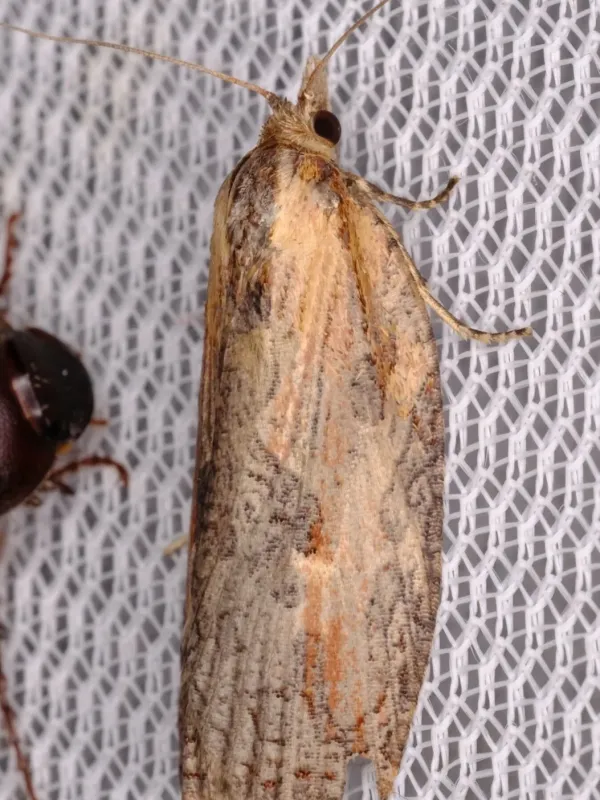
The macadamia leafroller (Cryptoptila immersana) belongs to the Tortricidae family, order Lepidoptera. The adult moth has a wingspan of approximately 15–20 mm and is characterized by its dull, cryptic coloration, which provides excellent camouflage against tree bark and leaves.
The larvae are active feeders that progress through several instars. They are known for their ability to spin silk, which they use to bind leaves together to create a sheltered environment during their development.
What it damages
As the name suggests, this pest primarily affects macadamia trees (Macadamia integrifolia). It is a significant concern for commercial growers, particularly in regions like Australia where the nut industry is established.
The larvae feed on young foliage, flower racemes, and developing nuts. By boring into the husk and shell of the nuts, they directly impact the marketable yield and quality of the crop.
When it appears
The lifecycle of the leafroller is highly dependent on the phenology of the macadamia tree. In warm tropical and subtropical climates, the pest can undergo multiple overlapping generations throughout the year.
Activity levels are typically highest when the tree is actively producing new shoots and setting fruit, providing an abundance of food sources for the emerging larvae.
Signs of infestation
The most distinctive symptom of infestation is the presence of webbed or tightly rolled leaves, which serve as protective retreats for the larvae. Within these clusters, you can often find larval frass (excrement).
Damage to the nuts is indicated by unsightly entry holes and internal feeding tracks within the husk. If left uncontrolled, severe infestations can lead to significant blossom blast and fruit drop.
Control measures
Integrated Pest Management (IPM) is essential for controlling Cryptoptila immersana. This includes the regular use of pheromone traps to monitor adult moth populations and determine the optimal timing for interventions.
Biological control plays a vital role, utilizing naturally occurring predators and parasitoids to keep leafroller numbers in check. Chemical interventions, when necessary, should be targeted at the larval stage before they tunnel into the fruit for protection.
Taxonomy
- Latin name
- Cryptoptila immersana
- Order
- Lepidoptera (butterflies)
- Family
- Tortricidae
- EPPO code
- CRTOIM
Discussion
No discussions yet — be the first.