
Cryptoptila
Cryptoptila
Description
How to identify
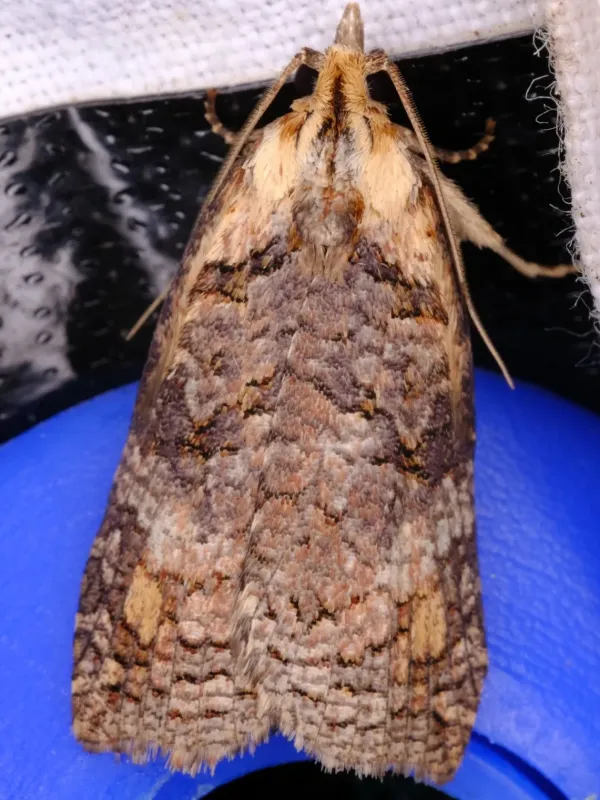
Cryptoptila is a genus of moths belonging to the order Lepidoptera and the family Tortricidae. Like other leafrollers, these moths exhibit specific wing structures and patterns characteristic of the Tortricinae subfamily.
Adult moths typically have a wingspan ranging from 20 to 25 mm. Their forewings often display brownish or grayish tones with vague transverse patterns, which serve as camouflage on tree bark.
The larvae, or caterpillars, are typical of leafrollers, possessing well-developed prolegs that allow them to move actively across the host plant. They are usually green or yellowish with a dark head capsule.
The larvae go through several developmental instars, increasing in size and feeding intensity. Pupation typically occurs within folded leaves or silken nests spun by the larvae for protection.
Precise species identification requires the analysis of genitalia, making field diagnosis reliant on host plant association and characteristic feeding damage patterns.
What it damages
This pest mainly affects ornamental and fruit crops, particularly those in the Rosaceae family. The larvae feed on leaf tissues, causing skeletonization or consuming the entire leaf blade.
Young shoots and buds are especially vulnerable, as early-season feeding can lead to severe deformation and stunted growth of the plant parts.
In cases of high population density, the larvae may also feed on developing fruit, significantly reducing the yield and market quality of the produce.
The damage caused by larvae creates entry points for secondary infections, including fungal and bacterial pathogens, which further weaken the host plant.
Mass infestations can lead to premature leaf drop and the loss of ornamental value in nursery stocks and urban landscape plantings.
When it appears
The pest is most active during the spring and summer months when vegetative growth is at its peak. The timing of adult emergence is highly dependent on ambient temperature.
The first generation of larvae emerges in early spring, targeting opening buds. Depending on the climate, the species may produce several generations per year.
Peak larval activity often coincides with the period of rapid leaf development, when the plant provides the most abundant and nutritious food source.
Pupation occurs during the summer, followed by the emergence of the next generation of adults that continue the life cycle on available hosts.
As autumn approaches, larvae or pupae enter diapause, overwintering in plant debris, under tree bark, or in the upper layers of the soil.
Signs of infestation
The primary indicator of a Cryptoptila infestation is the presence of leaves that are rolled or tied together with silk, within which the larvae reside.
Feeding damage is characterized by irregular holes in the leaf surface and the presence of frass (larval excrement) accumulated within the silken nests.
Stunted growth, curled buds, and malformed shoots are classic signs of early-season infestation that occurred during the initial flush of growth.
Adult moths may be observed in the evening hours, as they are often attracted to artificial light sources or can be found resting on the undersides of leaves.
- presence of silken nests;
- rolled or folded leaves;
- skeletonized leaf tissue;
- stunted or malformed shoots;
- accumulated frass on leaves.
Control measures
Effective management includes cultural practices such as the thorough removal and destruction of fallen leaves and plant debris to eliminate overwintering sites.
Biological control using Bacillus thuringiensis-based products is highly effective against young larval instars while preserving beneficial insect populations.
During periods of severe infestation, systemic or contact insecticides may be applied, provided they are registered for use on the specific host crops.
Monitoring with pheromone traps is essential for timing insecticide applications accurately, thereby reducing the need for broad-spectrum chemical treatments.
Conserving natural enemies, such as ichneumonid wasps, plays a vital role in suppressing population outbreaks and maintaining ecological balance in the field.
Taxonomy
- Latin name
- Cryptoptila
- Order
- Lepidoptera (butterflies)
- Family
- Tortricidae
- EPPO code
- CRTOSP
Discussion
No discussions yet — be the first.