
Macadamia nut borer
Cryptophlebia ombrodelta
Description
How to identify
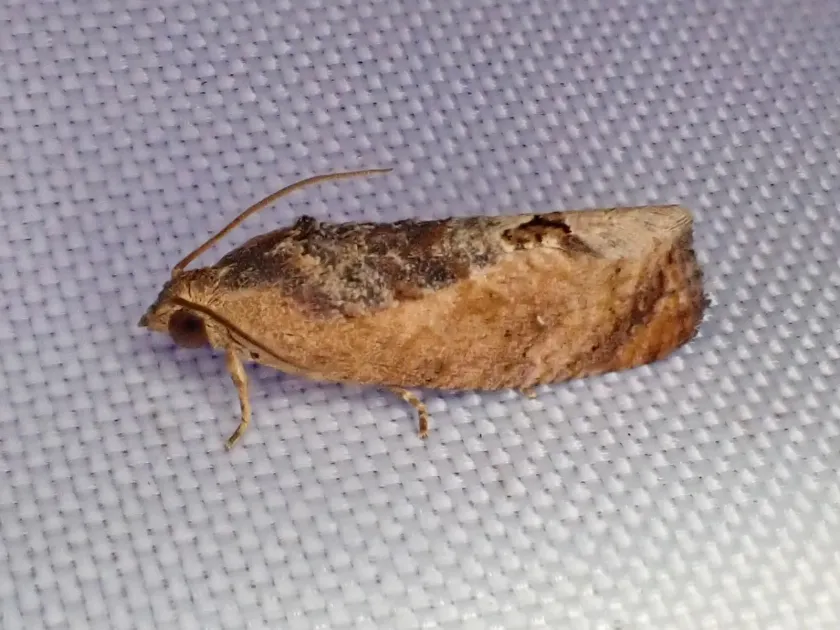
The Macadamia nut borer (Cryptophlebia ombrodelta) is a member of the Tortricidae family within the order Lepidoptera. The adult moth has a wingspan of approximately 20 to 25 mm, featuring brown forewings with distinctive dark, irregular patterns that allow it to blend seamlessly into tree bark.
The larval stage, which causes the damage, goes through several instars. Early-stage larvae are often pale or cream-colored, while older larvae transition to a vibrant reddish or pinkish hue. The dark-colored head capsule is a consistent anatomical feature used to identify this species.
This insect undergoes a complete metamorphosis: egg, larva, pupa, and adult. In tropical environments, the lifecycle can be continuous throughout the year, leading to overlapping generations and a constant presence of the pest in the orchard if not managed properly.
Females typically oviposit near the calyx or crevices of the fruit. A single female can produce several hundred eggs during her short lifespan, providing a high reproductive rate that can lead to rapid population spikes during the peak harvest season.
Pupation occurs in protected areas, including inside the infested fruit or within debris on the orchard floor. The pupal stage is highly resistant to many environmental factors, which explains why the pest remains persistent even after harsh climate conditions.
What it damages
While named for its preference for macadamia, this pest is highly polyphagous and infests various commercial crops including lychees, citrus, and several leguminous species. This wide host range makes it a significant threat to diversified tropical farming systems.
The larvae tunnel into the nut kernels, consuming the endosperm. This physical destruction makes the nut completely unmarketable and susceptible to environmental decay, resulting in total loss of the individual fruit affected by the borer.
Beyond direct feeding damage, the larvae introduce opportunistic fungi and bacteria into the fruit through their exit holes. This often leads to secondary infections and rapid rot, which can contaminate adjacent healthy fruits if left unharvested.
Yield loss is the primary economic impact of this pest, with infestations often exceeding 50% in untreated orchards. The hidden nature of the larvae within the hard shell of the nut makes early detection extremely difficult for orchard managers.
In mature orchards, high populations of C. ombrodelta can cause significant financial distress due to the loss of premium-grade nuts. Farmers must implement aggressive scouting protocols to determine the extent of damage before deciding on intensive control measures.
Control measures
Integrated Pest Management (IPM) for this species begins with the use of pheromone-baited traps to monitor adult male activity. These traps provide essential data to timing interventions, ensuring insecticides are applied when they are most effective.
Cultural practices are critical; the prompt removal and destruction of fallen or infested nuts are essential to break the insect's lifecycle. By preventing larvae from successfully pupating in the orchard floor debris, the overall population pressure for the next season is reduced.
Chemical control focuses on applying targeted insecticides during the window when larvae have hatched but have not yet bored into the nut shells. Systematic rotation of different insecticide modes of action is necessary to prevent the development of pesticide resistance.
Biological control alternatives, such as the release of Trichogramma wasps, have shown promise in parasitizing the eggs of the moth. These natural enemies, combined with Bacillus thuringiensis treatments, provide sustainable options for organic or low-input orchard management programs.
- Pheromone trap monitoring for population tracking.
- Sanitation through removal of infested fruit.
- Application of insecticides during peak larval emergence.
- Release of parasitoid wasps for biological control.
- Maintaining orchard hygiene to reduce pupation sites.
Taxonomy
- Latin name
- Cryptophlebia ombrodelta
- Order
- Lepidoptera (butterflies)
- Family
- Tortricidae
- EPPO code
- CRYIOM
Discussion
No discussions yet — be the first.