
Cryptophlebia
Cryptophlebia
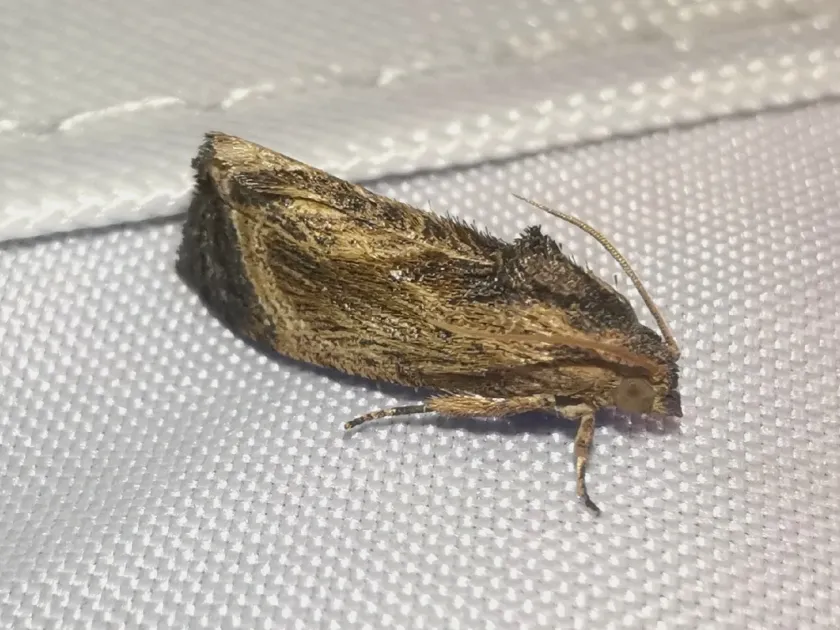
Description
How to identify
The genus Cryptophlebia belongs to the Tortricidae family within the order Lepidoptera. These moths are relatively small, with wingspans ranging from 15 to 20 mm. They typically exhibit mottled grey, brown, or black wing patterns that provide excellent camouflage against tree bark during their diurnal resting periods.
Larval stages are characterized by a cylindrical body that changes from creamy-white in the early stages to a distinct pink or reddish hue as they mature. The head capsule is sclerotized and dark brown, serving as a key diagnostic feature for species identification during field scouting.
The life cycle encompasses four stages: egg, larva, pupa, and adult. The development rate is highly temperature-dependent, with multiple overlapping generations occurring annually in tropical and subtropical environments, which complicates management efforts.
Female moths oviposit directly onto the surface of fruit or near the calyx. This strategic placement allows newly hatched larvae to bore immediately into the host tissue, protecting them from predators and environmental stressors from the very start of their life cycle.
Overwintering usually occurs in the larval stage. The larvae spin protective cocoons within crevices of tree bark, dried leaves, or inside abandoned/mummified fruit, ensuring their survival through periods of unfavorable climate conditions before pupating in the spring.
What it damages
The primary damage is caused by the larval feeding activity within the fruit. As the larvae tunnel through the flesh or kernel, they create complex galleries that disrupt the fruit's structural integrity and facilitate the ingress of decay-causing microorganisms and fungi.
Major host crops include macadamia, citrus, avocado, cotton, and various tropical fruits. In some regions, Cryptophlebia leucotreta, commonly known as the false codling moth, is a quarantine pest that causes significant economic disruption to the export trade.
Affected fruit often drops prematurely, resulting in substantial yield losses. For commercial orchards, this not only reduces harvest volumes but also increases the costs associated with sorting and grading to remove damaged produce from the supply chain.
Feeding destroys the internal quality of the fruit, making it unmarketable. In the case of nut crops, the larvae consume the kernel, which is the most valuable part of the product, rendering the entire harvest potentially useless for both consumption and industrial processing.
Economic impact is compounded by strict phytosanitary regulations. Countries importing host commodities often demand rigorous inspection and certification, and the presence of even a single larva can lead to the rejection of entire shipments at international borders.
Control measures
Effective management requires a robust monitoring program utilizing pheromone-baited traps. These traps are essential for identifying the timing of adult flight peaks, which guides the precise application of control measures to minimize pest populations.
Sanitation is a cornerstone of cultural control. Orchard hygiene practices, such as the consistent collection and destruction of fallen fruit and the removal of mummified fruits from branches, significantly reduce the carry-over of overwintering populations for the following season.
Chemical control focuses on the use of insecticides targeting the neonate larvae. Since larvae quickly penetrate the fruit, timing is critical; applications must occur before the larvae successfully enter the host tissue to ensure maximum mortality rates.
Integrated Pest Management (IPM) incorporates biological agents, including the release of specific egg parasitoids (such as Trichogramma species) and the application of entomopathogenic viruses, which provide sustainable alternatives to broad-spectrum chemical sprays.
- Utilize pheromone traps for early warning and population density monitoring.
- Implement strict orchard sanitation by clearing fallen and mummified fruit.
- Apply selective insecticides timed to the peak oviposition period.
- Encourage beneficial insect populations to suppress pest numbers naturally.
Taxonomy
- Latin name
- Cryptophlebia
- Order
- Lepidoptera (butterflies)
- Family
- Tortricidae
- EPPO code
- CRYISP
Discussion
No discussions yet — be the first.