
Mango bark beetle
Cryphalus mangiferae
Description
How to identify
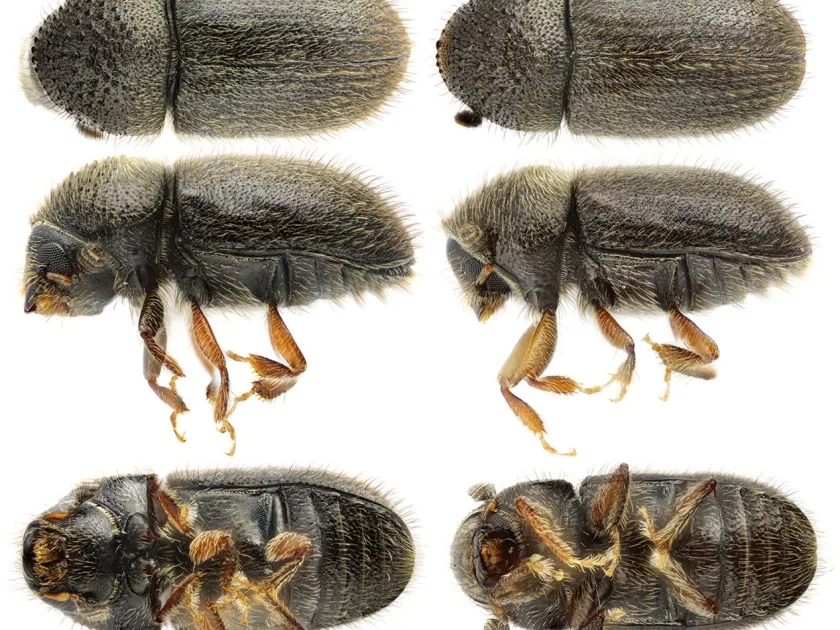
The mango bark beetle (Cryphalus mangiferae) is a member of the Curculionidae family and the Scolytinae subfamily. These beetles are extremely small, typically measuring less than 2 millimeters in length, with a cylindrical, dark brown body structure.
The larvae are legless, white, and C-shaped, perfectly adapted to live and feed within the tunnels they carve through the host plant tissues. Their cryptic nature makes them difficult to detect until significant damage has occurred.
What it damages
This beetle primarily affects mango trees (Mangifera indica), posing a threat to branches, trunks, and fruit. It is recognized as a significant pest, particularly in tropical regions where mango production is a key economic sector.
Infestation of the fruit leads to immediate rejection of the produce for domestic consumption and export. Furthermore, the boreholes created by the beetle serve as entry points for secondary pathogens like fungi, which exacerbate the damage.
When it appears
The beetle's life cycle is linked to the phenological stages of the mango tree, especially the fruit development period. Activity is usually higher in post-flowering stages when new fruit tissues are available for colonization.
In regions with consistent warm temperatures, the mango bark beetle can undergo multiple overlapping generations throughout the year, making continuous monitoring essential for successful orchard management.
Signs of infestation
The presence of Cryphalus mangiferae is indicated by minute, circular holes on the fruit surface or the bark of younger branches. These holes are often accompanied by small piles of frass or sap exudation around the entry point.
Advanced stages of infestation are characterized by the decline of tree vigor, wilting of canopy sections, and premature fruit drop. Opening a damaged branch usually reveals a complex network of larval galleries carved beneath the surface.
Control measures
Cultural control is the most effective approach to managing this pest. This includes the rigorous pruning and immediate destruction of all infested plant material to reduce the reservoir of beetles within the orchard.
Chemical control strategies should focus on applying systemic insecticides that can penetrate the plant tissues, combined with the use of pheromone traps to time applications accurately during the adult flight peak.
Taxonomy
- Latin name
- Cryphalus mangiferae
- Order
- Coleoptera (beetles)
- Family
- Curculionidae
- EPPO code
- HYPCMA
Discussion
No discussions yet — be the first.