
Cryphalus
Cryphalus
Description
How to identify
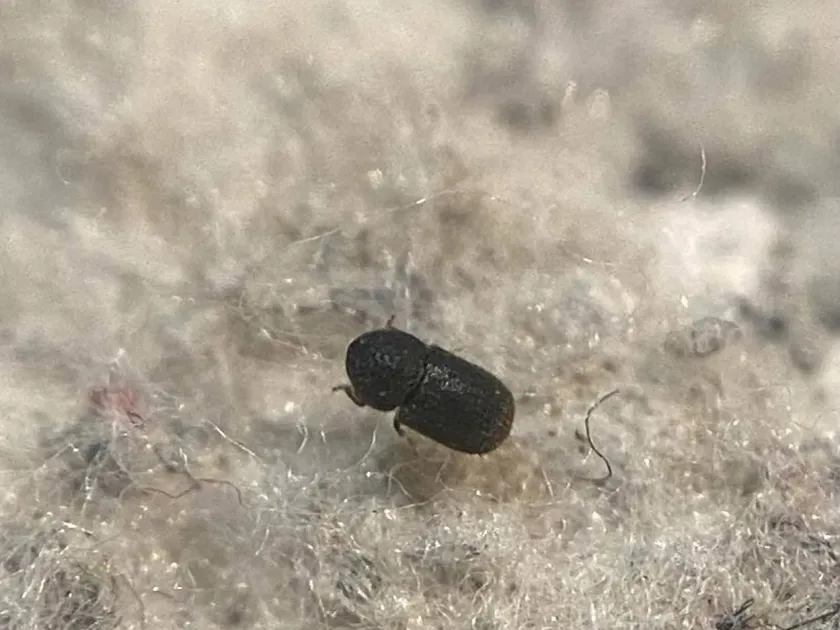
Cryphalus is a genus of small bark beetles belonging to the family Curculionidae and subfamily Scolytinae. These insects are characterized by their cylindrical bodies and small size, typically measuring 1.5–2 mm in length.
Adult beetles have a brownish to dark brown coloration. Their bodies are covered in fine, sparse hairs, which facilitate movement and grip within the narrow galleries they construct under the bark.
The larvae are legless, white in color, and possess a distinct, slightly yellowish head capsule. They spend their entire developmental period tunneling beneath the bark of host trees.
Pupation occurs within specifically formed pupal chambers constructed at the terminal end of the larval tunnels. This stage represents the final transformation before the adult beetle emerges.
The life cycle is closely linked to the environment and tree vitality. Depending on the species and geographical region, Cryphalus can complete one or more generations per year.
What it damages
Cryphalus primarily infests coniferous trees, with a strong preference for spruce (Picea), fir (Abies), and pine (Pinus). Weakened or stressed trees are the most susceptible targets.
The damage is caused by the feeding activities of both larvae and adults, which disrupt the phloem and cambium layers, essentially cutting off the tree's nutrient supply.
When mass infestations occur, the beetle can cause significant economic losses in forestry by killing young stands or weakening mature trees, making them susceptible to secondary pests.
The tunneling activity compromises the structural integrity of the bark and allows moisture to evaporate, accelerating the tree's decline and ultimate mortality.
Infestation sites serve as entry points for various pathogenic fungi, which often synergistically accelerate the decay process and the failure of the tree's defense systems.
Signs of infestation
The most reliable indicator of a Cryphalus infestation is the presence of fine, sawdust-like bore dust (frass) accumulating in the bark crevices near entry points.
External symptoms include the yellowing, browning, and eventual premature drop of needles. Foliage discoloration usually occurs in patches corresponding to the infested sections of the trunk or branches.
Upon peeling back a section of the bark, one can observe complex, branching or star-shaped gallery systems etched into the surface of the wood and the underside of the bark.
In cases where the tree has sufficient defensive capacity, resin flow (pitching out) may be observed at the entry holes as the tree attempts to push out the invaders.
Loose or sloughing bark is another late-stage sign, indicating that the vascular cambium has been destroyed and the tissue is beginning to rot or desiccate.
Control measures
The primary management strategy involves the timely identification and removal of infested trees (sanitation logging) to prevent the emergence and spread of the beetle population.
Monitoring using pheromone traps is an effective tool for tracking beetle activity and population density, providing data for more targeted control efforts.
Maintaining forest health through proper stand density management and avoiding the accumulation of logging debris helps create conditions unfavorable for Cryphalus outbreaks.
In ornamental or high-value landscapes, protective insecticide applications may be used to shield susceptible trees during the peak flight periods of the adult beetles.
Promoting tree vigor through adequate water management and nutrient supply is essential to enhance the natural resistance of coniferous stands against bark beetle attacks.
Taxonomy
- Latin name
- Cryphalus
- Order
- Coleoptera (beetles)
- Family
- Curculionidae
- EPPO code
- CRYHSP
Discussion
No discussions yet — be the first.