
Crossotarsus
Crossotarsus
Description
How to identify
The genus Crossotarsus belongs to the subfamily Platypodinae (ambrosia beetles) within the family Curculionidae. These are specialized beetles with elongated, cylindrical bodies, evolved for living in narrow galleries deep within wood.
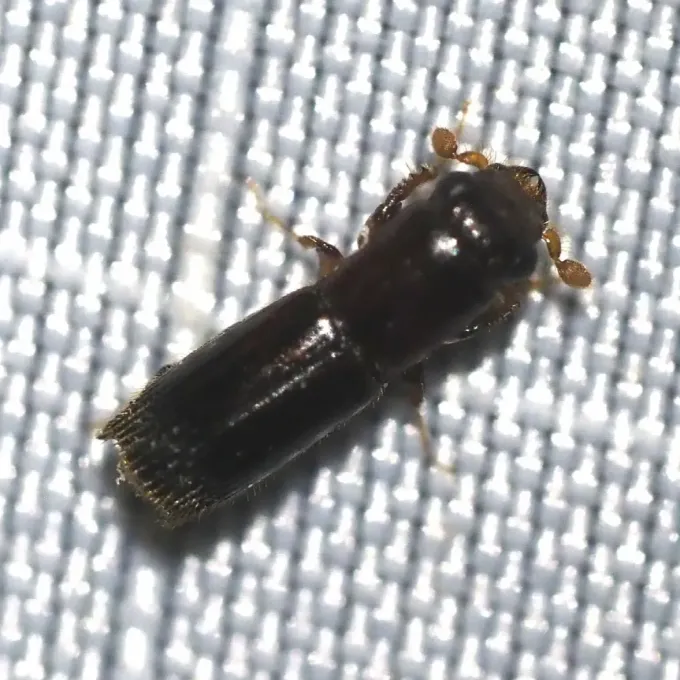
Adult beetles are typically dark brown or black with a shiny surface. They possess unique leg structures, which facilitate efficient movement and debris removal within the tunnels they excavate in the heartwood or sapwood.
The life cycle is cryptic, spent almost entirely inside the tree. They exhibit a symbiotic relationship with specific fungi, which they carry in specialized structures called mycangia. These fungi are essential for the larvae's survival and growth.
The developmental process consists of four distinct stages: egg, larva, pupa, and adult. Unlike some other bark beetles, the larvae stay in communal galleries where they feed on the fungal "gardens" cultivated by their parents.
They are highly social insects within their colonies, showing significant coordination in maintaining their tunnel systems and protecting their brood from competitors or predators.
What it damages
Crossotarsus species are recognized as significant technical pests of hardwood trees. They affect various species including oak, beech, and maple, often attacking stressed or declining trees in forests and plantations.
The primary damage is caused by the radial galleries bored deep into the wood. This boring activity disrupts the tree's vascular system, leading to wilting, branch dieback, and potentially the death of the entire tree if the infestation is severe.
Secondary damage is caused by the fungi introduced by the beetles. These fungi colonize the wood around the galleries, causing discoloration, commonly known as "blue stain," and accelerating wood decay processes.
Infestation reduces the structural integrity of the timber, making it unsuitable for high-quality wood production. The presence of numerous tiny exit holes and fungal staining significantly lowers the market value of the harvested wood.
In forest management, high populations of Crossotarsus can become a serious problem in drought-stricken areas where tree resistance is low, leading to widespread damage to valuable timber stands.
Signs of infestation
The most reliable sign of an infestation is the presence of small, round entry holes on the bark, usually between 1 to 2 millimeters in diameter, often accompanied by piles of fine sawdust or "frass."
Fungal staining patterns on the bark or wood surface indicate the presence of the beetle's symbionts. Deep penetration can often be confirmed by examining the wood quality after removing small sections of bark.
Crown symptoms such as yellowing, early leaf drop, or branch dieback are common indicators that the tree's internal vascular health has been severely compromised by gallery formation.
Sap exudation, often referred to as "bleeding," may occur around the entry holes as the tree attempts to push out the invaders or seal the galleries with natural resins.
A hollow or compromised sound when tapping the trunk can indicate extensive internal tunneling, suggesting that the infestation has reached a critical and advanced stage.
Control measures
Sanitation is the cornerstone of control. Removing and destroying infested or dead trees is critical to reducing the local population and preventing the beetles from spreading to healthy trees in the vicinity.
Proper timber management is essential. Harvested logs should be moved out of the forest as quickly as possible or treated with protective coatings to minimize the risk of colonization during the beetle's flight season.
Chemical control is most effective when applied during the peak flight of adult beetles. Targeted insecticide sprays can help prevent new attacks by protecting the bark surface until the flight period ends.
Monitoring using pheromone traps allows land managers to detect the arrival of the beetles early. This data helps in timing control applications and avoiding unnecessary chemical use in the environment.
For high-value specimen trees, stem injection of systemic insecticides provides a targeted and long-lasting solution, effectively turning the tree's tissues toxic to both the boring beetles and their associated fungi.
Taxonomy
- Latin name
- Crossotarsus
- Order
- Coleoptera (beetles)
- Family
- Curculionidae
- EPPO code
- CROSSP
Discussion
No discussions yet — be the first.