
Maple leafroller
Croesia forskaleana
Description
How to identify
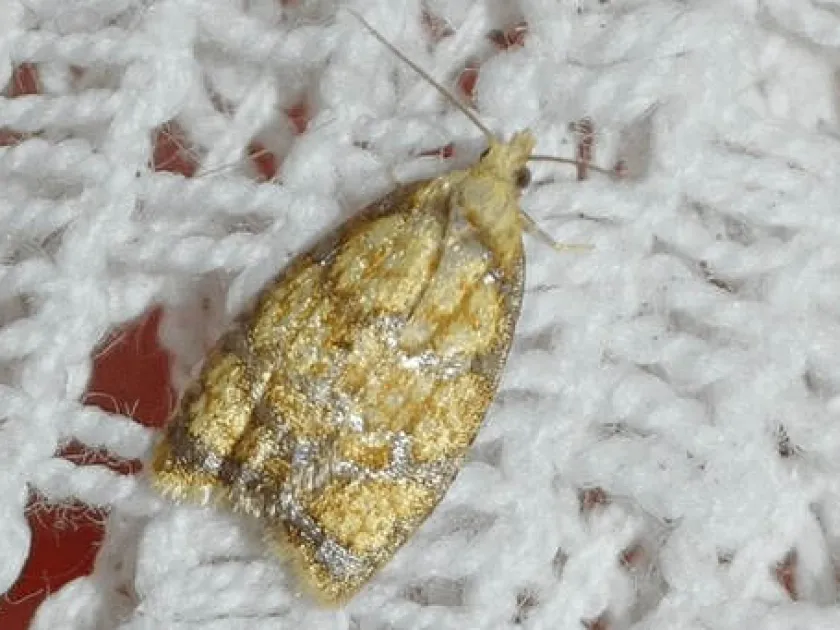
The maple leafroller (Croesia forskaleana) is a moth species belonging to the family Tortricidae, known for its specific host preference for maple trees.
Adult moths have a wingspan of approximately 12–16 mm, with forewings that are yellowish-brown, decorated with darker patches and bands for camouflage.
Larvae are small, light-green caterpillars with pale heads, which are highly mobile and display a characteristic drop-down behavior when disturbed.
The pupal stage occurs inside the shelter of rolled maple leaves, which the caterpillar prepares using silk webbing.
This species typically overwinters in the egg stage, which are laid singly or in small groups on the bark of twigs, often near buds.
What it damages
The primary host for this pest is the Norway maple (Acer platanoides), and it can cause significant damage to young plantations and ornamental trees.
Larvae feed on the leaf tissue, often consuming the parenchyma and leaving behind only the skeletonized veins or large, irregular holes.
The caterpillar rolls or folds leaves and secures them with silk, creating a protective hideout that also serves as its main feeding site.
Heavy infestations can lead to partial or total defoliation of the tree, which stresses the plant and inhibits its growth potential.
Damage is particularly visible in spring and early summer, compromising the aesthetic value of urban park trees and residential landscapes.
When it appears
Larval emergence typically begins in spring, synchronized with the opening of maple leaf buds, providing fresh food for the developing caterpillars.
The larval feeding phase continues throughout late spring and early summer, typically peaking in June before the transition to the pupal stage.
Adult moths are generally active during June and July, engaging in mating and egg-laying for the next generation.
The species is univoltine in most regions, meaning it completes only one generation per year, with the egg stage lasting through the autumn and winter.
Warm spring temperatures accelerate the development of larvae, potentially increasing the impact of the infestation on the host tree.
Signs of infestation
The most diagnostic sign of an infestation is the presence of tightly rolled or folded maple leaves webbed together with silk.
Visible feeding damage, where leaves appear tattered, skeletonized, or perforated, is a strong indicator of caterpillar activity within the canopy.
The presence of fine silk threads and dark larval frass (droppings) inside the rolled leaves provides evidence of the pest's recent occupancy.
Premature browning and abscission of damaged leaves during June are common consequences of severe leafroller activity.
Close inspection of twigs during the dormant season may reveal tiny, flattened eggs deposited on the bark, indicating potential for a future outbreak.
Control measures
For small trees, physical removal and disposal of rolled leaves by hand is an effective and environmentally friendly control tactic.
Biological control using microbial insecticides such as Bacillus thuringiensis is highly effective against larvae while being safe for non-target species.
Chemical intervention with systemic or contact insecticides may be necessary during severe outbreaks, applied when the larvae are actively feeding.
Promoting general tree health through proper fertilization and irrigation helps trees tolerate leaf tissue loss and recover more quickly.
Encouraging natural predators, such as insectivorous birds and parasitic wasps, plays a critical role in keeping leafroller populations at manageable levels.
Taxonomy
- Latin name
- Croesia forskaleana
- Order
- Lepidoptera (butterflies)
- Family
- Tortricidae
- EPPO code
- TORTFO
Discussion
No discussions yet — be the first.