
Croesia moth
Croesia
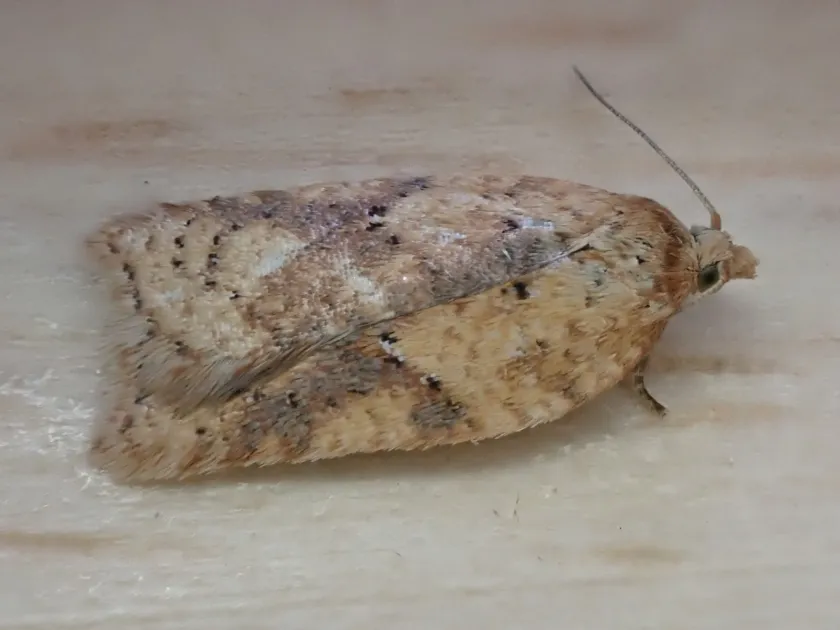
Description
How to identify
The Croesia moth (genus Croesia) belongs to the Tortricidae family, order Lepidoptera. These small moths are known for their leaf-rolling behavior, which is a defensive mechanism against predators.
The adults typically have distinctively patterned forewings with shades of yellow, brown, or mottled markings. Their larvae, often greenish or yellowish, are found feeding on the foliage of various host plants.
The classification of the genus is based on morphological characteristics of the genitalia and wing venation. As part of the Tortricidae family, they exhibit typical life cycles consisting of egg, larva, pupa, and adult stages.
Croesia species are commonly found in temperate regions, where they have adapted to survive winter stages, often as eggs laid on the bark of host trees.
Identifying the moth involves recognizing the specific leaf-rolling patterns and the characteristic resting position of the adults, which resembles a small triangular tent.
What it damages
Croesia moths are primarily pests of fruit trees, including apple, pear, and plum. The larvae cause damage by feeding on young leaves, buds, and fruitlets during the early spring.
Feeding damage significantly reduces the tree's photosynthetic capacity, which can lead to diminished fruit quality and yield. Heavy infestations may result in premature defoliation of the canopy.
The larvae are known for binding leaves together with silk, which protects them from chemical sprays and natural enemies. This behavior disrupts normal shoot development and can deform the terminal growth of the tree.
Beyond agricultural crops, some species of Croesia impact deciduous forest trees, causing secondary stress to the hosts. This stress can make trees more susceptible to bark beetles or fungal diseases.
In cases of severe infestation, the loss of flower buds before they bloom can lead to complete failure of fruit set, making them a significant concern for commercial orchard management.
When it appears
The life cycle is closely synchronized with the phenology of host trees. Overwintered eggs hatch in early spring, coinciding with the swelling and opening of tree buds.
The larval stage is the most active and damaging phase, typically occurring from late spring to early summer. During this time, they feed aggressively on the expanding vegetation.
Adult moths usually emerge in the summer months. Following emergence, they mate and lay eggs, which will remain dormant throughout the autumn and winter until the following spring.
Temperature fluctuations influence the duration of each life stage. A warm spring often leads to an earlier and more synchronized emergence, increasing the risk of widespread infestation.
Monitoring for the presence of the pest is crucial before and during the bloom stage, as this is when protective actions are most effective.
Signs of infestation
The most prominent sign of infestation is the presence of leaves that have been rolled into tight tubes or clumps and secured with fine silk threads.
Frass (larval droppings) inside the rolled leaves provides evidence of active feeding. Observers can also notice small holes in young buds and flowers where the larvae have penetrated.
Terminal shoots may become stunted or deformed if the larvae have consumed the growing point of the branch. This is particularly noticeable in young, vigorously growing trees.
Presence of webbing between leaves and buds is a reliable indicator of recent pest activity. Early detection of these signs is essential for successful mitigation.
- Rolled or folded leaves held together by silk.
- Visible larval webbing on fresh foliage.
- Damaged, shriveled, or hollowed-out fruit buds.
- Stunted or distorted growth at the tips of branches.
Control measures
Cultural control involves pruning and destroying infested twigs during the dormant season. This significantly reduces the overwintering population of eggs.
Biological control, using Bacillus thuringiensis or specific parasitoids, is highly effective for managing larvae without harming beneficial pollinators in the orchard.
Chemical control should be applied before the larvae fold the leaves. Once they are securely inside their silk tubes, traditional contact insecticides have limited success.
Pheromone traps are excellent tools for monitoring the flight periods of adult moths. This data allows growers to apply treatments at the optimal timing to prevent the next larval generation.
Integrated Pest Management (IPM) strategies, including habitat diversification and preservation of natural predators, provide long-term stability in suppressing Croesia populations.
Taxonomy
- Latin name
- Croesia
- Order
- Lepidoptera (butterflies)
- Family
- Tortricidae
- EPPO code
- CROISP
Discussion
No discussions yet — be the first.